1796 US Presidential Election: The first time that political parties competed for the presidency
The 1796 U.S. presidential election stands as one of the most significant in American history. As the first contested election after the presidency of George Washington, it laid the groundwork for the future of American electoral politics, introducing the formal presence of political parties, the Electoral College system, and the role of foreign influence. This election also highlighted the early divisions within the nascent United States, which would continue to define the political landscape for years to come.
In the article below, American historians at World History Edu explore the history, context, and key facts surrounding this pivotal election.
The Historical Context
By 1796, the United States was still a young nation, just a few years removed from the adoption of the Constitution. George Washington, the country’s first president, had served two terms and refused to run for a third. His decision not to seek re-election was significant, as it set the precedent of a peaceful transfer of power in the United States and reinforced the notion that the presidency was not a lifelong appointment.
With Washington stepping down, the country was poised for its first truly competitive presidential election. While the first two elections in 1788 and 1792 had been largely uncontested, with Washington running unopposed, the 1796 election would feature fierce competition between emerging political factions.
The 1796 United States presidential election was significant as it marked the third quadrennial election and the first to be contested with political parties playing a central role.
At the heart of the contest were two prominent political figures: John Adams and Thomas Jefferson. These men represented the two main political factions that had formed in the early Republic: the Federalists, led by John Adams and Alexander Hamilton, and the Democratic-Republicans, led by Thomas Jefferson and James Madison. This election would be the first in which political parties actively campaigned for the presidency, marking the start of the First Party System in American politics.

The 1796 Presidential Election was the first after George Washington’s decision not to seek a third term, opening the door for the first truly competitive presidential contest. Image: George Washington (1732 – 1799)
The Federalists vs. Democratic-Republicans
The Federalist Party, which supported a strong central government, a robust national economy, and good relations with Great Britain, coalesced around John Adams, Washington’s vice president. Federalists believed in a centralized federal authority, which they felt was necessary for the country’s stability and growth. They were largely aligned with commercial interests in the Northeast, particularly in New England and parts of the Mid-Atlantic states.
On the other hand, the Democratic-Republican Party, led by Thomas Jefferson, represented those who favored a more decentralized government and a stronger emphasis on states’ rights. Jefferson’s party viewed a strong central government as a potential threat to individual liberties and believed in aligning more with France, which had aided the United States during the American Revolution. The Democratic-Republicans had a base in the agricultural South and the expanding western frontier.
The philosophical and political differences between these two parties framed the 1796 election and were indicative of the broader national debate over how the new republic should be governed. While Federalists saw the future of the country tied to commerce and close ties with Britain, Democratic-Republicans looked to France as a model of revolution and liberty, though they often turned a blind eye to the violence and instability that had followed the French Revolution.
READ MORE: How did the United States come to have two major political parties?
The Electoral System
The 1796 election was conducted under the original rules of the U.S. Constitution, before the passage of the 12th Amendment in 1804. Under these rules, each member of the Electoral College cast two votes for president, and the candidate with the most votes would become president, while the candidate with the second-most votes would become vice president. Electors could not designate which candidate was their choice for president and which was their choice for vice president, a system that would later prove problematic and would be reformed.
Given the nature of this system, both political parties ran multiple candidates to try to prevent the opposition from winning both the presidency and the vice presidency. John Adams was the primary candidate for the Federalists, while Thomas Jefferson was the main candidate for the Democratic-Republicans. However, each party also had “running mates” or secondary candidates, even though, under the law at the time, all candidates were technically running for president.
Adams’s main running mate was Thomas Pinckney, a Federalist from South Carolina who had negotiated the Treaty of San Lorenzo with Spain. For the Democratic-Republicans, Aaron Burr, a senator from New York, was chosen as Jefferson’s running mate.
The Main Candidates

John Adams (Federalist Party)

John Adams – the first Vice President of our nation
Adams was the sitting vice president under George Washington and one of the most prominent figures of the American Revolution. A staunch advocate for independence, Adams had helped negotiate the Treaty of Paris in 1783, which ended the Revolutionary War. As vice president, Adams had been a key figure in the development of the new government but was somewhat overshadowed by the more charismatic Washington and the influential Alexander Hamilton.
Thomas Jefferson (Democratic-Republican Party)

Jefferson was the former secretary of state under Washington and the principal author of the Declaration of Independence. He was an advocate for the rights of states and a limited federal government, as well as an admirer of the French Revolution. Jefferson’s vision of America was one of a nation of small, independent farmers, in contrast to the Federalist preference for commerce and centralized government.
Thomas Pinckney (Federalist Party)
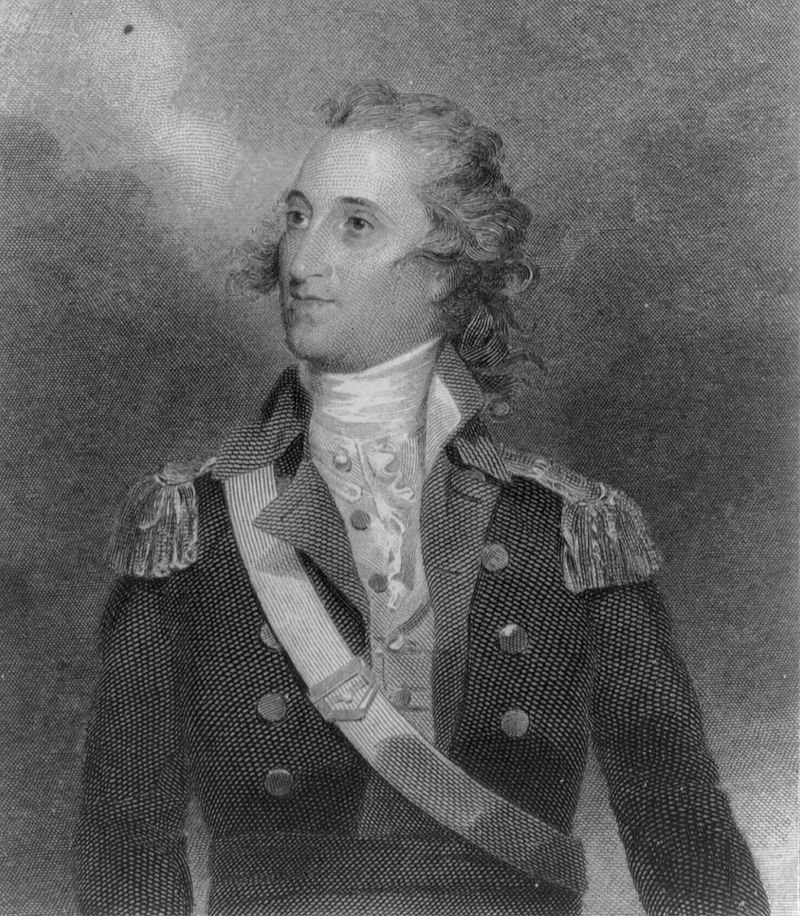
Pinckney, a former governor of South Carolina, had achieved prominence through his diplomatic work, particularly in negotiating the Treaty of San Lorenzo, which secured navigation rights on the Mississippi River and established a clear boundary between the United States and Spanish territories. He was seen as a moderate Federalist who could help balance the ticket with Adams.
Aaron Burr (Democratic-Republican Party)
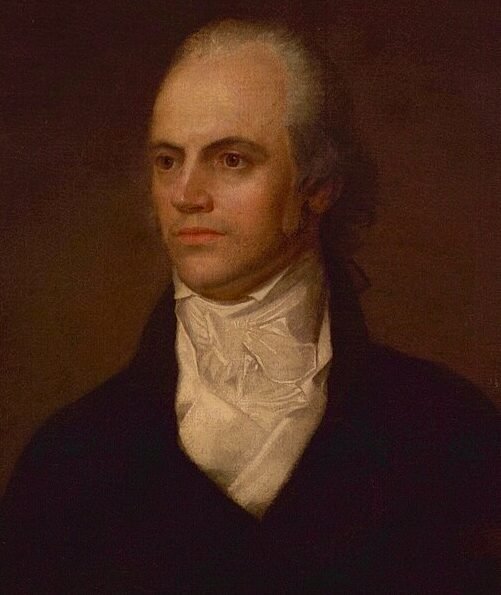
Image: An 1803 portrait of Aaron Burr.
Burr was a rising political figure from New York and was chosen as Jefferson’s running mate in an effort to balance the ticket geographically. Burr was a skilled politician and would later become infamous for his duel with Alexander Hamilton.
The Campaign
The 1796 election marked the first time in American history that political parties actively campaigned for the presidency. While the candidates themselves did not engage in direct campaigning (it was considered undignified at the time), their supporters and party apparatuses worked behind the scenes to garner votes. Newspapers, pamphlets, and public meetings were used by both parties to promote their candidates and attack their opponents.
The campaign itself was particularly bitter and divisive, with both sides engaging in fierce rhetoric. The Federalists sought to portray the Democratic-Republicans as radical sympathizers of the French Revolution, linking Jefferson and his party to the violent upheavals in France. They also accused Jefferson of being too pro-French and even an atheist, a serious charge in a deeply religious country.
The bitter campaign saw Federalists accusing Jefferson of pro-French sympathies, while Republicans criticized Adams for being too pro-British.
The Democratic-Republicans, meanwhile, accused the Federalists of favoring monarchism and aristocracy. They attacked John Adams as being overly influenced by Alexander Hamilton’s policies, which they believed favored Great Britain and the wealthy elite. They also criticized the Federalists for supporting the Jay Treaty, a 1794 agreement with Britain that had normalized trade relations between the two nations but was seen by many as too conciliatory toward the former colonial power.
Foreign policy, in fact, was a key issue in the election. The Federalists favored a strong relationship with Britain, America’s largest trading partner, while the Democratic-Republicans leaned toward France, America’s ally during the Revolutionary War. The Jay Treaty became a focal point of controversy, with Democratic-Republicans seeing it as a betrayal of revolutionary ideals.
READ MORE: 10 Most Significant Accomplishments of Founding Father John Jay
Electoral Results and the Outcome

Adams won with 71 electoral votes, narrowly defeating Jefferson with 68, who became vice president. This election established the First Party System, with key swing states determining the outcome.
The election results were as close as the contest had been contentious. John Adams ultimately won the presidency with 71 electoral votes, just one more than the majority needed. Thomas Jefferson, having secured 68 electoral votes, became vice president. This was the only time in U.S. history that the president and vice president were elected from opposing political parties, a situation that would prove problematic during their time in office.
Thomas Pinckney, the Federalist candidate for vice president, finished with 59 votes, while Aaron Burr, Jefferson’s running mate, garnered 30 votes. The remaining votes were distributed among various other candidates, reflecting the fragmented nature of the election.
The results highlighted several key factors in early American politics. First, the election was a clear illustration of the emerging divide between the North, which was largely Federalist, and the South, which leaned Democratic-Republican. While Adams won most of the Northern states, Jefferson dominated the Southern states. The swing states of New York, Maryland, and Pennsylvania played a decisive role in determining the outcome.
| Presidential Candidate | Party | Home state | Popular Vote | Electoral Vote | |
| Count | Percentage | ||||
| John Adams | Federalist | Massachusetts | 35,174 | 53.3% | 71 |
| Thomas Jefferson | Democratic-Republican | Virginia | 30,860 | 46.7% | 68 |
| Thomas Pinckney | Federalist | South Carolina | – | – | 59 |
| Aaron Burr | Democratic-Republican | New York | – | – | 30 |
| Samuel Adams | Democratic-Republican | Massachusetts | – | – | 15 |
| Oliver Ellsworth | Federalist | Connecticut | – | – | 11 |
| George Clinton | Democratic-Republican | New York | – | – | 7 |
| John Jay | Federalist | New York | – | – | 5 |
| James Iredell | Federalist | North Carolina | – | – | 3 |
| George Washington | Independent | Virginia | – | – | 2 |
| John Henry | Federalist | Maryland | – | – | 2 |
| Samuel Johnston | Federalist | North Carolina | – | – | 2 |
| Charles Cotesworth Pinckney | Federalist | South Carolina | – | – | 2 |
| Total | 66,034 | 100% | 276 | ||
| Number of Electoral Votes Needed to Win |
70 |
||||
Did you know…?
The 1796 election was one of only two elections in U.S. history that resulted in a presidential term of 1,460 days instead of the usual 1,461 days. This discrepancy was due to the rules of the Gregorian calendar, which exclude certain leap years, including the year 1800.
Major Facts and Legacy of the Election

Held between November 4 and December 7, 1796, the 1796 Presidential Election was also unique for electing a president and vice president from opposing parties. John Adams, the Federalist candidate and incumbent vice president, faced off against Thomas Jefferson of the Democratic-Republican Party, who had served as secretary of state.
- First Contested Election: The 1796 election was the first in which political parties actively campaigned for the presidency, making it a significant milestone in American political history. The Federalists and Democratic-Republicans laid the foundations for the American party system that still exists today.
- Electoral System Complexity: The original Electoral College system created confusion and unintended consequences, particularly with the lack of distinction between votes for president and vice president. This resulted in the president and vice president being from different parties, which led to significant tension during their administration. The election highlighted the need for reform, eventually leading to the passage of the 12th Amendment in 1804, which required electors to cast separate votes for president and vice president.
- Foreign Influence: The 1796 election also saw significant foreign interference. The French government, still embroiled in the chaos of the French Revolution, openly supported Thomas Jefferson and the Democratic-Republicans. France viewed the Federalists as too pro-British and sought to influence American policy by backing the more pro-French Democratic-Republicans. However, this interference ultimately had little effect on the outcome, as Adams narrowly won the election.
- The Jay Treaty: One of the central issues of the campaign was the Jay Treaty with Great Britain. Federalists defended the treaty as a necessary step to ensure peaceful trade relations with Britain, while Democratic-Republicans condemned it as a betrayal of revolutionary ideals. The debate over the Jay Treaty exemplified the broader philosophical differences between the two parties on foreign policy.
- First Party System: The election of 1796 solidified the emergence of the First Party System, with the Federalists and Democratic-Republicans establishing themselves as the dominant political forces. This system would define American politics until the 1820s, when the Federalist Party eventually collapsed, and new political alignments emerged.
- Precedent of Peaceful Transition: Perhaps most importantly, the 1796 election marked the first peaceful transition of power in American history. Although Washington was stepping down voluntarily, the fact that power was transferred through an election set a critical precedent for future transitions of power in the United States. It demonstrated the viability of the American democratic system, even in the face of intense political conflict.
The Legacy of Adams and Jefferson
The 1796 election produced an unusual and difficult political partnership, with John Adams as president and Thomas Jefferson as vice president. While both were Founding Fathers and had once been allies during the American Revolution, their political ideologies were deeply at odds. Adams favored a strong central government and closer ties with Britain, while Jefferson advocated for states’ rights and closer alignment with France.
Their time in office together was marked by tension and conflict, particularly as international events, such as the quasi-war with France, strained their relationship. This friction foreshadowed the intense rivalry that would culminate in the election of 1800, in which Jefferson would ultimately defeat Adams in one of the most contentious elections in American history.
Despite their political differences, Adams and Jefferson would later reconcile in their post-presidency years, engaging in a famous correspondence that lasted until their deaths, both of which occurred on July 4, 1826—the 50th anniversary of the Declaration of Independence.
READ MORE: What triggered the feud between John Adams and Thomas Jefferson
Conclusion
The 1796 U.S. presidential election was a critical moment in the early history of the United States. It was the first election to feature active political parties, the first contested presidential race, and the first peaceful transfer of power from one leader to another. The election underscored the deep philosophical and political divides in the young nation, particularly between those who favored a strong central government and those who supported a more decentralized system.
The electoral process itself revealed flaws that would eventually lead to significant constitutional reform, and the political landscape it shaped laid the foundation for the American party system. Despite the bitterness of the campaign and the tensions that followed, the 1796 election demonstrated the resilience of the American democratic experiment and its ability to adapt and grow in response to challenges.
Frequently Asked Questions about the 1796 U.S. Presidential Election

What made the 1796 U.S. presidential election historically significant?
The 1796 election was the first contested U.S. presidential election where political parties actively sought the presidency. It was also the only time in U.S. history when the president and vice president were from opposing political parties, with John Adams, a Federalist, becoming president, and Thomas Jefferson, a Democratic-Republican, serving as vice president.
What rules governed the 1796 election, and how were they different from later elections?
Before the ratification of the 12th Amendment in 1804, electors in the Electoral College cast two votes, but they could not specify which vote was for president and which was for vice president. The candidate with the most votes became president, and the runner-up became vice president. This system created the possibility of electing a president and vice president from different political parties.
Who were the main candidates in the 1796 election?
The Federalist Party’s primary candidate was John Adams, the incumbent vice president under George Washington. His main running mate was Thomas Pinckney, a former governor of South Carolina. The Democratic-Republican Party nominated Thomas Jefferson, with Aaron Burr, a senator from New York, as his running mate.
What role did Alexander Hamilton play in the 1796 election?
Alexander Hamilton, a leading Federalist, tried to manipulate the election by persuading electors loyal to Thomas Jefferson to cast their second vote for Thomas Pinckney, hoping that Pinckney would receive more electoral votes than Adams and become president. Hamilton’s efforts created internal tension within the Federalist Party.

The two main Federalist candidates John Adams and Thomas Pinckney
Why was the vice-presidential selection important in this election?
Since electors could not distinguish between their votes for president and vice president, the vice-presidential selection was important because running mates were competing directly for the presidency. Both parties aimed to ensure their presidential candidate received one more vote than their intended vice-presidential candidate.
How did Tennessee’s admission to the Union impact the election?
Tennessee was admitted as a state in 1796, increasing the total number of electors in the Electoral College to 138. This added complexity to the election by increasing the number of electoral votes needed to win the presidency.
What strategies did both parties use to manipulate the election results?
Both the Federalist and Democratic-Republican parties encouraged some of their electors to cast one vote for their party’s intended presidential candidate and a second vote for someone other than the intended vice-presidential candidate. This strategy was meant to ensure that the presidential candidate received more votes than the running mate, but slow communication and coordination failures hindered these efforts.
In which states did the majority of the campaigning occur?
Campaigning centered in the swing states of New York and Pennsylvania, which were crucial in determining the election’s outcome. These states were highly contested by both Federalist and Democratic-Republican candidates.
What were some irregularities in how electors cast their votes?
Several electors deviated from their party’s preferred candidates. For example, one Maryland elector cast votes for both Adams and Jefferson. Additionally, some electors cast votes for George Washington, who was not running. The fragmented nature of the voting process contributed to the complexity of the election results.
What were the final electoral results of the 1796 election?
John Adams was elected president with 71 electoral votes, just one more than the majority needed. Thomas Jefferson came in second with 68 votes and became vice president. Thomas Pinckney, Adams’ running mate, finished with 59 votes, and Aaron Burr, Jefferson’s running mate, received 30 votes.
What were the consequences of having a president and vice president from different political parties?
The election resulted in John Adams, a Federalist, becoming president, while Thomas Jefferson, a Democratic-Republican, became vice president. This created tension within the administration, as the president and vice president held opposing political ideologies, complicating governance and decision-making.
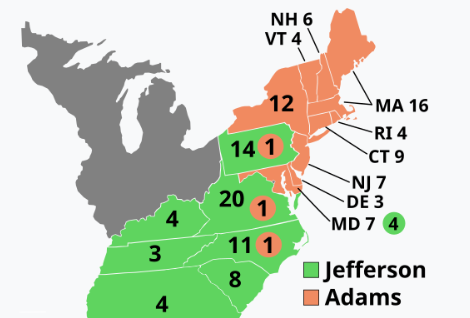
1796 Presidential Election results map
Why is it difficult for historians to compile reliable popular vote statistics for the 1796 election?
In 1796, voters did not directly vote for presidential candidates. Instead, they selected electors who would then vote for the president. Elector candidates did not always publicly declare their party affiliation or intended vote, and in some states, candidates from the same party ran against each other. Additionally, records from some states have not survived, making it difficult to calculate popular vote totals.
What issues arose in Massachusetts and Virginia regarding elector selection?
In Massachusetts, some popular elector candidates were not selected by the state legislature to serve as electors, despite their success in the public vote. In Virginia, the election records were incomplete, further contributing to the difficulty in determining voter intent.
How did foreign interference play a role in the 1796 election?
The French foreign minister attempted to influence the election in favor of Thomas Jefferson by supporting the Democratic-Republican Party and attacking the Federalists. Despite these efforts, John Adams won the election. George Washington’s Farewell Address, which warned against foreign interference in American politics, played a role in limiting the impact of this meddling.
What constitutional reforms were proposed in response to the 1796 election?
After the complexities and tensions of the 1796 election, some lawmakers proposed reforms to clarify the voting process. Representative William L. Smith of South Carolina proposed an amendment to require electors to specify which vote was for president and which for vice president. Although no immediate action was taken, the deadlock of the 1800 election would eventually lead to the ratification of the 12th Amendment in 1804, which implemented this change.





