Great Royal Wife in Ancient Egypt
by World History Edu · November 15, 2024
The role of the Great Royal Wife in Ancient Egypt was one of immense prestige and influence. Holding the esteemed title of “Great Royal Wife” or “Chief King’s Wife” (ḥmt nswt wrt), these women were not merely consorts but pivotal figures in the political, religious, and cultural spheres of Egyptian society. They often wielded significant power, acting as advisors, regents, high priestesses, and sometimes even ascending to the throne themselves.
In the article below, World History Edu explores notable Great Royal Wives in Ancient Egypt and their accomplishments, highlighting their contributions to the legacy of one of history’s most fascinating civilizations.
Ahmose-Nefertari

Ahmose-Nefertari – Great Royal Wife of Ahmose I
Ahmose-Nefertari was a queen of the early 18th Dynasty, the daughter of Pharaoh Seqenenre Tao and Queen Ahhotep I. She was both the sister and wife of Pharaoh Ahmose I, the founder of the 18th Dynasty who expelled the Hyksos invaders and reunified Egypt.
Ahmose-Nefertari was one of the first royal women to hold the title of “God’s Wife of Amun,” a position that signified her as the earthly consort of the god Amun. This role granted her immense religious authority, allowing her to influence temple policies and priesthood appointments.
As queen of the land of Egypt, she played a crucial role in the cultural renaissance that followed the Hyksos expulsion. Ahmose-Nefertari was instrumental in the rebuilding of temples and the promotion of arts and literature.
As the Great Royal Wife and later as Queen Mother, she was a key advisor to her husband and son, Amenhotep I. Her guidance was essential in establishing the foundations of the New Kingdom’s prosperity.
After her death, Ahmose-Nefertari was deified, a rare honor that reflects her significant impact. She was worshipped as a protective goddess, especially in the Theban region.
READ MORE: Major Achievements of Pharaoh Ahmose I
Hatshepsut

One of the few women to be crowned pharaoh of Egypt, Queen Hatshepsut was the daughter and only child of Thutmose I and his chief consort Ahmose
Hatshepsut was the daughter of Pharaoh Thutmose I and Queen Ahmose. She became the Great Royal Wife of her half-brother Thutmose II. After his death, she initially served as regent for her stepson Thutmose III but eventually declared herself pharaoh.
Hatshepsut is one of the few women to have ruled Egypt as pharaoh. She reigned for approximately 22 years, during which she adopted full pharaonic regalia and titles.
Her reign is noted for extensive building projects, including her mortuary temple at Deir el-Bahri, which is considered an architectural masterpiece.
Hatshepsut reestablished trade networks disrupted during the Hyksos occupation. Notably, she organized a famous expedition to the Land of Punt, bringing back wealth and exotic goods.
She expanded the Temple of Karnak and was a patron of the cult of Amun, reinforcing the god’s central place in Egyptian religion.
READ MORE: Major Accomplishments of Hatshepsut
Tiye
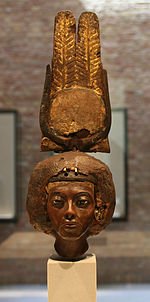
Queen Tiye, Great Royal Wife of Amenhotep III
Queen Tiye was the Great Royal Wife of Amenhotep III and the mother of Akhenaten. She was born to Yuya and Tjuyu, who were influential figures, though not of royal blood.
Tiye played a significant role in foreign affairs. Correspondence from other rulers addresses her directly, indicating her involvement in diplomatic relations.
She was a trusted advisor to Amenhotep III, and her influence extended into the reign of her son Akhenaten.
Tiye may have had a role in the early development of the Aten cult, which later became central during Akhenaten’s reign.
She was depicted in statues and reliefs on the same scale as the pharaoh, an unusual practice that underscores her prominence.
READ MORE: Major Accomplishments of Amenhotep the Third
Nefertiti
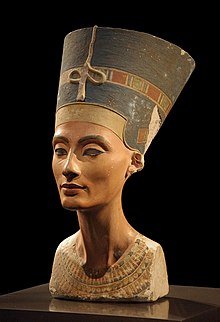
The bust of Nefertiti from the Ägyptisches Museum Berlin collection, presently in the Neues Museum
Nefertiti was the Great Royal Wife of Pharaoh Akhenaten. Little is known about her origins, but she may have been the daughter of Ay, a high-ranking official who later became pharaoh.
Nefertiti was a central figure in the Atenist revolution, which saw the elevation of the sun disk Aten as the sole deity. She participated in religious ceremonies and was depicted worshipping alongside Akhenaten.
The Amarna art style flourished during her time, characterized by realistic and intimate portrayals of the royal family.
Some scholars suggest that Nefertiti may have ruled as pharaoh after Akhenaten’s death under the name Neferneferuaten, though this remains a topic of debate.
The bust of Nefertiti, discovered in 1912, has become a symbol of ancient Egyptian beauty and power.
Nefertari Meritmut

Image: Tomb wall depicting Queen Nefertari, the great royal wife of Pharaoh Rameses II
Nefertari Meritmut was the Great Royal Wife of Ramesses II (also known as Ramses the Great), one of Egypt’s most powerful pharaohs. Her name means “Beautiful Companion, Beloved of Mut.”
Nefertari played a role in diplomatic affairs, particularly in the peace treaty between Egypt and the Hittites. She corresponded with the Hittite queen Puduhepa, fostering goodwill.
She was involved in religious activities and held titles such as “Mistress of Upper and Lower Egypt.”
Ramesses II built a magnificent tomb for her in the Valley of the Queens (QV66), renowned for its exquisite wall paintings.
At Abu Simbel, Nefertari is depicted alongside Ramesses II, and she has a temple dedicated to her, a rare honor for a queen.
Meretseger
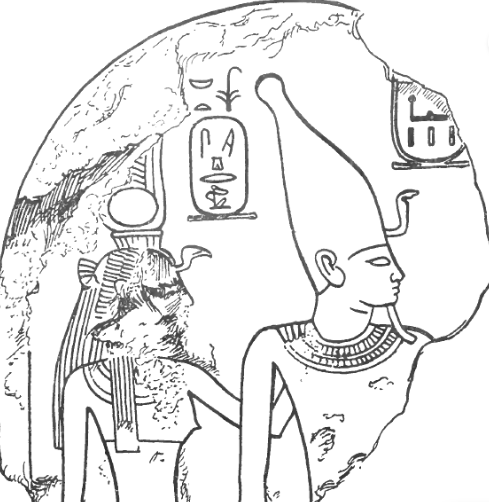
Meretseger with her husband Senusret III on a New Kingdom stela. British Museum, EA846
Meretseger, whose name translates to “She who Loves Silence,” is recognized as an ancient Egyptian queen consort linked to Pharaoh Senusret III of the Twelfth Dynasty. She is mentioned in sources from the New Kingdom period, where she is identified as his wife. These later records attribute significant firsts to her: she is considered potentially the earliest Egyptian queen to hold the title “Great Royal Wife,” which became the standard designation for the principal wives of pharaohs, and she is noted as the first queen consort whose name was enclosed within a cartouche—a privilege reserved for royalty.
Meretseger was the chief consort of King Senusret III.
Despite these claims, there are no contemporary records from Senusret III’s reign that mention Meretseger. The absence of Middle Kingdom evidence suggests that her association with the pharaoh might be a creation of New Kingdom historians, possibly reflecting later reinterpretations or mythologizing of earlier dynasties.
Meretseger is listed among three known wives of Senusret III, alongside Khenemetneferhedjet II and Neferthenut, with a possible fourth being Sithathoriunet. Her image and name appear on a New Kingdom stela, now housed in the British Museum (inventory number EA846), and on an inscription at Semna dating to the reign of Thutmose III. These artifacts reinforce her posthumous significance and the reverence later periods had for her, even if her historical existence during Senusret III’s time remains unconfirmed due to the lack of contemporary documentation.
Mutemwia

Queen Mutemwiya in relief at a Luxor temple
Mutemwia was the wife of Thutmose IV and the mother of Amenhotep III. She was not of royal birth, which makes her elevation significant.
Upon her son’s ascension, Mutemwia was granted the title of Great Royal Wife and may have acted as regent during his early reign.
She is associated with divine birth scenes, suggesting that Amenhotep III’s birth was of divine origin, reinforcing his legitimacy.
Mutemwia is depicted in the Luxor Temple’s birth colonnade, highlighting her importance in the royal lineage.
Ankhesenamun

Ankhesenpaaten, sister and wife to Tutankhamun. Image: Pharaoh Tutankhamun receives flowers from Ankhesenamun
Ankhesenamun was the daughter of Akhenaten and Nefertiti and became the Great Royal Wife of Tutankhamun. She may have also been married to her father and possibly her half-brother Smenkhkare.
Ankhesenamun’s marriage to Tutankhamun symbolized the restoration of traditional religious practices after the Amarna period.
After Tutankhamun’s death, she famously wrote to the Hittite king Suppiluliuma I, requesting one of his sons as a husband to avoid marrying a commoner, highlighting her agency in political matters.
She likely played a role in the return to the worship of Amun and other gods, reversing her father’s monotheistic reforms.
READ MORE: Most Revered Gods and Goddesses in Ancient Egypt
Iset (Isis)
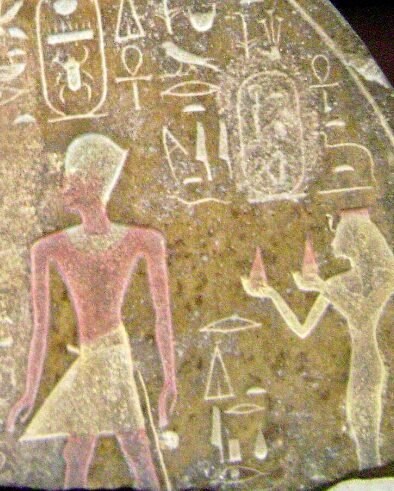
Pharaoh Tuthmosis III with his mother Isis behind him.
Iset was a secondary wife of Thutmose II and the mother of Thutmose III. She was elevated in status after her son became pharaoh.
Upon her son’s ascension, Iset was granted the title of Great Royal Wife, reflecting her newfound importance.
As the mother of one of Egypt’s greatest military pharaohs, she held a significant position in court and religious ceremonies.
Tiaa
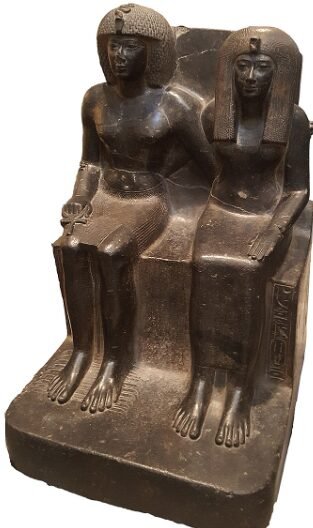
Joint statue of Queen Tiaa and her son Pharaoh Thutmose IV
Tiaa was a wife of Amenhotep II and the mother of Thutmose IV. She was not initially the Great Royal Wife but received the title after her son’s coronation.
Tiaa’s elevation to Great Royal Wife signifies the importance of the queen mother in legitimizing the new pharaoh’s rule.
She participated in royal rituals and was depicted in temple reliefs, emphasizing her role in the divine kingship.
Meritaten
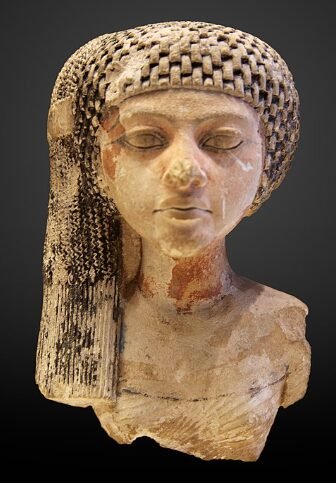
Bust of a daughter of Akhenaten and Nefertiti, perhaps the young Meritaten, in the Louvre, Paris
Meritaten was the eldest daughter of Akhenaten and Nefertiti. She may have been married to her father and possibly succeeded him as pharaoh under the name Neferneferuaten.
As a prominent figure during the Amarna period, Meritaten participated in the Aten cult and royal ceremonies.
Some theories suggest she ruled Egypt for a short period, highlighting the potential for royal women to assume supreme power.
Nubkhaes
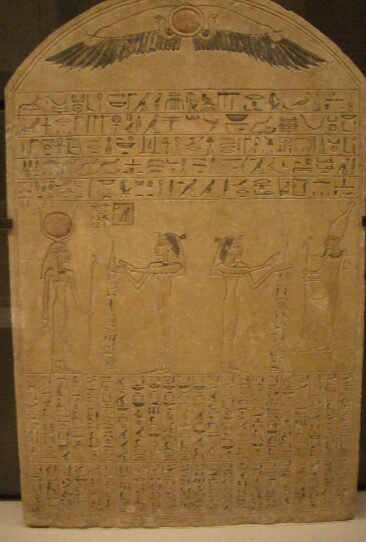
Stela of Queen Nubkhaes in the Louvre Museum
Nubkhaes is one of the earliest known holders of the title Great Royal Wife, dating back to the Second Intermediate Period.
Her association with the title indicates the early use and significance of the position, though specific accomplishments are less documented.
Mutnodjmet

Mutnedjmet, detail of the double statue of pharaoh Horemheb and queen Mutnedjmet, from Karnak, Museo Egizio, Turin, Italy
Mutnodjmet was the wife of Horemheb, the last pharaoh of the 18th Dynasty. She may have been Nefertiti’s sister or relative.
Mutnodjmet played a role in the transition from the 18th to the 19th Dynasty, bridging the gap between royal families.
Alongside Horemheb, she was involved in restoring traditional religious practices after the upheavals of the Amarna period.
Twosret
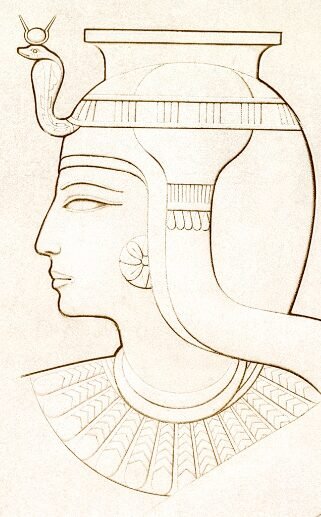
Drawing of a Portrait of Tausret from her tomb in Thebes by Émile Prisse d’Avennes (1878).
Twosret (Tausret) was the Great Royal Wife of Seti II and later ruled as pharaoh herself, the last ruler of the 19th Dynasty.
Twosret assumed the throne after the death of her stepson Siptah, ruling for approximately two years.
She continued building projects, including her mortuary temple and contributions to the Ramesseum.
Her reign faced internal strife, and her legacy was overshadowed by the rise of the 20th Dynasty under Setnakhte.
Khenemetneferhedjet I

Statue of Khenemetneferhedjet-Weret, Louvre Museum
Also known as Weret, she was the principal wife of Amenemhat II during the 12th Dynasty.
Khenemetneferhedjet I held significant sway in court affairs and was involved in diplomatic relations.
She held titles such as “United with the White Crown,” indicating her role in the ideological unification of Upper and Lower Egypt.
Ahhotep I

Coffin of Queen Ahhotep I
Ahhotep I was the wife of Seqenenre Tao and mother of Ahmose I and Kamose, key figures in the expulsion of the Hyksos.
She is credited with rallying troops and maintaining stability during turbulent times. An inscription praises her for “she who cares for Egypt.”
Ahhotep I may have acted as regent for her young son Ahmose I, guiding the kingdom through the final stages of the Hyksos wars.
She was awarded military honors, including golden flies, symbolizing her contributions to warfare.
Ahmose-Meritamon
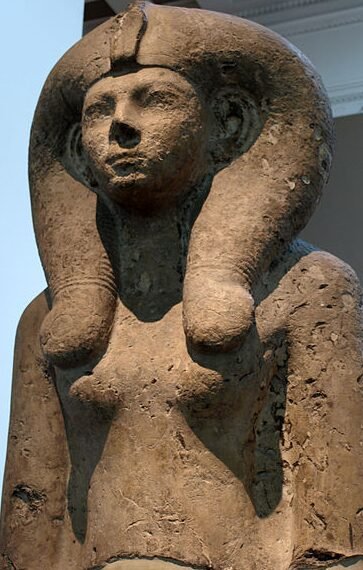
Fragmentary colossal bust of Ahmose-Meritamon, wearing a wig fashioned after a style associated with the goddess Hathor – British Museum
She was a daughter of Ahmose I and Ahmose-Nefertari and became the Great Royal Wife of Amenhotep I.
As a priestess, she participated in religious ceremonies and held the title of “God’s Wife.”
She supported arts and architecture, contributing to the cultural development of the early 18th Dynasty.
Sitamun
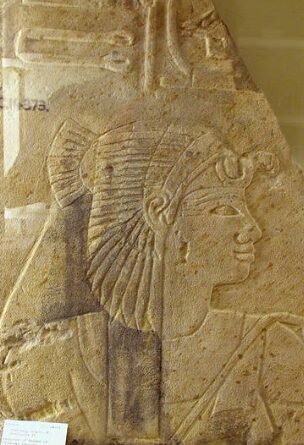
Queen Sitamun
Sitamun was the daughter of Amenhotep III and Queen Tiye. She was elevated to the status of Great Royal Wife during her father’s reign.
Sitamun’s elevation to Great Royal Wife while her mother was still alive and queen is unusual, indicating her high status.
She participated in religious festivals and may have had her own estates, reflecting significant autonomy.
Nebetnehat
Nebetnehat, whose name means “Lady of the sycamore tree”—an epithet linked to the goddess Hathor—was an ancient Egyptian queen consort during the mid-18th Dynasty.
She bore the prestigious title of Great Royal Wife, though the specific pharaoh she married remains unidentified. Her existence is known solely from a fragment of an alabaster canopic jar discovered in the Valley of the Queens, within a site referred to as the Tomb of the Princesses. This artifact suggests she was part of the royal family.
Given her high status and the era she lived in, scholars speculate she might have been closely related to Amenhotep III, possibly as his daughter or another female relative. The sycamore tree’s sacred association underscores her potential religious significance.
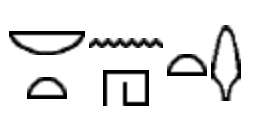
Nebetnehat was a lesser-known Great Royal Wife of Thutmose III. Her role contributed to the stability of Thutmose III’s long reign, though specific achievements are less documented. Image: Name of Nebetnehat in hieroglyphs
Merytre-Hatshepsut
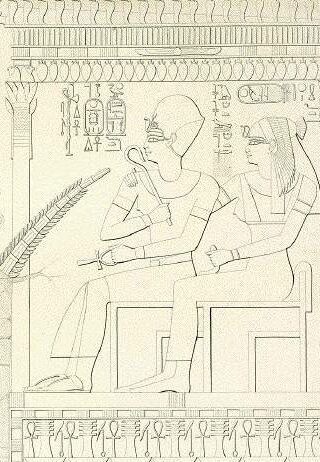
Merytre-Hatshepsut was another Great Royal Wife of Thutmose III and the mother of Amenhotep II. As the mother of the heir, she held significant influence in court and religious life. Image: Merytre-Hatshepsut and her son Amenhotep II
Merytre-Hatshepsut, also known as Hatshepsut-Meryet-Ra, was a prominent Great Royal Wife of Pharaoh Thutmose III during Egypt’s 18th Dynasty, ascending to this position after Queen Satiah’s death. She was of noble descent, potentially the daughter of the Adoratrix Huy. A statue of Huy in the British Museum (EA 1280) portrays her holding a grandchild and includes depictions of Merytre-Hatshepsut’s children along the sides, indicating her esteemed lineage.
As Thutmose III’s wife, Merytre-Hatshepsut bore several children, most notably Pharaoh Amenhotep II. Her other offspring included Prince Menkheperre and princesses Nebetiunet, Meritamen (two daughters possibly distinguished as Meritamen C and D), and Iset. She held numerous prestigious titles reflecting her high status and religious roles, such as Hereditary Princess, Great of Praises, King’s Mother, Lady of The Two Lands, Great King’s Wife, God’s Wife, and God’s Hand.
Merytre-Hatshepsut is depicted in temple reliefs, highlighting her status and contributions to religious practices.
Merytre-Hatshepsut is well-attested in various monuments and tombs. In the mortuary temple of Thutmose III at Medinet Habu, she is depicted standing behind the seated pharaoh, adorned in full queenly attire—including the vulture cap and a modius with double plumes—and holding a fly-whisk. In Thutmose III’s tomb (KV34), she appears on a pillar among three queens following the pharaoh, alongside Queen Satiah, Queen Nebtu, and Princess Nefertari. Another depiction in the tomb of Ra (TT72) at Thebes shows her seated near her son, Amenhotep II.
Her intended burial site was tomb KV42 in the Valley of the Kings, as confirmed by foundation deposits discovered in 1921. However, evidence suggests she may have been interred in KV35, the tomb of Amenhotep II, while KV42 was later repurposed for the Theban Mayor Sennefer and his wife, Senetnay. The absence of her burial in KV42 might indicate a decline in her posthumous honor during her grandson’s reign, possibly hinting at a fall from favor within the royal lineage.
Conclusion
The Great Royal Wives of Ancient Egypt were more than mere consorts; they were influential figures who shaped the political, religious, and cultural landscapes of their time. From Ahmose-Nefertari’s religious and political acumen to Hatshepsut’s unprecedented reign as pharaoh, these women navigated complex power structures to leave lasting legacies. Their accomplishments underscore the importance of royal women in Ancient Egypt, reflecting a society where female leadership, though not the norm, was both possible and impactful.
These notable Great Royal Wives demonstrate the diverse roles women played in governance, diplomacy, religion, and cultural patronage. Their stories offer invaluable insights into the dynamics of royal courts and the potential for women to wield significant authority in one of history’s most remarkable civilizations.
Frequently Asked Questions
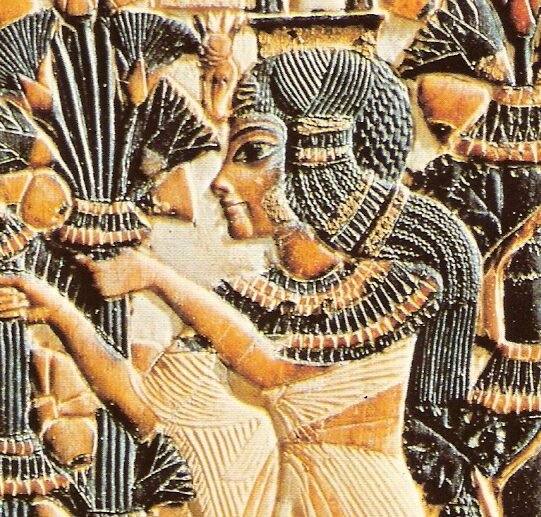
In ancient Egypt, the “Great Royal Wife” or “Chief King’s Wife” (ḥmt nswt wrt) was the title given to the pharaoh’s principal wife. Image: Queen Ankhesenamun
What was the typical marital practice among the general populace in ancient Egypt, and how did it differ for pharaohs?
Among the general populace in ancient Egypt, monogamy was typical, meaning individuals had only one spouse. In contrast, pharaohs often had multiple wives and concubines. This practice allowed them to form diplomatic marriages with daughters of allied nations, strengthening political ties.
What was the title given to the principal wife of the pharaoh, and what was its significance?
The principal wife of the pharaoh held the esteemed title of “Great Royal Wife” or “Chief King’s Wife” (ḥmt nswt wrt). This title signified her high status in the royal hierarchy and played a crucial role in diplomatic relations, as her marriage could strengthen alliances with other nations.
What is the “Heiress Theory” in the context of Egyptian royal succession, and what has modern research concluded about it?
The “Heiress Theory” posited that royal succession in Egypt passed through the female line, meaning that marrying a royal woman legitimized a man’s claim to the throne. Modern research, particularly studies from the 1980s focusing on the Eighteenth Dynasty, has largely debunked this theory. Evidence now suggests that the throne typically passed to the eldest living son of the pharaoh, regardless of his mother’s rank.
Were the mothers of heirs to the Egyptian throne always the Great Royal Wife? Provide examples.
No, the mothers of heirs were not always the Great Royal Wife. However, upon their sons’ ascension to the throne, these mothers could be granted the title along with other honors. Notable examples include Iset, mother of Thutmose III; Tiaa, mother of Thutmose IV; and Mutemwia, mother of Amenhotep III.
Who was Meretseger, and why is she significant in the history of the Great Royal Wife title?
Meretseger was the chief wife of Senusret III and is possibly the earliest queen whose name appears with the title of Great Royal Wife. She is significant because she was also the first consort known to enclose her name within a cartouche, a privilege reserved for royalty. However, since her attestations come from the New Kingdom period, it’s possible that the title was retroactively applied, making it an anachronism.
What notable roles did Hatshepsut hold before and after becoming pharaoh?
How did Hatshepsut involve her daughter Neferure in religious duties, and what is speculated about Neferure’s marital status?
How did other African kingdoms like Kush emulate Egyptian practices regarding royal women?
Kingdoms like Kush mirrored Egyptian practices by structuring their royal households similarly. They emphasized the political and religious significance of royal women, who often played crucial roles in governance, diplomacy, and succession processes. This reflects a common cultural thread across major African states of the period.
What was the significance of enclosing a queen’s name within a cartouche, and who was the first consort known to do this?
Enclosing a queen’s name within a cartouche was a privilege reserved for royalty, signifying their importance and divine status. Meretseger, chief wife of Senusret III, was the first consort known to enclose her name within a cartouche.
Why might the title of Great Royal Wife associated with Meretseger be considered an anachronism?
Since Meretseger’s attestations come from the New Kingdom period, the title of Great Royal Wife might have been retroactively applied to her. This means that while she lived earlier, the title may not have been used during her lifetime, making it an anachronism.
READ MORE: Major Events in the History of Ancient Egypt





