Most Significant Landmarks in Mexico City
Mexico City, one of the largest and most culturally rich capitals in the world, is home to numerous landmarks that reflect its deep historical roots, artistic achievements, and modern vibrancy. From pre-Hispanic ruins to colonial-era structures and contemporary icons, these sites encapsulate the city’s diverse identity.
Below are some of the most significant landmarks that define Mexico City’s landscape and heritage.
Zócalo (Plaza de la Constitución)
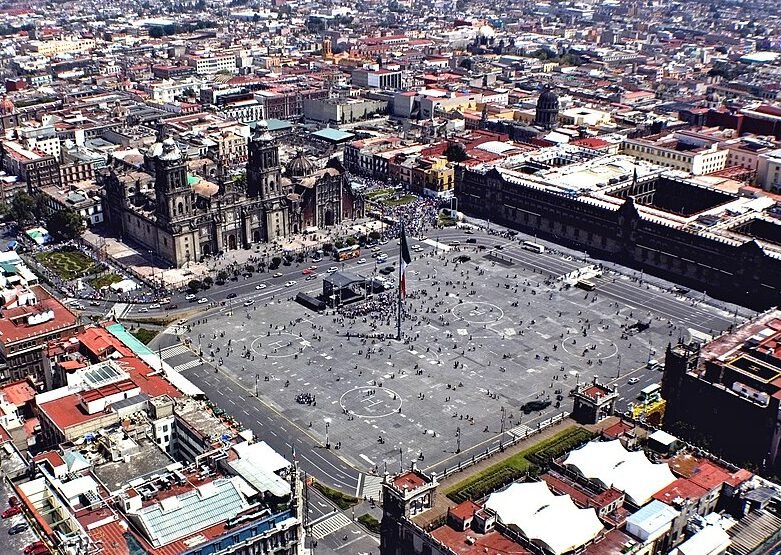
Aerial view of Zócalo.
At the heart of Mexico City lies the Zócalo, one of the largest public squares in the world. Officially known as Plaza de la Constitución, this expansive space has been the political, cultural, and social hub of Mexico since the time of the Aztec Empire, when it was known as Tenochtitlan’s main plaza. The Zócalo is surrounded by historic buildings, including the National Palace, the Mexico City Metropolitan Cathedral, and the Supreme Court of Justice.
Today, Zócalo remains a symbol of national identity and resilience.
Throughout history, the Zócalo has been the stage for political protests, celebrations, and cultural events, reflecting Mexico’s dynamic history. Every year, on September 15, thousands gather here to witness the Grito de Dolores, the reenactment of the battle cry that launched Mexico’s war for independence.
Mexico’s Declaration of Independence from the Spanish Empire
Mexico City Metropolitan Cathedral
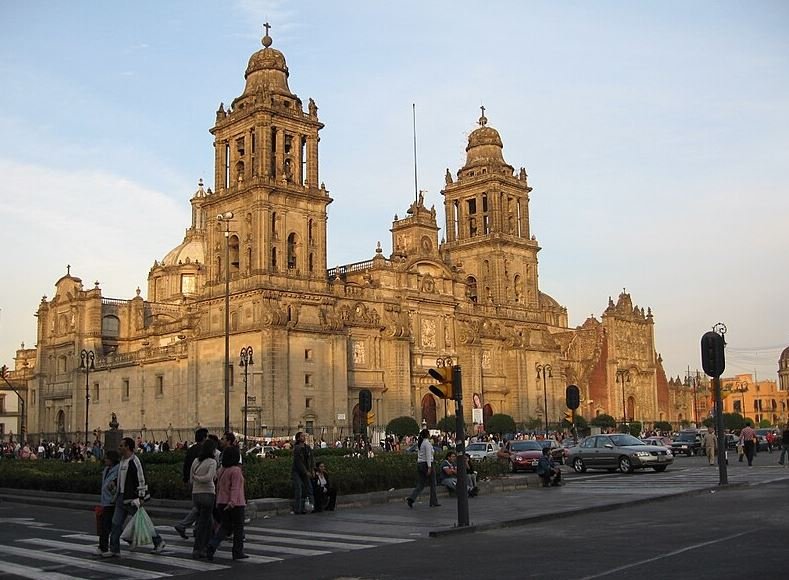
A 2006 view of Mexico City Metropolitan Cathedral.
Adjacent to the Zócalo, the Mexico City Metropolitan Cathedral is the largest and oldest Roman Catholic cathedral in Latin America. Constructed between 1573 and 1813 on top of the ruins of the Aztec Templo Mayor, this architectural masterpiece blends Gothic, Baroque, and Neoclassical styles.
The cathedral houses elaborate altars, intricate wood carvings, and priceless religious artworks. Notable features include the Altar of the Kings, the crypt of archbishops, and its massive twin bell towers, which dominate the city’s skyline. The cathedral is also known for its leaning structure, a result of Mexico City’s sinking ground. Efforts to stabilize the building continue, preserving this important religious and historical monument.
READ MORE: Most Famous Baroque Painters and their Masterpieces
Templo Mayor
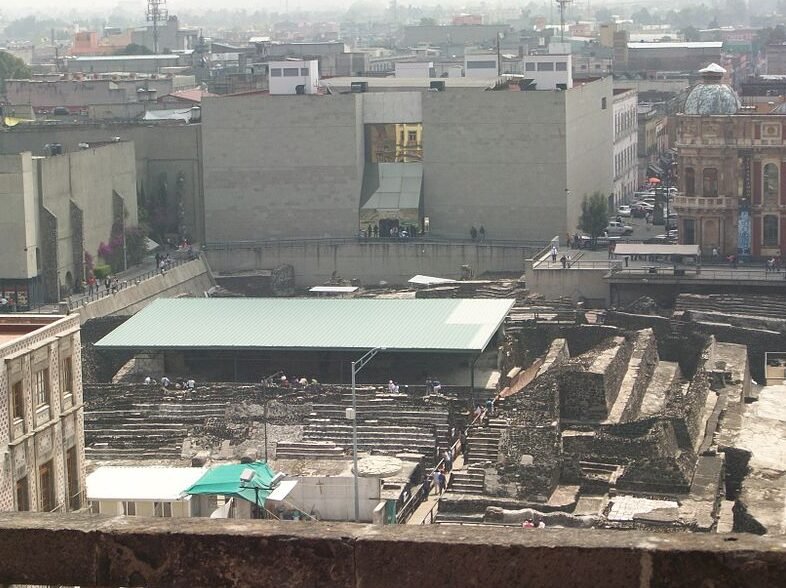
Aerial view of the Templo Mayor
Beneath the streets of Mexico City’s historic center lie the remains of the Templo Mayor, the main religious and political center of the Aztec capital, Tenochtitlan. Discovered in 1978, this ancient temple complex was dedicated to Huitzilopochtli (god of war and the sun) and Tlaloc (god of rain and fertility).
The archaeological site features excavated ruins, ceremonial altars, and an on-site museum displaying thousands of artifacts, including the famous Coyolxauhqui Stone, which depicts the moon goddess in a fragmented state. The Templo Mayor is a crucial site for understanding Mexico’s pre-Columbian past and the dramatic transformations brought by Spanish colonization.
READ ALSO: Religious Practices and Major Deities of Pre-Columbian Civilizations
Palacio de Bellas Artes
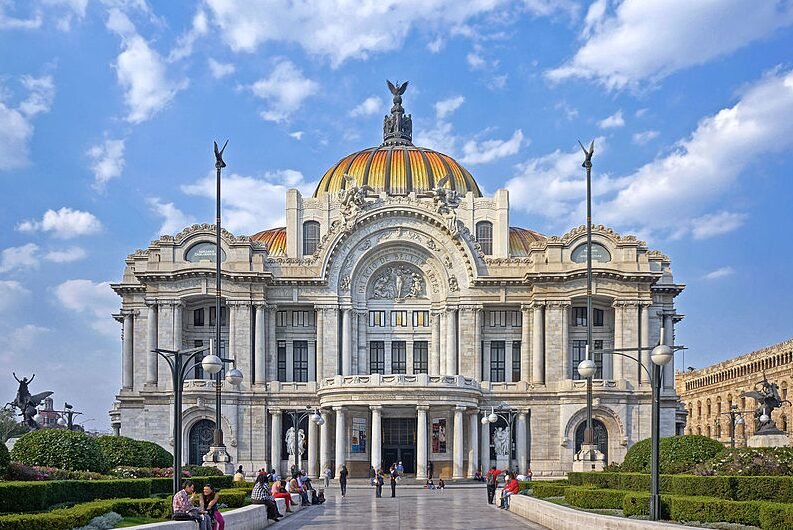
Palacio de Bellas Artes during the early 2010s
A crown jewel of Mexican arts and culture, the Palacio de Bellas Artes (Palace of Fine Arts) is an architectural masterpiece blending Art Nouveau and Art Deco styles. Completed in 1934, the palace hosts ballets, operas, theater productions, and art exhibitions, making it Mexico’s premier cultural venue.
Inside, visitors can admire murals by Diego Rivera, Rufino Tamayo, and José Clemente Orozco, which depict Mexico’s revolutionary history and social struggles. The building’s stained-glass curtain, depicting the Valley of Mexico, is one of its most unique features. The Palacio de Bellas Artes stands as a testament to Mexico’s artistic heritage and cultural vibrancy.
Chapultepec Castle
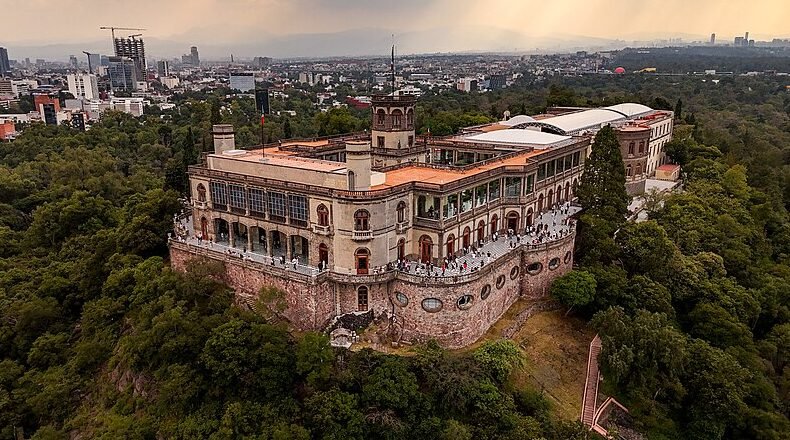
Chapultepec Castle
Perched atop Chapultepec Hill, this historic castle is the only royal castle in North America that once housed Emperor Maximilian I and later served as the residence of Mexican presidents. Today, it is home to the National Museum of History, displaying artifacts from pre-Hispanic times to the Mexican Revolution.
Built in the late 18th century, the castle features elegant European-style gardens, opulent interiors, and stunning views of Mexico City. It played a pivotal role during the Battle of Chapultepec in 1847, where young Mexican cadets, known as Los Niños Héroes, defended it against American forces. Today, it is a must-visit landmark that embodies Mexico’s royal, military, and revolutionary past.
Paseo de la Reforma and El Ángel de la Independencia
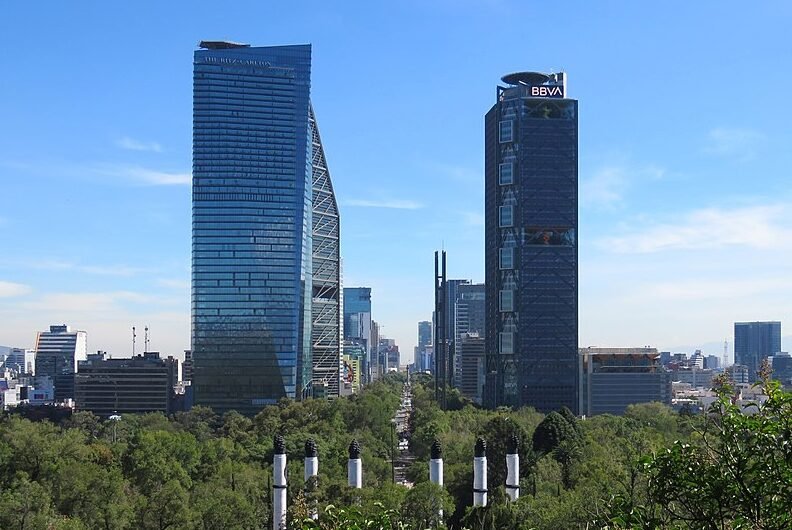
A view of the Paseo de la Reforma from the Chapultepec Castle.
One of Mexico City’s most iconic avenues, Paseo de la Reforma, was designed during the reign of Emperor Maximilian I to connect Chapultepec Castle with the city center. Today, it is lined with modern skyscrapers, historical monuments, and cultural institutions.
The most famous landmark along this boulevard is El Ángel de la Independencia, a golden-winged victory statue atop a towering column. Unveiled in 1910 to commemorate Mexico’s centennial of independence, the Ángel has since become a symbol of national pride. It is also a traditional gathering spot for public celebrations, including sports victories and political demonstrations.
Basilica of Our Lady of Guadalupe
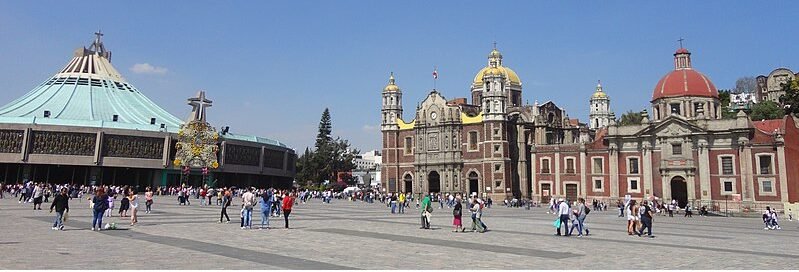
Basilica of Our Lady of Guadalupe in 2019
One of the most visited Catholic pilgrimage sites in the world, the Basilica of Our Lady of Guadalupe is dedicated to Mexico’s patron saint, the Virgin of Guadalupe. According to tradition, the Virgin appeared to Juan Diego, an Indigenous man, in 1531, leaving her image miraculously imprinted on his tilma (cloak).**
The site houses two basilicas—the Old Basilica (built in the 1700s) and the New Basilica (completed in 1976), designed to accommodate millions of pilgrims each year. The sacred tilma with the Virgin’s image is displayed inside, attracting devotees from around the world. The basilica is a powerful symbol of faith, Indigenous heritage, and Mexican identity.
Monumento a la Revolución
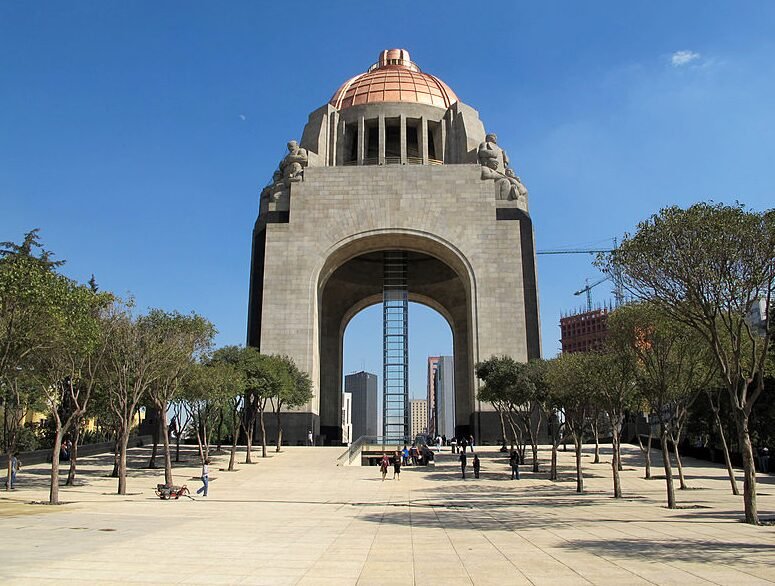
Monumento a la Revolución during the early 2010s.
The Monumento a la Revolución is a towering structure that honors the Mexican Revolution (1910–1920). Originally intended as a legislative palace, it was repurposed into a revolutionary monument after the fall of President Porfirio Díaz.
Beneath the monument lies a mausoleum housing revolutionary figures, including Francisco “Pancho” Villa and Venustiano Carranza. The structure features an elevated observation deck, offering panoramic views of the city. Surrounding the monument is Plaza de la República, a space for cultural events and public gatherings, making it an enduring symbol of Mexico’s fight for democracy.
Coyoacán and Casa Azul (Frida Kahlo Museum)
The Coyoacán district is a historic and artistic neighborhood known for its cobblestone streets, colonial-era homes, and vibrant markets. It was once home to Frida Kahlo and Diego Rivera, two of Mexico’s most celebrated artists.
The Casa Azul (Blue House), now the Frida Kahlo Museum, offers a personal look into Kahlo’s life, displaying her paintings, personal belongings, and traditional Mexican artifacts. The museum is a pilgrimage site for art lovers, showcasing Kahlo’s deep connection to Mexican identity and culture. Coyoacán also features landmarks such as Plaza Hidalgo, the Church of San Juan Bautista, and the León Trotsky Museum, adding to its historical significance.
Torre Latinoamericana
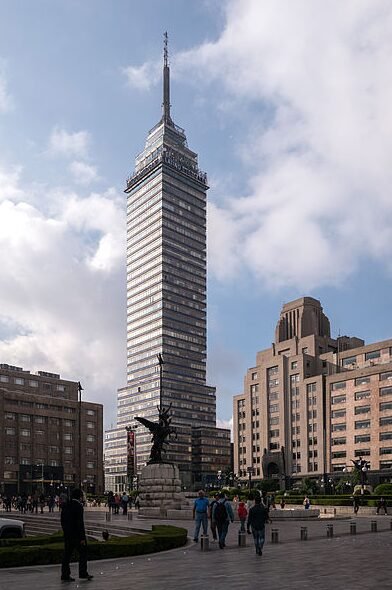
A 2015 photo of the Torre Latinoamericana
Standing tall in Mexico City’s skyline, the Torre Latinoamericana is one of the most recognizable skyscrapers in Latin America. Completed in 1956, it was the tallest building in Mexico at the time and remains an engineering marvel due to its earthquake-resistant design.
The observation deck on the 44th floor offers stunning 360-degree views of the city, making it a favorite spot for tourists. The tower symbolizes Mexico’s modernization and resilience, having withstood numerous earthquakes, including the devastating 1985 quake. Today, it continues to serve as an important business and cultural landmark in Mexico City’s historic center.
What is the difference between Cinco de Mayo and Mexico’s Independence Day?
Frequently Asked Questions
What is Alameda Central?
Alameda Central is Mexico City’s oldest public park, established in 1592, known for its fountains, sculptures, and historical significance.
What does the Antimonumenta represent?
The Antimonumenta is a protest memorial dedicated to victims of femicide and gender violence, symbolizing ongoing demands for justice in Mexico.
What is the significance of Monumento a la Revolución?
This monument honors the Mexican Revolution (1910–1920) and serves as a mausoleum for revolutionary figures, featuring an observation deck with panoramic city views.
Where is the Bench of Fidel Castro and Che Guevara?
Located in Parque Tabacalera, this bench features statues of Fidel Castro and Che Guevara, commemorating their time in Mexico before the Cuban Revolution.
What is the importance of Paseo de la Reforma?
Paseo de la Reforma is Mexico City’s main avenue, home to landmarks like El Ángel de la Independencia, major skyscrapers, and cultural monuments.
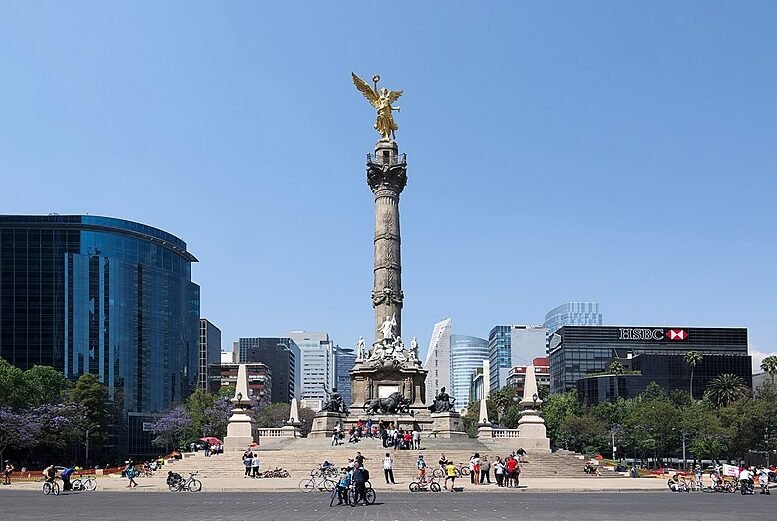
A 2017 photo of the El Ángel de la Independencia.
What can be found at Museo Universitario del Chopo?
This museum showcases contemporary art and cultural exhibitions, housed in a neo-Gothic iron structure brought from Germany in the early 20th century.
Why is the Monument to Pope John Paul II significant?
It honors Pope John Paul II’s visits to Mexico, reflecting his deep cultural and religious impact on the country’s Catholic population.
What is Tianguis Cultural del Chopo?
A weekly alternative market, known for its punk, rock, and goth subcultures, where visitors can find music, clothing, and collectibles.





