Arses of Persia
Arses, also known as Artaxerxes IV, ruled as the twelfth Achaemenid King of Kings from 338 to 336 BC. His brief and tumultuous reign marked the decline of the Persian Empire following its resurgence under his father, Artaxerxes III. Ascending to the throne through the machinations of the eunuch Bagoas, Arses’ reign ended with his assassination, symbolizing the instability that engulfed the empire during this period. Below World History Edu presents a detailed look at his life, reign, and legacy.
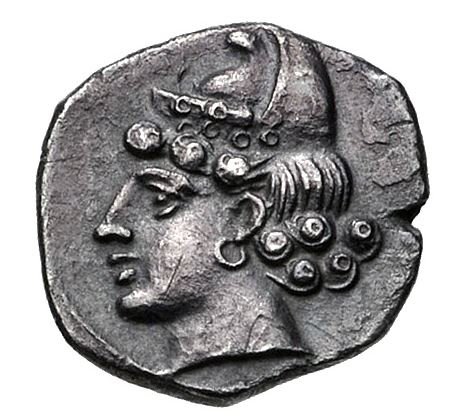
A probable portrait of Arses, shown wearing the distinctive Egyptian Pharaonic crown.
“male” or “manly”
Arses is the name by which this ruler is most commonly identified in Greek sources, and it is believed to be his personal name. Upon ascending the throne, however, he adopted the royal regnal name Artaxerxes IV, following the tradition of his predecessors.
The name “Arses” originates from the Old Persian R̥šā, which is linguistically related to the Avestan Aršan- and Greek arsēn, meaning “male” or “manly.” This connection underscores its significance as a noble and masculine name in the context of ancient Persian royalty. Historical records, including the Xanthus trilingue and archaeological findings like potsherds from Samaria, confirm his regnal identity as Artaxerxes IV.
Early Life and Family
Arses was the youngest son of Artaxerxes III and Queen Atossa. He had several brothers, though only one, Bisthanes, is specifically mentioned in historical accounts. Artaxerxes III had strengthened the Persian Empire significantly, restoring order and quelling rebellions across his vast dominions.
However, the empire’s resurgence was cut short when Artaxerxes III was poisoned by Bagoas, a eunuch and the powerful chiliarch of the court. Following this assassination, most of Artaxerxes III’s sons were also killed, leaving Arses as one of the few surviving male heirs.
Rulers of the Achaemenid Empire: From Cyrus the Great to Artaxerxes V
Rise to Power
Bagoas placed the youthful Arses on the throne, aiming to manipulate him as a puppet ruler. The eunuch had already demonstrated his influence by orchestrating the deaths of the preceding monarch and his family. Upon ascending to power, Arses likely adopted the name Artaxerxes IV as a symbol of continuity with his father and grandfather.
Greek threats that Arses had to deal with
During Arses’ reign, the Achaemenid Empire faced external pressures, particularly from the Greek league under the leadership of Macedonian King Philip II. The Macedonian kingdom, emboldened by Persia’s internal turmoil, demanded reparations from Persia for its involvement in assisting Perinthus during Artaxerxes III’s rule. When Arses refused, Philip II launched a campaign against Persia, sending 10,000 Macedonian troops into Asia Minor in 336 BC.

Macedonian forces, initially led by Philip II and later by his son Alexander, capitalized on the political disarray within Persia. By portraying Darius III as a usurper and emphasizing the supposed legitimacy of their campaigns, the Macedonians effectively undermined Persian resistance and justified their expansion into Asia. Image: Bust of Philip II.
Struggles with Bagoas
Arses’ short reign was characterized by his struggle to free himself from Bagoas’ dominance. Attempting to eliminate the eunuch, Arses sought to poison him. However, his efforts failed, and Bagoas retaliated by poisoning Arses and his entire family. The throne was then passed to Darius III, Arses’ cousin, whom Bagoas believed he could also control.

Dynastic Instability and Propaganda
The death of Arses and the rise of Darius III marked a turning point in the history of the Achaemenid Empire. Macedonian propaganda, crafted to justify Alexander the Great‘s later conquests, portrayed Arses as the last legitimate Achaemenid ruler. These narratives often implicated Darius III in Arses’ assassination, framing him as a usurper and tarnishing his reputation.
Coinage and Representation
Unlike many Achaemenid rulers, Arses does not have a distinct series of dynastic coinage attributed to him. However, numismatic evidence suggests that he may have been depicted as a young ruler on coins minted by Mazaios, the satrap of Cilicia. These coins feature a youthful figure wearing the Pharaonic crown on the reverse, while the obverse depicts a seated figure, believed to represent Artaxerxes III. The iconography reflects the continuity of Achaemenid royal imagery and highlights the influence of Persian traditions in satrapal coinage.
Legacy and Historical Impact
Arses’ reign lasted only two years, but its significance lies in the larger context of the empire’s decline. The Achaemenid Empire had reached its zenith under Artaxerxes III, but the sudden death of this capable ruler left a vacuum that Arses, inexperienced and politically constrained, could not fill. The instability following his assassination further weakened Persia, leaving it vulnerable to external threats like the Macedonian campaigns.

Frequently Asked Questions about Arses of Persia
What was Arses’ real name, and what name did he assume as king?
Arses was his real name, derived from Old Persian R̥šā. As king, he assumed the regnal name Artaxerxes IV.
Who placed Arses on the throne, and why?
Bagoas, a powerful eunuch, placed Arses on the throne in 338 BC to manipulate him for political control.
What led to the weakening of the Achaemenid Empire during Arses’ reign?
The assassination of Artaxerxes III, internal instability, and the rise of Greek aggression under Philip II of Macedon weakened the empire.

A rock relief depicting Artaxerxes III at Persepolis.
How did Arses attempt to resist Bagoas’ control?
Arses tried to poison Bagoas but failed, leading to his own poisoning by Bagoas in 336 BC.
What role did Philip II of Macedon play in Persia’s troubles?
Philip II demanded compensation for aiding Perinthus, and upon refusal, sent 10,000 Macedonian soldiers into Asia, exploiting Persia’s instability.
How was Arses related to Darius III, and how did his reign end?
Arses was a cousin of Darius III. His reign ended with his and his family’s assassination by Bagoas, who then placed Darius III on the throne.

Darius III, the last Achaemenid King of Kings of Persia
What propaganda surrounded the succession after Arses?
Macedonian propaganda portrayed Darius III as complicit in Arses’ murder, framing Arses as the last legitimate Achaemenid king.
Is there any coinage directly attributed to Artaxerxes IV?
No dynastic coinage exists for Artaxerxes IV, but he may be depicted as a young ruler on coins of Mazaios, the satrap of Cilicia.





