Author: World History Edu
The Inca Road System, also known as the Qhapaq Ñan, is one of the most impressive and extensive transportation networks in the history of pre-Columbian civilizations. Spanning over 23,612 miles (38,000...
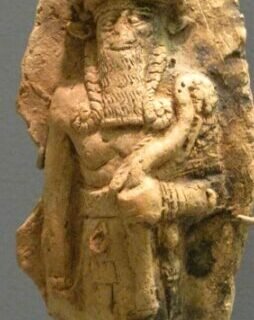
Nergal stands as one of the most formidable deities in the ancient Mesopotamian pantheon. Revered for his association with war, death, and disease, Nergal’s influence permeated various aspects of Mesopotamian...
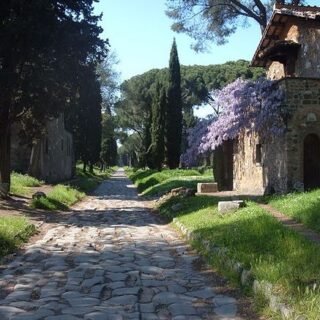
Roman roads were an integral part of the Roman Empire’s infrastructure, enabling military expansion, facilitating trade, and enhancing communication across vast territories. These roads were marvels of engineering and a...
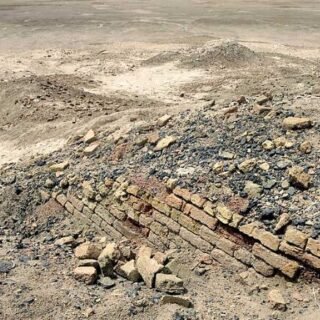
Eridu stands as one of the earliest known cities in southern Mesopotamia, embodying significant historical, cultural, and architectural milestones. Situated in present-day Iraq, Eridu’s legacy offers profound insights into the...
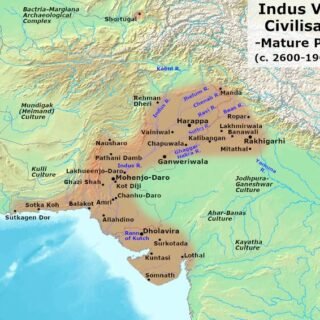
The Harappan Civilization, also known as the Indus Valley Civilization (IVC), was one of the world’s earliest urban cultures, flourishing around 2600–1900 BC. It extended across present-day Pakistan, northwest India,...
Diodorus Siculus, a Greek historian from the 1st century BC, wrote an expansive history called the Bibliotheca Historica. Within this work, he provided an account of Semiramis, a semi-legendary queen...
Ur, one of ancient Mesopotamia’s most renowned city-states, played a pivotal role in the development of early urban civilization. Situated on the fertile plains between the Euphrates and Tigris rivers,...
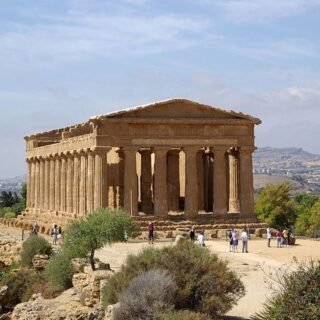
Sicilian temples, as part of the broader tradition of Greek architecture, represent some of the most spectacular monuments of the ancient world. These temples, located primarily in the ancient Greek...
Pharaoh Djet, also known as Hor Djet (“Horus Cobra” or “Horus Who Strikes”), ruled during Egypt’s First Dynasty in the Early Dynastic Period, around 2980 BC. His name reflects a...
The Classic Maya Collapse is a term used to describe the decline of the Maya civilization during the Terminal Classic period (roughly 800–1000 CE). This event, characterized by the abandonment...
The Romantic movement, flourishing in Europe during the late 18th and early 19th centuries, marked a significant departure from the rationalism and order of the Enlightenment. In France, Romanticism found...
The Battle of Philippi, fought in 42 BC, was a significant military engagement in Roman history. This two-part conflict marked the culmination of the Liberators’ War, pitting the forces of...
Ancient Rome was renowned for its architectural grandeur and sophisticated urban planning, with forums serving as the heart of public life. These forums were multifunctional spaces that combined marketplaces, political...
Zenobia’s rebellion, chronicled in the Historia Augusta (a late Roman collection of imperial biographies), is an extraordinary tale of ambition, strategy, and defiance. This rebellion unfolded during the 3rd century CE,...
Often hailed as the “Father of History,” Greek historian and geographer Herodotus has inspired countless works of art throughout history. His pioneering narrative style, blending history and storytelling, serves as...