The Law in Ancient Egypt
Ancient Egyptian society was built upon a foundation of stability, order, and harmony, which the Egyptians encapsulated in the concept of Maat. This principle governed not only the cosmic order but also the human and societal realms, influencing every aspect of Egyptian life, from religion and governance to law and justice. Maat was personified as a goddess and represented truth, justice, and harmony. Her principles guided the actions of the pharaoh, who was the intermediary between the gods and the people. To maintain Maat, Egyptians developed a sophisticated system of laws and judicial practices aimed at ensuring balance in society.

Ma’at depicted with an ostrich feather in her hair
READ ALSO: Egyptian Mythology: How the universe was created
Maat: The Foundation of Balance and Law
In ancient Egypt, Maat was not merely an abstract idea but a living embodiment of universal order and balance. It was believed that the universe was created in a state of Maat, where chaos (isfet) was subdued. The Egyptians feared that any deviation from Maat could result in a return to chaos, disrupting the stability of their world. Consequently, adherence to Maat was considered essential not only for the survival of society but also for the continuation of the cosmos.
Maat was symbolized as a goddess wearing an ostrich feather on her head, which became a symbol of truth and justice. Pharaohs, who were seen as divine rulers, were tasked with upholding Maat by enacting laws and ensuring that justice prevailed. They were considered the earthly representatives of the gods, and their legitimacy rested on their ability to preserve Maat.
Pharaohs such as Amenhotep III and Ramesses II often emphasized their role as guardians of Maat, underscoring that maintaining order was a sacred duty. Inscriptions on temple walls frequently praised pharaohs for “bringing Maat to the land,” a testament to the centrality of this principle in Egyptian ideology.
The Role of the Pharaoh in Law and Justice
The pharaoh was the ultimate source of law and authority in ancient Egypt. His decrees were considered divine commands that reflected the will of the gods. As the living embodiment of Horus, the son of Osiris, the pharaoh had a sacred duty to uphold Maat. Pharaohs issued laws, appointed judges, and oversaw legal matters to ensure justice was served.
The king was not just a distant figurehead; he was actively involved in the administration of justice. Royal decrees were issued to address specific legal matters, such as land disputes, criminal offenses, and social issues. The Vizier, the highest official under the pharaoh, was entrusted with the responsibility of managing the legal system. Viziers acted as chief judges and oversaw the work of local courts, ensuring that justice was dispensed according to Maat.
Pharaohs also acted as arbitrators in cases of great importance. The judicial pronouncements of the pharaoh carried absolute authority and were final. Inscriptions from the New Kingdom depict the king presiding over court proceedings, where he listened to petitions and delivered verdicts that reinforced the principles of fairness and equity.

Colossal Statue of Ramses II in the first peristyle court at Luxor
Legal Institutions and Administration
The Egyptian legal system was hierarchical and structured to ensure that justice was accessible to all. The legal apparatus consisted of several layers, with the vizier at the top, followed by regional and local officials who managed courts in their respective jurisdictions.
The Vizier’s Court
The vizier was the highest judicial authority after the pharaoh and had a wide range of responsibilities. The Tomb of Rekhmire, a vizier during the reign of Thutmose III, provides an insightful account of the vizier’s duties. Rekhmire’s inscriptions emphasize that a vizier had to act impartially, ensuring that justice was served without bias.
The vizier presided over the High Court, where he heard cases involving serious offenses such as murder, corruption, and treason. He also handled appeals and acted as the final arbitrator in disputes that could not be resolved at lower levels. Records from the New Kingdom suggest that the vizier’s court was highly organized, with clerks and scribes recording proceedings to maintain transparency.
Local Courts and Nomarchs
Below the vizier’s court were local courts, often overseen by regional governors known as nomarchs. These courts dealt with less serious cases, including property disputes, inheritance issues, and minor offenses. Nomarchs had a vested interest in maintaining order within their territories and ensuring that Maat was upheld.
Local officials, including scribes and priests, were involved in judicial processes. They recorded legal documents, witnessed transactions, and maintained archives to ensure that legal records were preserved. The presence of priests in the judicial system highlighted the sacred nature of law in ancient Egypt, as the maintenance of Maat was seen as both a legal and spiritual obligation.
READ ALSO: Priests vs. Pharaohs in Ancient Egypt
Kenbet: Village Councils and Legal Assemblies
At the village level, legal matters were handled by councils known as kenbet. These assemblies were composed of local elders, priests, and other respected members of the community who gathered to hear cases and dispense justice. The kenbet operated as a form of participatory justice, where decisions were based on consensus and community norms.
Kenbet councils handled a wide range of issues, including theft, domestic disputes, and boundary disagreements. Their decisions were binding, although more serious cases could be referred to higher authorities if necessary. The emphasis on local adjudication ensured that justice was swift and aligned with the needs of the community.
Legal Procedures and Principles
Egyptian legal procedures were guided by the principles of Maat, emphasizing fairness, truth, and impartiality. Legal processes were designed to prevent corruption, ensure transparency, and provide recourse to those seeking justice.
Evidence and Testimony
Evidence played a crucial role in Egyptian legal proceedings. Testimonies from witnesses were considered the most reliable form of evidence, and perjury was severely punished, as it was seen as an affront to Maat. In cases where witnesses were unavailable, physical evidence, such as written contracts, was used to determine the outcome.
Judges were expected to listen carefully to both parties and assess the evidence impartially. They often questioned witnesses rigorously to ensure that their testimonies were truthful. Judges were trained to recognize inconsistencies and were required to weigh the evidence carefully before reaching a verdict.
Oaths and Divine Judgments
Oaths held significant weight in Egyptian legal practice. Litigants and witnesses were often required to swear oaths invoking the gods to affirm the truthfulness of their statements. Breaking an oath was considered a grievous offense that invited divine punishment.
In cases where evidence was inconclusive, divine intervention was sometimes sought through ordeals. These ordeals involved subjecting the accused to tests believed to reveal their guilt or innocence. For example, a common ordeal involved throwing an accused person into the Nile. If they survived, it was believed that the gods had vindicated them. Such practices, although rare, underscored the belief that Maat would ultimately prevail.
Punishments and Penalties
Punishments in ancient Egypt were designed not only to deter crime but also to restore balance to society. The severity of punishments varied depending on the nature of the offense, with harsher penalties reserved for crimes that threatened Maat.
For minor offenses, fines and restitution were common forms of punishment. Property disputes, theft, and other non-violent crimes often resulted in the guilty party compensating the victim. However, more serious offenses, such as murder, adultery, and treason, were met with severe penalties, including exile, mutilation, and even execution.
Pharaohs had the authority to pardon offenders and commute sentences, reflecting their role as custodians of Maat. Mercy was considered an expression of divine grace, and pharaohs often granted clemency to demonstrate their commitment to maintaining harmony.
Legal Status of Women and Minorities
Ancient Egypt stood out among ancient civilizations for its relatively progressive treatment of women and marginalized groups. Women had considerable legal rights and could own property, initiate divorce, and engage in business transactions. They had access to the legal system and could seek redress in court.
Legal documents from the Middle and New Kingdoms reveal instances where women successfully defended their interests in court. Women often acted as plaintiffs and defendants, and their testimonies carried the same weight as those of men. This legal equality was rooted in the belief that Maat applied universally, regardless of gender.
Foreigners and non-Egyptians living within Egypt’s borders were also subject to Egyptian law. Although they did not enjoy the same privileges as native Egyptians, they were afforded certain legal protections. Legal contracts and marriage agreements involving foreigners were recognized by Egyptian authorities, indicating that Maat extended to all inhabitants of the land.
READ ALSO: How were women treated in ancient Egypt?
Legal Texts and Codifications
Although ancient Egyptian law was not codified in the same way as Mesopotamian laws such as the Code of Hammurabi, several legal texts and decrees provide insights into Egyptian jurisprudence.
The Instruction of Ptahhotep
One of the earliest known texts discussing justice and morality is the Instruction of Ptahhotep, dating to the Fifth Dynasty (c. 2400 BCE). Ptahhotep’s maxims emphasized the importance of truth, fairness, and humility in the pursuit of justice. These teachings were intended to guide officials and judges in their duties, ensuring that their actions aligned with Maat.
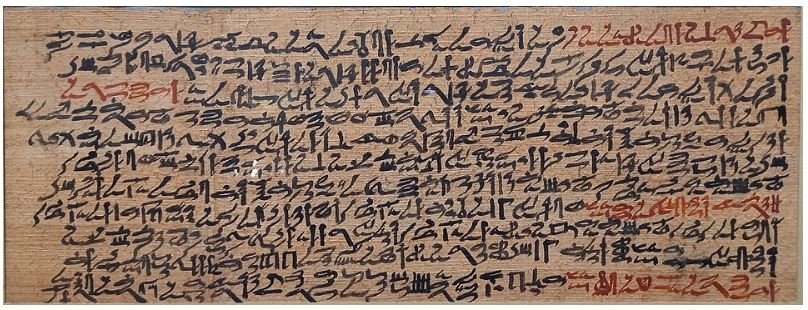
The Papyrus Prisse contains lines 75–123 of ‘Instruction of Ptahhotep’, and is preserved in the Bibliothèque nationale de France.
The Eloquent Peasant
A famous Middle Kingdom literary text, The Tale of the Eloquent Peasant, provides a vivid depiction of the Egyptian concept of justice. The story revolves around a peasant named Khunanup who seeks redress after being wronged by a corrupt official. Khunanup’s eloquent appeals for justice highlight the expectation that those in power must act in accordance with Maat.
Maat’s enduring legacy can be seen in modern legal concepts that emphasize the importance of balance, equity, and the protection of fundamental rights.
Legal Decrees and Royal Edicts
Pharaohs issued legal decrees and edicts to address specific concerns and reinforce Maat. One notable example is the Edict of Horemheb (c. 1300 BCE), which sought to curb corruption among officials and restore order in society. Horemheb’s edict laid out penalties for bribery, theft, and abuse of power, reflecting the king’s commitment to maintaining justice.
The Role of Religion in Law
Religion permeated every aspect of ancient Egyptian life, including the legal system. The belief that law and justice were divinely sanctioned meant that legal practices were intertwined with religious rituals and observances.

An Illustration Portraying the Weighing of the Heart ceremony in the Hall of Maat.
Temples as Centers of Justice
Temples played a critical role in the administration of justice. Priests and temple officials acted as mediators and judges in legal disputes. Temples maintained records of legal transactions, marriage contracts, and property agreements, ensuring that these documents were preserved for posterity.
Many temples had their own judicial councils, which handled cases involving land ownership, taxation, and religious matters. The association of justice with the divine reinforced the idea that upholding Maat was a sacred duty.
Oracles and Divine Verdicts
In some cases, Egyptians sought divine guidance through oracles to resolve legal disputes. Oracles were believed to convey the will of the gods, providing authoritative answers to complex legal questions. Petitioners presented their cases before an oracle, and the verdict was considered binding.
Oracular verdicts were often sought in cases where human judgment was insufficient to determine the truth. The use of oracles underscored the Egyptians’ belief that divine wisdom was the ultimate arbiter of justice.
Legacy of Egyptian Law and Maat
The legacy of Egyptian law and the concept of Maat endured long after the decline of pharaonic Egypt. Elements of Egyptian jurisprudence influenced the legal systems of neighboring civilizations, including the Greeks and Romans. The emphasis on fairness, impartiality, and divine justice left an indelible mark on subsequent legal traditions.

Questions and answers
What was the foundational concept of Egyptian law?
Egyptian law was based on the principle of Maat, symbolizing harmony, balance, and cosmic order. It was believed that Maat was established at the beginning of time when the universe emerged from chaos.
How was Maat connected to the creation of the universe?
According to Egyptian mythology, the god Atum rose from the chaotic waters of Nun and stood on the primordial mound (ben-ben), beginning the act of creation. He was accompanied by the force of heka (magic), personified by the god Heka, which sustained Maat and ensured balance.
20 Important facts about Ptah, the ancient Egyptian god of creation and craftsmen
What role did Heka play in maintaining Maat?
Heka, the god of magic, was believed to provide the power that sustained Maat. Without heka, Maat could not exist, and without Maat, the universe would collapse into chaos. Egyptologist Richard H. Wilkinson described Heka’s name as meaning “the first work,” highlighting that the creation of Maat was the first act of divine order.

Heka, shown with a Hemhem crown and sidelock, holding a crook, flail, and ankh.
When did Maat become a core value in Egyptian society?
Maat became a central value guiding law, morality, and governance during the Early Dynastic Period (c. 3150–2613 BCE). Though personified as a goddess only in the Old Kingdom (c. 2613–2181 BCE), the principles of Maat were evident in art and practices during the Predynastic Period (c. 6000–3150 BCE).
READ ALSO: The Five Great Kings of Egypt’s Early Dynastic Period
Why were laws necessary if Maat promoted balance?
Although living according to Maat was expected to ensure harmony, selfish desires often led individuals to violate this balance. To prevent such disruptions, laws were established to maintain order and discipline in society.
Did Egypt have a codified law code like the Code of Hammurabi?
No codified law code has been discovered in Egypt, but works such as The Tale of the Eloquent Peasant from the Middle Kingdom (c. 2040–1782 BCE) provide evidence of a structured legal system. Judges and officials worked from established precedents based on past rulings.
What role did the pharaoh play in maintaining Maat?
The pharaoh was the ultimate guardian of Maat, responsible for upholding balance and ensuring justice. During his coronation, the pharaoh offered a symbolic statue of Maat to the gods, pledging to maintain harmony. If the pharaoh failed in this duty, chaos (isfet) would threaten society and the cosmos.
How was Egypt’s legal system structured?
Egypt’s legal system was hierarchical, with the vizier serving as the highest judicial authority after the pharaoh. Local courts handled less serious cases, while serious offenses were referred to the vizier or the pharaoh. Village councils, known as kenbet, resolved community disputes and upheld Maat at the local level.
What principles guided Egyptian legal procedures?
Egyptian legal procedures emphasized truth, fairness, and impartiality. Witness testimony was highly valued, and oaths invoking the gods ensured honesty. In cases where evidence was inconclusive, divine intervention was sought through ordeals to reveal guilt or innocence.
What types of punishments were used to maintain order?
Punishments were designed not only to deter crime but also to restore balance. Minor offenses often resulted in fines or restitution, while serious crimes such as murder, theft, and treason were met with harsher penalties, including execution. The pharaoh had the power to pardon offenders as part of his role in maintaining Maat.
How did Maat influence beliefs about the afterlife?
Maat was central to the Egyptian understanding of the afterlife. After death, the soul was judged in the Hall of Truth, where the heart was weighed against the feather of Maat. If the heart was lighter than the feather, the soul was granted eternal life in the Field of Reeds. If it was heavier, it was devoured by Ammit, condemning the soul to nonexistence.
What caused the decline of Maat during the New Kingdom?
Corruption and imbalance crept into the system during the late New Kingdom (c. 1186–1077 BCE), particularly during the reign of Ramesses III (1186–1155 BCE). Misallocation of resources and increased corruption led to the collapse of the once-efficient bureaucracy, undermining Maat and causing a breakdown in law and order.
What was the significance of the Deir el-Medina workers’ strike?
The Deir el-Medina workers’ strike in 1159 BCE was an unprecedented event that reflected the failure of the system to maintain Maat. It was a sign that the social contract had broken down, as workers, whose wages had been delayed, protested against the officials who had neglected their duties.
How did the fall of Maat affect Egyptian society?
By the time of Ramesses XI (1107–1077 BCE), the Egyptian empire had fallen, giving way to the Third Intermediate Period (c. 1069–525 BCE). Corruption and lawlessness became rampant, and although ideals of justice and fairness persisted in literature, they no longer reflected the realities of society.





