Middle Kingdom of Ancient Egypt
The Middle Kingdom (c. 2045–1782 BC) was a period of reunification and stability following the First Intermediate Period. It included the Eleventh and Twelfth Dynasties, and sometimes part of the Thirteenth.

A map showing Egypt and neighboring regions Between 2060 BC and 1650 BC.
Summary
The Middle Kingdom of Egypt was also known as the Period of Reunification. It spanned from approximately 2045 to 1782 BC, following the tumultuous First Intermediate Period. This era was marked by political stability, economic prosperity, and cultural flourishing. The Middle Kingdom is often divided into two major dynasties, the Eleventh and Twelfth, and some scholars extend it to include the Thirteenth Dynasty. During this time, Egypt experienced significant administrative reforms, military campaigns, and religious transformations, particularly the rise of Osiris as the principal deity of the common people. The period ended with the fragmentation of central authority, ushering in the Second Intermediate Period.
Political History
Reunification Under the Eleventh Dynasty
The Middle Kingdom began when Mentuhotep II of Thebes successfully reunified Egypt after defeating the rival Herakleopolitan rulers of the Tenth Dynasty. This consolidation of power marked the beginning of a new era of strong central rule. Mentuhotep II reinforced his position by restoring the royal cult and expanding Egyptian influence into Nubia and the Sinai Peninsula.
His successors, Mentuhotep III and Mentuhotep IV, continued these policies, maintaining control over the nation and embarking on expeditions for resources. Mentuhotep IV’s reign is obscure, and his successor, Amenemhet I, likely usurped the throne, marking the transition to the Twelfth Dynasty.

A relief depicting Mentuhotep II
The Twelfth Dynasty and Administrative Reforms
Amenemhet I established a new capital, Itjtawy, near el-Lisht, to strengthen his control over both Upper and Lower Egypt. His reign saw the implementation of a co-regency system with his son, Senusret I, ensuring stable succession. The Twelfth Dynasty was characterized by significant military campaigns, particularly in Nubia, and extensive construction projects.
Senusret III is often regarded as one of the most powerful rulers of the Middle Kingdom. He carried out sweeping administrative reforms, weakening the power of provincial nomarchs and centralizing authority under the monarchy. His successor, Amenemhet III, presided over a period of economic prosperity, with extensive mining operations and agricultural developments in the Faiyum region.
Military Expansion and Foreign Relations
The Middle Kingdom was primarily defensive in its military strategy, focusing on securing Egypt’s borders. Fortifications were built along the First Cataract in Nubia and the Sinai Peninsula to protect trade routes and mineral resources.
Campaigns in Nubia
Egyptian rulers, particularly Senusret III, launched multiple campaigns into Nubia to secure control over the region’s gold mines and trade routes. He built a series of forts, such as at Buhen and Semna, to establish a firm Egyptian presence and regulate interactions with Nubian populations.
Relations with the Near East
The Middle Kingdom saw increased diplomatic and trade relations with the Near East, particularly with Byblos in modern-day Lebanon, which supplied cedar wood for construction. Egyptian artifacts from this period have been found in Canaan, indicating active trade and possible military engagements.
Administration and Governance
The administrative structure of Egypt underwent significant changes during the Middle Kingdom. While the Old Kingdom had a highly centralized government, the First Intermediate Period saw the rise of powerful local governors, or nomarchs. The Twelfth Dynasty kings sought to curb their influence and restore central authority.
The Middle Kingdom era saw the reunification of Egypt under strong rulers, the centralization of administration, and a flourishing cultural landscape.
Centralized Bureaucracy
Pharaohs of the Middle Kingdom established a well-organized bureaucracy to manage taxation, labor, and resource distribution. The vizier, the highest official under the pharaoh, oversaw state affairs. Other key officials included the Treasurer and the Overseer of Sealed Goods, who managed economic resources.
Decline of the Nomarchs
During the early Middle Kingdom, nomarchs still held significant power, governing their regions with relative autonomy. However, by the reign of Senusret III, their authority was significantly diminished, and local administration was brought under tighter royal control. This centralization helped ensure stability but also contributed to the decline of the Middle Kingdom when weak rulers later struggled to maintain control.
Religion and Cultural Developments
The Middle Kingdom saw a transformation in Egyptian religious beliefs, with Osiris becoming the most important deity for common people. Previously, the afterlife was primarily reserved for the pharaoh, but during this period, beliefs evolved to include all Egyptians who lived a righteous life.
Egyptian literature flourished during the Middle Kingdom, with notable works such as “The Story of Sinuhe,” “The Tale of the Shipwrecked Sailor,” and “The Instructions of Amenemhet.” These texts reflected the values of loyalty, wisdom, and divine kingship.
Artistic styles also evolved, with increased realism in sculptures, particularly in royal portraits. Pharaohs such as Senusret III and Amenemhet III were depicted with individualized facial features, emphasizing wisdom and experience rather than idealized youthfulness.
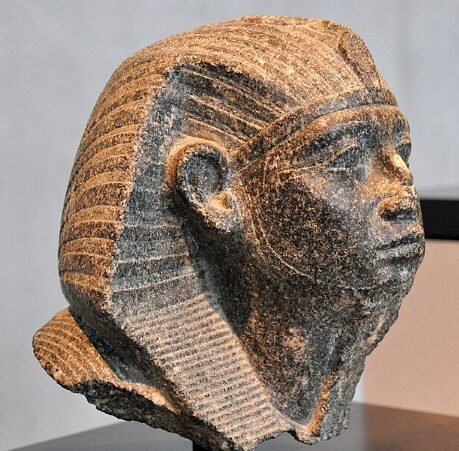
Head of Senusret III
READ MORE: List of Egyptian Gods and Goddesses
Economy and Agriculture
The Middle Kingdom benefited from high Nile flood levels, leading to agricultural prosperity. Pharaohs invested in irrigation projects, such as the development of the Faiyum basin, which expanded arable land and increased food production.
Trade flourished during this period, with Egypt engaging in commerce with Nubia, the Levant, and even distant regions like Punt. Mining operations in the Sinai Peninsula provided valuable resources such as turquoise and copper, while quarries in Wadi Hammamat supplied stone for monumental construction.
The Decline of the Middle Kingdom
The transition from the Twelfth to the Thirteenth Dynasty marked the beginning of the Middle Kingdom’s decline. The Thirteenth Dynasty saw a rapid turnover of rulers, weakening central authority. The rise of independent rulers in Xois and the increasing presence of the Hyksos in the eastern Delta further destabilized Egypt.
Internal political struggles and external threats eventually led to its decline, paving the way for the challenges of the Second Intermediate Period.
By around 1650 BC, the Hyksos, a Semitic-speaking people from the Near East, gained control over Lower Egypt, marking the beginning of the Second Intermediate Period. Egyptian control was limited to Thebes in Upper Egypt, where native rulers struggled to reclaim the country from foreign domination.
Frequently Asked Questions
Who founded the Middle Kingdom?
Mentuhotep II of the Eleventh Dynasty reunified Egypt around 2045 BC after defeating the rival Herakleopolitan rulers of Lower Egypt.

Seated painted sandstone statue of Nebhepetre Mentuhotep II, Egyptian Museum, Cairo.
Where did the rulers of the Middle Kingdom govern from?
Eleventh Dynasty rulers governed from Thebes, while Twelfth Dynasty rulers established a new capital at Itjtawy near el-Lisht.
How did the Middle Kingdom expand Egypt’s influence?
Pharaohs like Senusret III conducted military campaigns in Nubia and built forts to secure the southern border, while also increasing trade with the Near East and Punt.
What were the major achievements of the Twelfth Dynasty?
This period saw strong centralized rule, the development of coregency, increased agricultural projects (e.g., Faiyum irrigation), and military fortifications.
How did the Middle Kingdom’s administration function?
The vizier was the highest official, overseeing a bureaucratic system that controlled taxation, agriculture, and justice, with governors (nomarchs) managing provinces.
What role did Osiris play in Middle Kingdom religion?
Osiris became the dominant deity, associated with the afterlife and resurrection, influencing burial practices and beliefs in divine judgment.
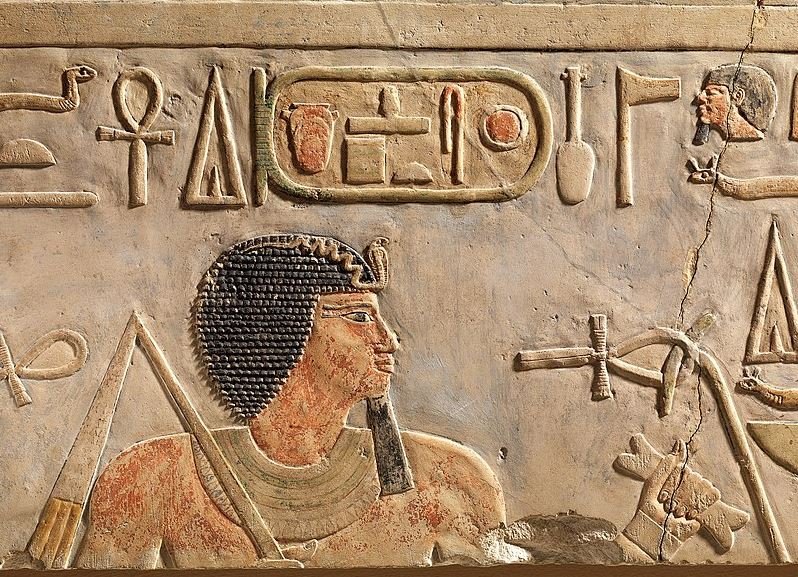
A depiction of Pharaoh Amenemhat I from his burial site at El-Lisht.
What literary works were composed during the Middle Kingdom?
Key texts include The Story of Sinuhe, The Tale of the Shipwrecked Sailor, and The Satire of the Trades, which became classics of Egyptian literature.
Why did the Middle Kingdom decline?
Weak rulers, economic strain, climate changes, and internal instability led to the disintegration of central power, paving the way for the Second Intermediate Period.
Who were the Hyksos, and how did they impact Egypt?
The Hyksos, a foreign Asiatic group, gradually took control of Lower Egypt, marking the end of the Middle Kingdom and the start of the Second Intermediate Period.





