Ancient Greek Logographer Lysias
Lysias (circa 445–380 BC) was a notable logographer, or speechwriter, in ancient Greece. He excelled in creating persuasive speeches for legal cases and political issues, playing a significant role in...

Lysias (circa 445–380 BC) was a notable logographer, or speechwriter, in ancient Greece. He excelled in creating persuasive speeches for legal cases and political issues, playing a significant role in...

Attic Greek represents a cornerstone of ancient linguistic and cultural heritage. Its development, literary achievements, and influence on subsequent Greek dialects and global intellectual traditions underscore its historical importance. As...

Koine Greek, meaning “common dialect,” served as the lingua franca of the Hellenistic world and beyond, following the conquests of Alexander the Great. It emerged as a simplified, universal form...
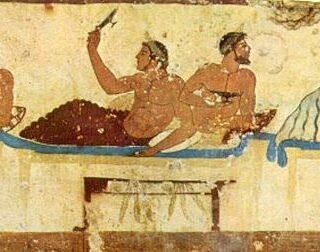
Greek philosophy has profoundly shaped Western thought, offering foundational texts that explore a wide array of subjects, from ethics and politics to metaphysics and aesthetics. In the article below, World...
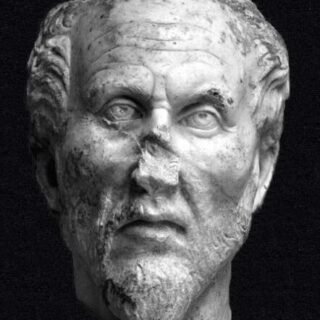
The Enneads encapsulate Greek Platonist philosopher Plotinus’s extensive philosophical inquiries, thoughtfully arranged by Porphyry to facilitate a structured exploration of Neoplatonic thought. This compilation not only preserves Plotinus’s legacy but...

Aristippus of Cyrene was a prominent philosopher and the founder of the Cyrenaic school of philosophy, known for its emphasis on hedonism—the pursuit of pleasure as the highest good. His...

Ancient Greek philosophy stands as a cornerstone of Western intellectual tradition, profoundly shaping subsequent developments in philosophy, science, politics, and the arts. Emerging in the 6th century BCE, Greek thinkers...

Athena Parthenos, crafted by the renowned ancient Greek sculptor Phidias, was one of the most celebrated masterpieces of classical antiquity. Standing within the Parthenon on the Athenian Acropolis, this colossal...

Antisthenes of Athens, a prominent Greek philosopher and student of Socrates, is a key figure in the writings of Diogenes Laertius, whose Lives and Opinions of Eminent Philosophers serves as a rich...

Often hailed as the “Father of History,” Greek historian and geographer Herodotus has inspired countless works of art throughout history. His pioneering narrative style, blending history and storytelling, serves as...
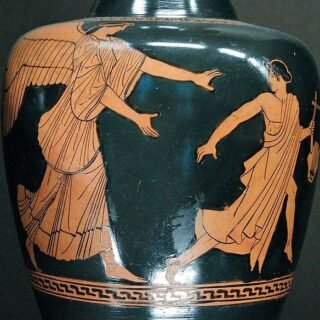
Tithonus, a Trojan prince and lover of Eos, the Goddess of Dawn, occupies a significant place in Greek mythology as a symbol of the consequences of immortality without eternal youth....

Pisistratus (c. 600–527 BC) was a prominent Athenian leader and early tyrant whose governance shaped Athens’ trajectory toward cultural and political significance. His three non-consecutive periods of rule (late 560s,...

The Panathenaea was one of the most important festivals in ancient Greece, celebrated annually in Athens in honor of Athena, the city’s patron goddess. Its origins are rooted in mythology...
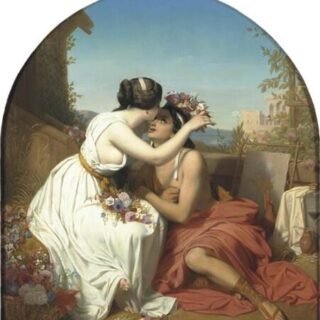
Pausias stands out as a distinguished figure in ancient Greek art, flourishing during the early 4th century BC. As a member of the Sicyonian school, his contributions significantly influenced the...
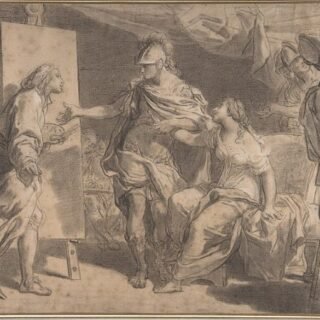
Apelles, a 4th-century BCE Hellenistic Greek painter, remains celebrated as one of antiquity’s most esteemed artists, despite the complete loss of his works. His exceptional reputation is largely based on...





