Battle of Salamis (480 BCE)
The Battle of Salamis, fought in 480 BCE, stands as one of the most pivotal naval engagements in ancient history. Occurring during the second Persian invasion of Greece, this confrontation...
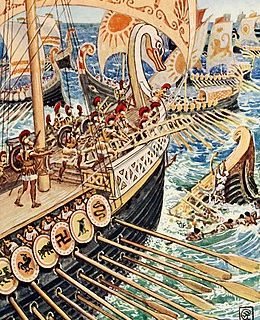
The Battle of Salamis, fought in 480 BCE, stands as one of the most pivotal naval engagements in ancient history. Occurring during the second Persian invasion of Greece, this confrontation...
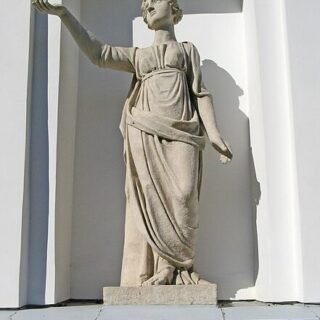
Leto, also known as Lētṓ, is a significant yet often understated figure in ancient Greek mythology and religion. She is primarily revered as the mother of two of the most...
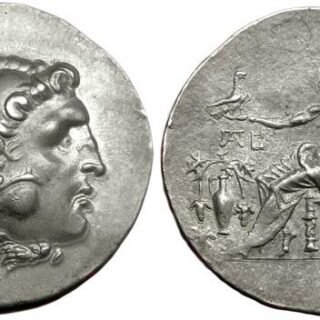
Ancient Greek coinage is a remarkable reflection of the culture, politics, and economy of one of history’s most influential civilizations. Its development spans four distinct periods: Archaic, Classical, Hellenistic, and...

The Apollo Belvedere, one of the most celebrated sculptures of classical antiquity, has long been revered as a masterpiece of artistic perfection. Its rich history and cultural significance span centuries,...
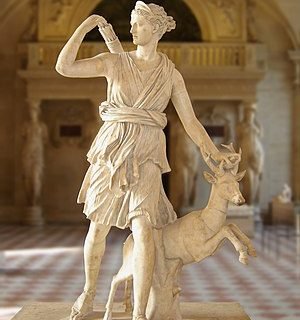
The Diana of Versailles, a slightly larger-than-life marble statue of Diana (Artemis in Greek mythology), was created as a Roman copy of a lost Greek bronze original by Leochares, dating...

Leochares was a prominent sculptor from Athens, active during the 4th century BC. Renowned for his contributions to monumental and portrait sculpture, he played a significant role in defining the...

In the early 6th century BC, Athens faced a dire social and political crisis. Severe inequality, rampant debt slavery, and aristocratic dominance had brought the city-state to the brink of...

Agesilaus’ reign is remembered for his military leadership and personal virtues, such as frugality and dedication to Spartan ideals. However, his rigid policies and unrelenting hostility toward Thebes are often...
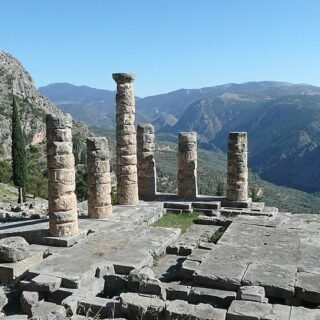
The Archaic period of ancient Greece, spanning roughly from the early 8th century BCE to the onset of the Classical era around 480 BCE, represents a foundational epoch in Greek...
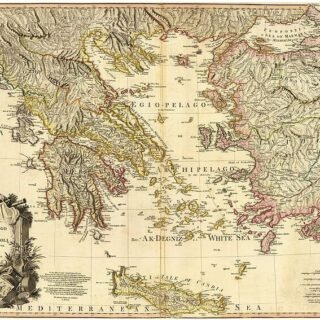
Ancient Greece was not a monolithic entity but a tapestry of diverse tribes, each contributing uniquely to the cultural, political, and social landscape of the Hellenic world. According to the...
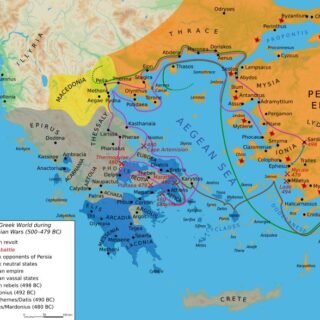
The first Persian invasion of Greece (492–490 BC) was a pivotal episode in ancient history, part of the broader Greco-Persian Wars. It was driven by Persia’s ambition to expand its...
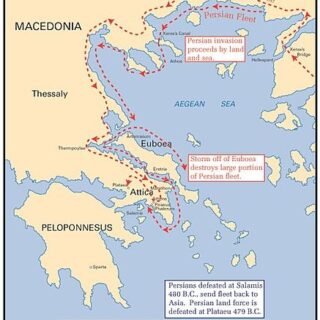
The Second Persian Invasion of Greece (480–479 BC) stands as one of the most significant military campaigns in ancient history. Orchestrated by King Xerxes I of Persia, this invasion marked...
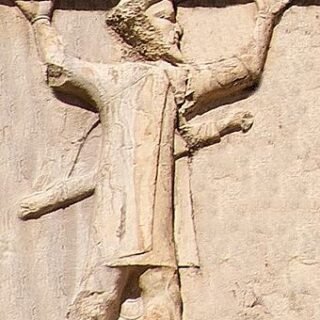
The Ionians were one of four major ancient Greek tribes, alongside Dorians, Aeolians, and Achaeans. The dialect of the Ionians was a key linguistic division in the Hellenic world. Narrowly,...
Cratinus was one of the eminent playwrights of ancient Greece. The Athenian playwright was a master of Old Comedy, a theatrical tradition characterized by its sharp wit, political satire, and...

Arrian of Nicomedia, formally known as Lucius Flavius Arrianus Nicomediensis, stands as a prominent figure in ancient history and philosophy. Living during the Roman Empire in the second century AD,...





