The Four Evangelists in Christian Tradition
The Four Evangelists—Matthew, Mark, Luke, and John—are the authors traditionally attributed to the four canonical Gospels of the New Testament. These books, titled The Gospel of Matthew, The Gospel of...
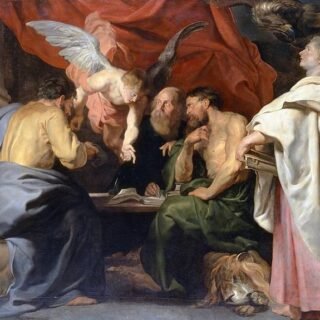
The Four Evangelists—Matthew, Mark, Luke, and John—are the authors traditionally attributed to the four canonical Gospels of the New Testament. These books, titled The Gospel of Matthew, The Gospel of...

Commissioned in 1373 by Albanian ruler Gjergj Arianiti, the Epitaph of Gllavenica is considered one of the finest examples of its kind in the Balkans, featuring intricate depictions of the...

Sodom and Gomorrah are two ancient cities mentioned in the Abrahamic religions, primarily as examples of divine punishment for human sinfulness. Their story, found in Genesis 19:1–28, parallels the Genesis...
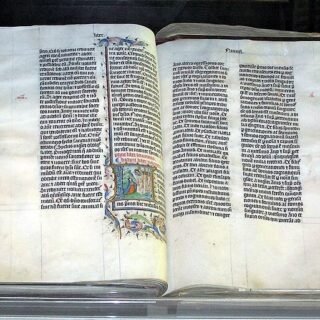
The Old Testament (OT) is the foundational text of the Christian biblical canon, derived from the Hebrew Bible, or Tanakh. This collection of ancient Hebrew and some Aramaic writings reflects...

Genesis is the first book of the Hebrew Bible and Christian Old Testament, detailing the creation of the world, humanity’s early history, and the origins of the Jewish people. Summary...
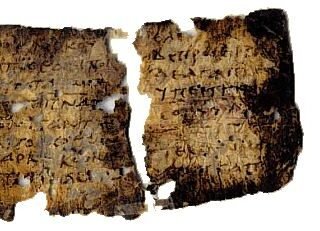
The Didache, also known as the Teaching of the Twelve Apostles, is an early Christian document that holds significant historical, theological, and liturgical value. Likely composed in the late first or early...
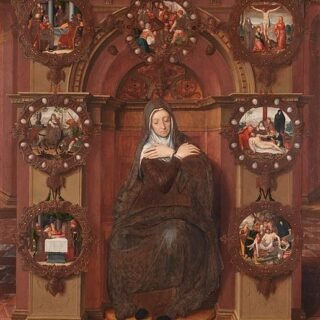
Our Lady of Sorrows, also referred to as Mater Dolorosa, Our Lady of Dolours, Mother of Sorrows, or Our Lady of the Seven Sorrows, is a title given to Mary,...

The Myrrhbearers, a term rooted in Eastern Orthodox Christian tradition, refers to individuals involved in the burial of Jesus and those who discovered his empty tomb after his resurrection. Derived...

Joseph of Arimathea, an enigmatic biblical figure, is known for his role in the burial of Jesus Christ following the crucifixion. Identified as a member of the Sanhedrin in three...

The Coptic Orthodox Church is an Oriental Orthodox Christian church based in Egypt, also known as the Coptic Orthodox Patriarchate of Alexandria. It is the largest Christian community in the...

Alexander was a key opponent of Arianism, leading its condemnation at the council. He brought a delegation including his deacon Athanasius, who acted as his spokesman. Early Life Alexander I...

The Islamic New Year, also known as the Hijri New Year, marks the beginning of a new lunar Islamic calendar year. It commemorates the migration (Hijrah) of Prophet Muhammad and...

Islamic holidays hold great spiritual and communal significance for Muslims around the world. These events, rooted in Islamic tradition and the lunar calendar, offer opportunities for worship, charity, and celebration....
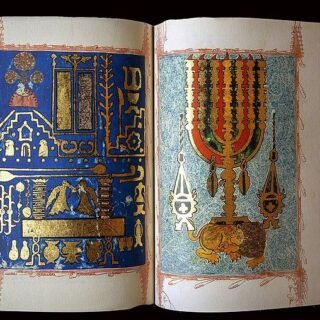
Judaism is an Abrahamic, monotheistic, and ethnic religion that encompasses the spiritual, cultural, and legal traditions of the Jewish people. With origins tracing back thousands of years, Judaism is recognized...

The Sabbath, also known as Shabbat in Hebrew, holds significant importance in Abrahamic religions. Its origins, observances, and cultural implications have evolved over centuries, marking it as a central concept...





