Jens Munk
Jens Munk, a Danish explorer and naval officer, is renowned for his adventurous expeditions in the early 17th century, particularly his attempt to find the Northwest Passage—a sea route connecting...

Jens Munk, a Danish explorer and naval officer, is renowned for his adventurous expeditions in the early 17th century, particularly his attempt to find the Northwest Passage—a sea route connecting...
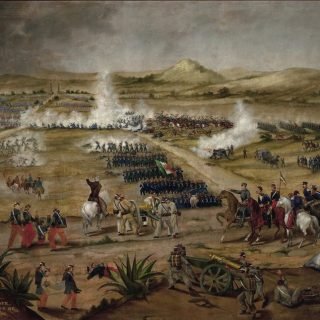
In the annals of history, certain events stand out not merely for their military significance but also for their symbolic resonance. The Battle of Puebla, fought on May 5, 1862,...

On the night of April 14, 1865, Ford’s Theater in Washington, D.C., became the site of one of the most infamous events in American history: the assassination of President Abraham...

The first U.S. presidential election is a key milestone in American history, marking the birth of the executive branch of the federal government as established by the U.S. Constitution. The...
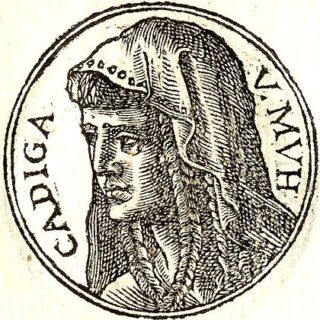
Khadijah bint Khuwaylid: Fast Facts Married: 595 CE Status: First wife, highly respected and beloved. Background: A wealthy and successful merchant, Khadijah was Muhammad’s first and only wife for 25...
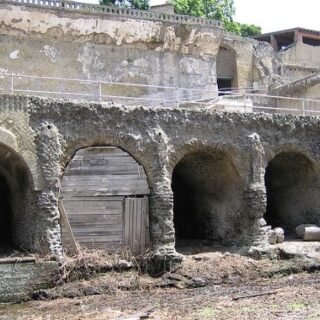
Herculaneum, an ancient Roman city, shares a tragic fate with its more famous counterpart, Pompeii, as it was destroyed and buried by the catastrophic eruption of Mount Vesuvius in 79...

The marriages of Prophet Muhammad provide insights into his life, the socio-political landscape of 7th-century Arabia, and the various roles women played in early Islamic history. Each wife had a...
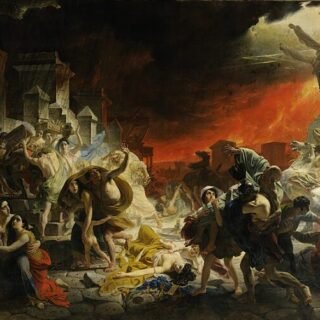
The eruption of Mount Vesuvius in 79 AD is one of the most famous natural disasters in history. It destroyed the Roman cities of Pompeii and Herculaneum, burying them under...

World War I, often referred to as “The Great War” or “The War to End All Wars,” was a pivotal event in world history. Its impacts were far-reaching, reshaping geopolitics,...

Journey to the West, one of the most revered classical Chinese novels, narrates the adventurous pilgrimage of the monk Tang Sanzang (also known as Xuanzang) to retrieve sacred Buddhist scriptures...
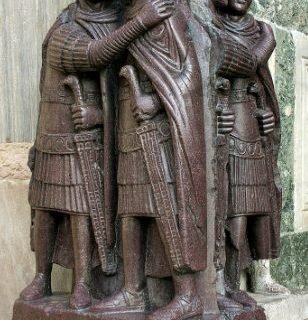
The Tetrarchy, a term derived from the Greek word meaning “rule of four,” was an innovative and purposeful administrative and power-sharing system established by the Roman Emperor Diocletian at the...

The Old Ghana Empire, also referred to as the Wagadou Empire, was a prominent and powerful kingdom in West Africa that flourished between the 6th and 13th centuries. It was...

Nicolaus Copernicus (1473–1543) was a Polish astronomer, mathematician, and scholar who fundamentally changed humanity’s understanding of the cosmos by proposing that the Earth and other planets revolve around the Sun,...

Mount Olympus, the highest peak in Greece, has long been venerated in both ancient myth and modern history. While today it stands as a natural marvel, in ancient Greek mythology,...

The Industrial Revolution, one of the most transformative periods in human history, began in Britain in the late 18th century and fundamentally altered the global economy, technology, and society. It...





