Most Famous Minarets
Minarets are among the most striking architectural features in Islamic culture. Over centuries, these towering structures have served not only as places from which the call to prayer is issued...

Minarets are among the most striking architectural features in Islamic culture. Over centuries, these towering structures have served not only as places from which the call to prayer is issued...

The Arthurian legend has undergone a vast literary evolution spanning over a millennium, shaping the mythical King Arthur and his knights into a timeless narrative. From early medieval chronicles to...
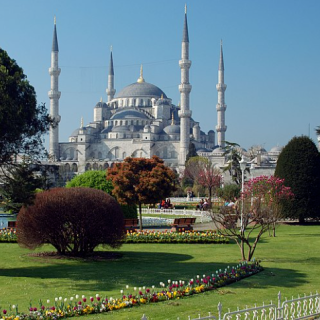
The Blue Mosque is one of the most iconic landmarks of Istanbul, Turkey. Constructed between 1609 and 1617 under the reign of Sultan Ahmed I, it stands as a magnificent example...
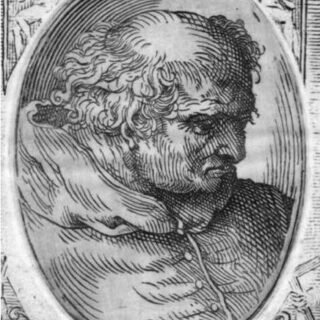
Donato Bramante (1444 – April 11, 1514), born Donato di Pascuccio d’Antonio, was a distinguished Italian architect and painter. His contributions to Renaissance architecture, particularly in Milan and Rome, have...

The sack of Aquileia in 452 AD marked one of the most devastating events in the history of the late Roman Empire. This event was part of Attila the Hun’s...

George VI ascended the throne in 1936 after his brother, Edward VIII, abdicated to marry Wallis Simpson, a twice-divorced American socialite. In this post, WHE delves deeper in to the...

The Second Intermediate Period (c. 1700-1555 BC) was a time of fragmentation and political instability in ancient Egypt, occurring between the end of the Middle Kingdom and the emergence of...

Bes was a household deity protecting mothers, children, and childbirth, later becoming a defender against evil and a symbol of joy, music, and dance. What was Bes worshiped for? Bes...

The Syriac Sinaiticus, also known as the Codex Sinaiticus Syriacus or the Sinaitic Palimpsest, is a late 4th- or early 5th-century manuscript. It consists of 179 folios and contains a...

The National Party (NP), or Nasionale Party in Afrikaans, played a dominant role in South African politics from its founding in 1914 until its dissolution in 1997. Responsible for the...
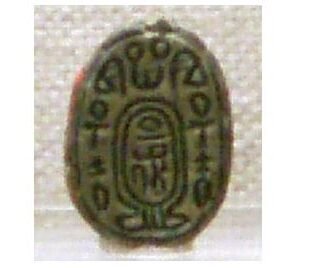
Apepi was one of the longest-reigning and most influential Hyksos rulers of Egypt. While he initially maintained peaceful relations with the native Thebans, hostilities eventually led to his dynasty’s decline....

Apartheid in South Africa was a state-enforced system of racial segregation that lasted from 1948 to 1994. During this time, various sectors of society actively opposed apartheid through organized movements,...

Vera Reitzer’s life encompassed extreme contrasts—she survived Auschwitz, was liberated by American forces, resettled in Israel, and later supported a system of racial segregation in South Africa. Her story illustrates...

Pope Victor I, a prominent leader of the early Christian Church, served as the Bishop of Rome in the late second century. His papacy is significant for its role in...

The Fall of Constantinople, also known as the conquest of Constantinople, was a defining moment in world history. The capture of the Byzantine capital by the Ottoman Empire on May...





