Bals des victimes
The bals des victimes, or victims’ balls, are said to have emerged in post-Reign of Terror France as exclusive gatherings for those who had lost family members to the guillotine....

The bals des victimes, or victims’ balls, are said to have emerged in post-Reign of Terror France as exclusive gatherings for those who had lost family members to the guillotine....
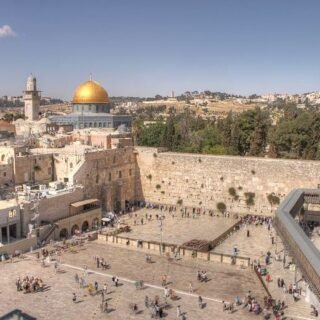
The Western Wall, known in Hebrew as HaKotel HaMa’aravi, is an ancient limestone wall in the Old City of Jerusalem. It is a remnant of the Second Temple, which was...

Richard II, known as “Richard the Good” (French: Le Bon), was born into the powerful House of Normandy as the eldest surviving son of Richard I, known as “Richard the...

Neferkare II was a little-known pharaoh of ancient Egypt who ruled during the tumultuous early First Intermediate Period (c. 2181–2055 BC). As a ruler of the Eighth Dynasty, he would...

The Tuileries Palace, once a grand royal and imperial residence in Paris, stood on the right bank of the Seine, forming a magnificent western extension of the Louvre. Serving as...
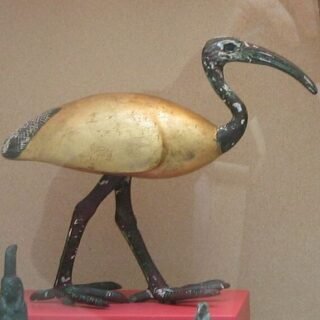
The sacred ibis was deeply revered in ancient Egypt, primarily due to its association with Thoth, the god of wisdom, knowledge, writing, and mathematics. Thoth, often depicted with the head...

Friday the 13th is widely regarded as an unlucky day in Western superstition. This belief is rooted in various historical, religious, and cultural influences. The day occurs when the 13th...
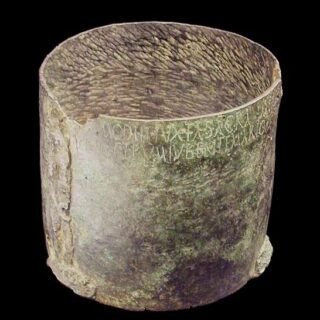
The units of measurement in ancient Rome were well-documented and generally consistent across the empire. Roman measurements encompassed length, area, volume, weight, and time, each playing a crucial role in...

In Islam, the qibla refers to the direction toward the Kaaba in the Sacred Mosque in Mecca, Saudi Arabia. It is a fundamental aspect of Islamic worship and is particularly...

Gustavus Adolphus was born on December 9, 1594, in Stockholm, Sweden, as the eldest son of Duke Charles of the House of Vasa and Christina of Holstein-Gottorp. His father deposed...

The Battle of Maldon, fought on August 10 or 11, 991 AD, was a significant confrontation between the Anglo-Saxons and Viking invaders. Occurring near the River Blackwater in Essex, England,...

Islamic funerals follow specific religious rites rooted in the principles of sharia (Islamic law). While customs may vary depending on cultural and regional interpretations, the fundamental practices remain consistent. The...
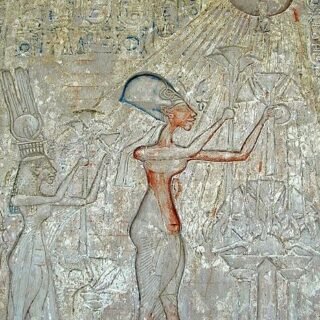
Atenism, also known as the Amarna religion, was a radical religious movement introduced by Pharaoh Akhenaten during the 14th century BCE in ancient Egypt. This monotheistic or monolatristic faith centered...

Ali ibn Abi Talib was the cousin and son-in-law of the Islamic prophet Muhammad (S.A.W), the fourth Rashidun caliph (656–661 CE), and the first Shia imam. History of Shia Islam:...

The Coronation Chair, also referred to as St Edward’s Chair or King Edward’s Chair, is one of the most historically significant pieces of furniture in British history. It has been...





