Agesilaus II: King of Sparta
Agesilaus’ reign is remembered for his military leadership and personal virtues, such as frugality and dedication to Spartan ideals. However, his rigid policies and unrelenting hostility toward Thebes are often...

Agesilaus’ reign is remembered for his military leadership and personal virtues, such as frugality and dedication to Spartan ideals. However, his rigid policies and unrelenting hostility toward Thebes are often...

Nectanebo I, who reigned from 379 to 360 BCE, was the founder of Egypt’s 30th Dynasty and one of the last native Egyptian pharaohs to successfully maintain the nation’s independence....

Nestled within the expansive loop of the Kızılırmak River in modern-day Turkey lies the ancient city of Hattusa (also known as Hattuşa, Ḫattuša, Hattusas, or Hattusha). Once the vibrant capital...

The Hurrians were an influential Bronze Age people whose cultural, political, and religious dimensions once resonated across a wide geographical landscape. Though never as universally recognized in popular imagination as...

The Safavid Dynasty (1501–1736) was one of Iran’s most influential empires, marking the beginning of modern Iranian history. Known for consolidating Twelver Shia Islam as the official state religion, the...

Ismail I (1487–1524), the founder of the Safavid Dynasty, was a transformative figure in Iranian and Islamic history. His life and reign marked the establishment of a powerful empire that...

Iran’s journey to becoming a bastion of Shia Islam is deeply intertwined with the rise of the Safavid dynasty in the early 16th century. The Safavids’ concerted efforts to institutionalize...

Horemheb, whose name means “Horus is in Jubilation,” was the final pharaoh of Egypt’s 18th Dynasty, ruling from 1319 BCE to 1292 BCE. Unlike many of his predecessors, he was...
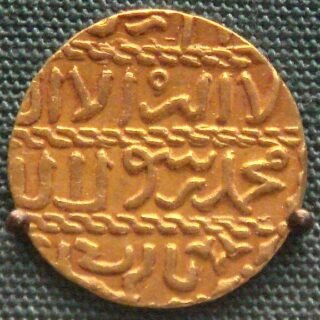
Al-Ashraf Sayf ad-Dīn Barsbāy (Arabic: الأشرف سيف الدين برسباي), who ruled Egypt from 1422 to 1438 as the ninth sultan of the Burji Mamluk dynasty, left a profound mark on...

Pharaoh Ay was a significant yet enigmatic figure of ancient Egypt’s 18th Dynasty. His brief reign, familial ties, and political maneuvering during a turbulent period highlight his role as a...

The Muslim Conquest of Persia, also known as the Arab Conquest of Iran, was a transformative series of military campaigns conducted by the Rashidun Caliphate between 632 and 654 CE....

Thuya, also spelled as Touiyou, Thuiu, Tuya, Tjuyu, or Thuyu, was an influential figure in ancient Egypt, particularly during the New Kingdom era. Thuya is best known for being notable...

Abd Allah ibn Abi Quhafa, widely known by his kunya Abu Bakr, stands as a monumental figure in early Islamic history. Born around 573 CE in Mecca, Abu Bakr was...

Inca textiles were among the most advanced and valued products of the ancient Andes, reflecting the sophistication, organization, and artistic prowess of the Inca civilization. More than mere fabrics, they...

Tarḫunna, also known as Tarḫuna or Tarḫuna-i, occupies a pivotal role in Hittite mythology as the supreme weather god. Revered as the “Weather God of Heaven” and the “Lord of...





