Welcome to Elysium: A Greek Afterlife Like No Other
Imagine a place where the sun never scorches, storms never rage, and life flows with a blissful calm. That’s Elysium—ancient Greece’s most desirable afterlife destination. While the underworld usually conjures images of gloom and shadows, Elysium was anything but grim. It was where the most virtuous, heroic, or divinely favored souls would retire, eternally indulging in their favorite joys.
In the article below, World History Edu unpacks this fascinating vision of paradise, from its poetic origins to its aftershocks in modern culture.

A 1903 artwork entitled “Elysian Fields” by Swiss painter Carlos Schwabe.
The Origins: What Is Elysium, Anyway?
In ancient Greek belief systems, Elysium (or the Elysian Fields, Elysian Plains, or Elysian Realm—take your pick) stood apart from the usual dreariness of Hades, the underworld. Unlike the vast majority of souls who wandered the shadowy realm after death, only a special few made it to Elysium. Early on, this privilege was reserved for demigods, heroes, or mortals closely related to the divine. But as time rolled on, the criteria broadened. Eventually, those who lived righteous or heroic lives—according to the gods’ favor—could earn a spot in this serene afterlife.
A Shifting Paradise Over Time
The Elysian Fields didn’t always look the same in every account. Homer, the famed epic poet, situated Elysium at the far western edge of the Earth, beyond the stream of Oceanus—a kind of mysterious world-border.
Later on, Hesiod painted a slightly different picture, describing it as a group of far-flung islands called the “Isles of the Blessed” or “Fortunate Isles.” These were equally unreachable for ordinary mortals but were seen as places of peace, joy, and eternal abundance.
By the time the poet Pindar came around, the Isles had merged into a single utopia full of shady groves, golden blossoms, and divine breezes. Here, the honored dead could spend eternity doing what they loved—singing, dancing, or playing sports. Picture an endless summer resort run by the gods themselves.
READ ALSO: Most Powerful Ancient Greek Gods and Goddesses
Who’s the Boss in Elysium?
As with many Greek myths, the question of who ruled Elysium varies by storyteller. Some authors gave that honor to Cronus, the ancient Titan and father of Zeus. Others claimed it was Rhadamanthus, a stern but fair judge of the dead, who took up residence there after death. Homer leans toward Rhadamanthus, while Hesiod preferred Cronus. Still, the one thing they all agree on is that the ruling presence in Elysium was benevolent and just—a fitting vibe for paradise.

A Name with a Mystery
Let’s take a second to talk etymology. The word Elysium comes to us via Latin from the Greek Elysion pedion (meaning “Elysian field”), but the roots beyond that? Still a bit of a mystery.
Some ancient scholars tried to trace it to the word alyō, meaning “to be deeply stirred with joy,” while others linked it to words suggesting incorruptibility or even the act of “coming” or arriving somewhere—a metaphorical journey, perhaps, to paradise.
Initially reserved for demigods and those closely connected to the gods, entry into the Elysian Field later expanded to include righteous and heroic mortals chosen by the divine.
Elysium in Classical Poetry and Prose

Chronos and his child by Giovanni Francesco Romanelli, National Museum in Warsaw, a 17th-century depiction of Titan Cronus as Father Time, wielding a harvesting scythe
When you turn to the literature of the classical world, Elysium is practically glowing with praise. In Homer’s Odyssey, it’s described as a land of eternal spring breezes—no snow, no heavy rain, just peaceful winds from Oceanus. Not a bad retirement plan for a soul.
Hesiod’s Works and Days gives us golden fruit-bearing earth and heroes living in joy, all under the rule of Cronus. Pindar goes even further, imagining inhabitants relaxing beneath shady trees, crowned with golden flowers, and surrounded by the scent of blossoms nurtured by holy waters.
Different sources attribute the rule of Elysium to various figures, with some traditions naming Cronus while others refer to the just judge Rhadamanthus.
Virgil, writing from a Roman perspective in his Aeneid, adds a poetic Latin flavor. He describes Elysium as lush, green, and self-illuminated—with its own sun and stars. It’s the destination for righteous souls, while the wicked veer off toward Tartarus, the Greek version of a punishment zone. Aeneas even meets his father Anchises there, catching up amid meadows and crystal streams.
Philosophers and Historians Weigh In
Greek thinkers and historians didn’t ignore the idea either. Plutarch, for instance, claimed the Isles of the Blessed were actual physical islands far off the coast of Africa. They enjoyed gentle rains and mild breezes, creating an Eden-like setting. Even barbarian tribes, he says, believed these islands to be sacred realms.
Diodorus Siculus went one step further and proposed that the Elysian Fields might have been inspired by the beautiful plains surrounding Memphis in Egypt. He suggested Orpheus, the mythical Greek poet, picked up many of his ideas about the afterlife during his supposed trip to Egypt.
READ ALSO: Ancient Egyptian City of Memphis
Into the Middle Ages and Beyond
As Christianity began to spread, Elysium didn’t entirely vanish. It found its way into early Christian literature, often reimagined as a sort of pre-Heaven paradise. Dante, in his Divine Comedy, nods to Elysium when describing Aeneas’s journey and his heartfelt reunion with Anchises.
Come the Renaissance, Elysium gained a bit more sparkle. It shed its more somber, pagan tones and began to resemble a glowing paradise. The Champs-Élysées in Paris, for example, got its name during this period—a poetic link between ancient utopia and elegant boulevards.
Elysium evolved into a symbol of heavenly reward in early Christian writings and was celebrated in Renaissance and modern literature as an emblem of eternal bliss.
Poetic Rebirths in Modern Literature
Poets of later centuries couldn’t resist the romanticism of Elysium. Friedrich Schiller’s “Ode to Joy,” later turned into Beethoven’s famous symphony, praises it as a realm of divine bliss. Heinrich Heine playfully twisted this by calling cholent, a Jewish Sabbath stew, the “daughter of Elysium”—mixing culinary delight with mythological poetry.
Writers like Shakespeare also used it casually. Viola in Twelfth Night mentions her brother being “in Elysium,” clearly signaling a kind of heavenly afterlife. Cervantes, in Don Quixote, waxes poetic about Dulcinea’s beauty by comparing her forehead to the “Elysian fields.” That’s high praise—literally.
From Stage to Screen: Elysium in Pop Culture
Elysium continues to inspire fiction, drama, and even sci-fi. In Hercules: The Legendary Journeys and Xena: Warrior Princess, the Elysian Fields appear as lush meadows of eternal happiness. On a more dystopian note, the 2013 film Elysium used the term to describe a space station where the wealthy live in perfect comfort, far from the suffering masses stuck on a decaying Earth. A sharp social commentary wrapped in myth.
In video games like Assassin’s Creed Odyssey, Elysium is a digital paradise—explorable, visually stunning, and filled with mythological twists. And in Honkai Impact 3rd, it becomes a haunting memory realm where ancient warriors rest.
Printed Pages and Graphic Panels
In modern literature and comics, Elysium is often reimagined but remains an honored concept. In David Gemmell’s historical fantasy novels, it’s called the “Hall of Heroes”—a place for fallen warriors. In the manga Saint Seiya, Elysium becomes the final battleground where Athena’s champions face off against Hades himself. It’s a sacred space where only the purest can tread.
Even in high school satire, Elysium finds a home. One novel sets its story in a school called Elysium Hills High, drawing a cheeky parallel between teenage drama and ancient heroism.
Around the World: Real-World Namesakes
You might be surprised by how often “Elysium” pops up in real-world geography. The famous Champs-Élysées in Paris? Yep, that’s a direct reference. There’s also an Elysium Mons on Mars, a massive volcano named after the fields of bliss. Antarctica has an Elysian Beach, and the U.S. features Elysian Fields in Texas, Minnesota, and New Jersey. It’s like the world is full of little nods to paradise.
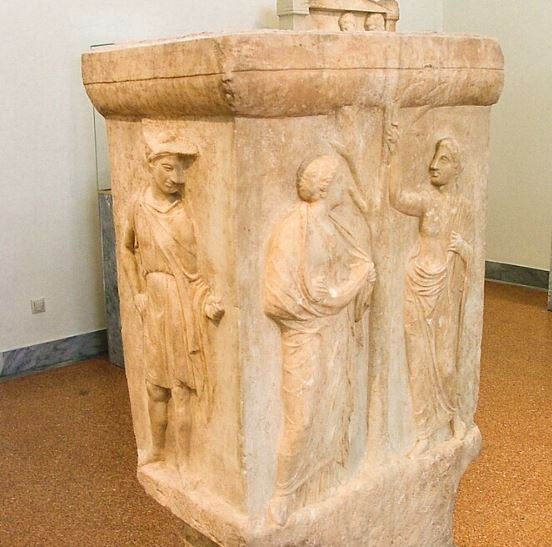
A 5th-century BC Ancient Greek funerary vase portrays a young man and woman gathering fruit from a tree, symbolizing the afterlife in the Elysian Fields, where the blessed dead enjoyed golden fruits.
Why Elysium Still Captivates Us
So why does Elysium remain such a powerful symbol? Probably because it taps into a deep, human desire—not just for an afterlife, but for reward. Unlike abstract heavens or mystical rebirths, Elysium is easy to imagine: it’s the best parts of life carried into eternity. Sunshine without heat, songs without sadness, and feasts without guilt.
In every age, we reshape it to match our dreams—whether it’s a heavenly garden, a luxurious space station, or even a metaphorical schoolyard. And maybe that’s the real magic of Elysium: it evolves with us, but never stops being a vision of bliss.
Questions and Answers
Who was allowed into Elysium?
Initially, only demigods and mortals related to the gods could enter. Later, entry expanded to include those chosen by the gods, the righteous, and heroic individuals.
Where was Elysium believed to be located?
Homer placed it at the western edge of the Earth by Oceanus. Hesiod described it as the “Isles of the Blessed,” later condensed by Pindar into a single paradise island.
Who ruled over Elysium?
Different sources offer different rulers: Cronus is mentioned by Hesiod and Pindar, while Homer refers to Rhadamanthus, a just judge of the dead.

Rhadamanthus, as depicted in the ancient Macedonian Tomb of Judgement.
How is Elysium described in classical literature?
It’s portrayed as a land of eternal spring, free from pain and toil, filled with gentle breezes, shady groves, music, and golden blossoms—an ideal paradise.
How did Elysium influence later literature and religion?
Elysium appeared in early Christian writings as a symbol of paradise and was referenced by Renaissance and modern writers as a metaphor for heavenly joy and eternal peace.
Why does Elysium remain culturally significant?
Because it represents a deeply human longing for reward, rest, and joy after life, making it a flexible and enduring symbol of paradise across time and cultures.





