Jews in Mesopotamia
The Jewish spirit—the elusive yet resilient force that has defined the survival and transformation of the Jewish people across millennia—has its most ancient roots buried deep in the fertile crescent of Mesopotamia. This spiritual and cultural legacy, forged in a world dominated by towering ziggurats and epic floods, began not in the grand temples of Jerusalem or the academies of Babylon, but in a much earlier, subtler landscape.
Long before Moses received the commandments on Sinai, and before David united the tribes into a kingdom, there existed an intangible trace—a “never seen” spiritual imprint—that formed the core identity of a people still emerging. From the cradle of civilization, this early Jewish consciousness, rooted in the experiences of a single family and their covenant with an unseen God, grew quietly yet profoundly into one of history’s most enduring spiritual legacies.
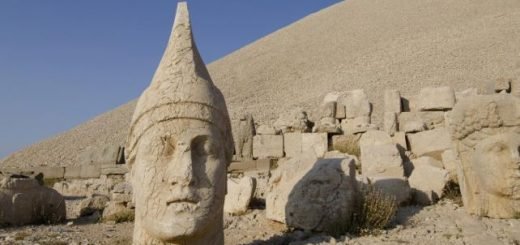
Reasons why Mesopotamia is often called the “Cradle of Civilization”
Mesopotamia: The Birthplace of Memory and Myth
Mesopotamia, the land between the Tigris and Euphrates rivers, was the epicenter of the earliest urban civilizations: Sumer, Akkad, Babylon, and Assyria. These cultures pioneered written language, law, mathematics, and theology. Amid this dynamic mosaic of gods, kings, and empires, the story of the Jewish people begins with Abraham, a man of Ur.
Ur, a bustling city in southern Mesopotamia, was a spiritual crossroads where temples to Nanna, the moon god, dominated the skyline. It was here that Abraham—then known as Abram—first appears in the biblical narrative. According to Genesis, he is called to leave his homeland and journey to an unknown land, guided only by divine promise. What distinguishes Abraham from the religious milieu of his environment is not merely a belief in one god, but a radical departure from the prevailing theology: he forms a direct, personal relationship with a single, incorporeal, moral deity who demands faith and ethical behavior rather than sacrificial rituals alone.
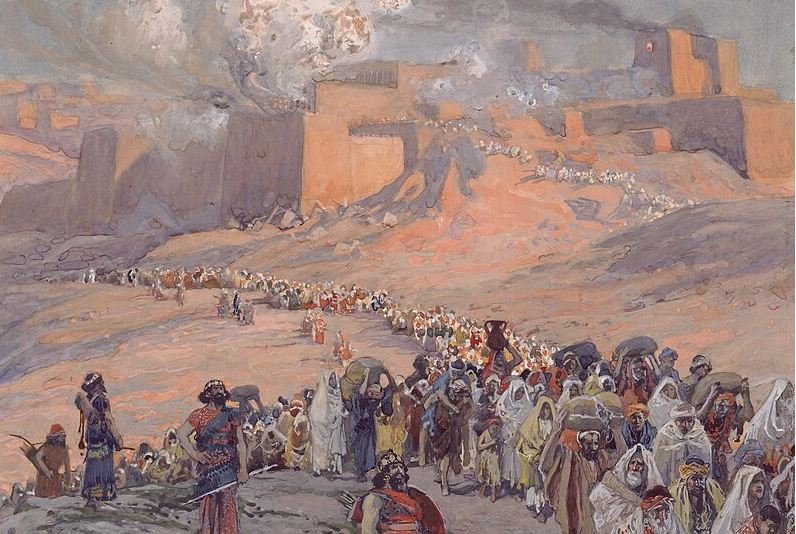
An illustration showing the banishment of the Jewish people from the ancient Kingdom of Judah to Babylon
READ ALSO: 10 Most Famous Ancient Mesopotamian Kings
This transition marked a tectonic shift in spiritual consciousness. In a society of visible gods represented by idols and natural forces, Abraham’s invisible God—unseen yet omnipotent—initiated a new kind of religious identity, one that emphasized inner conviction over external observance. The Jewish spirit, in this sense, was born in resistance to the spiritual architecture of Mesopotamia. It was a rejection of static cosmologies and a leap into a dynamic, unfolding relationship with the divine.
From Family Saga to National Memory
Abraham’s descendants—Isaac, Jacob, and the twelve sons of Israel—transformed the personal faith of their patriarch into a collective memory. The Book of Genesis presents their lives as a series of journeys, conflicts, and reconciliations. Yet these narratives are more than ancient tales; they encode early Jewish values such as covenantal loyalty, moral struggle, and divine testing. Jacob’s wrestling with the angel, culminating in the renaming of Israel, symbolizes the tension and resilience at the heart of the Jewish spiritual path.
Even in these early patriarchal tales, the Jewish spirit reveals itself not through triumph or conquest, but through endurance, introspection, and moral responsibility. These stories emerged in oral form before being canonized, shaped by centuries of transmission, migration, and interpretation. While their events may be “never seen” in archaeological terms, their impact is visible in the enduring ethical framework they provided to Jewish thought.
Exile and Egypt: The Spirit in Displacement
The journey from Mesopotamia led the Israelites to Egypt, a land of abundance and oppression. Here, they flourished and suffered in equal measure. While the historical record of the Israelites in Egypt remains debated, the narrative of Exodus—central to Jewish identity—describes a profound transformation from tribal family to enslaved nation. It is in bondage that the Jewish spirit begins to crystallize as a communal ethos.
The divine call to Moses from the burning bush marks another milestone in Jewish spiritual history. Here, God identifies as “I Am That I Am” (Ehyeh Asher Ehyeh), a name that defies anthropomorphism and embraces being itself. This profound theological insight, emerging from the wilderness, reflects a maturation of the monotheistic idea first planted in Mesopotamia.
The Exodus, with its dramatic plagues, liberation, and journey to Sinai, becomes the foundational myth of Jewish peoplehood. It is both a political and spiritual awakening. The giving of the Torah at Sinai, where law and spirit converge, defines the next phase of Jewish identity. This moment translates the invisible covenant of Abraham into a visible, structured way of life—mitzvot (commandments), rituals, festivals, and legal principles—all of which express the hidden trace of divine purpose in daily life.
Wilderness and Covenant: Forming a People of the Spirit
Forty years in the wilderness were more than a historical transition; they were a spiritual incubation. The generation that emerged from slavery had to be remade into a community bound not by blood alone but by shared values and divine law. The wilderness period, with its rebellions, miracles, and divine instruction, offered an environment where the Jewish spirit could evolve beyond tribalism into moral nationhood.
Unlike the Mesopotamian empires that measured greatness in conquests and monuments, the Israelites were forming a civilization based on memory, story, and covenant. Their concept of holiness was not confined to temples but extended to time (the Sabbath), action (justice, charity), and community (hospitality, kinship). This shift—from space to time, from spectacle to ethic—was revolutionary and bore the signature of a spirituality that transcended visibility.
Canaan and Kingship: A Spiritual Tension
Entering Canaan brought new challenges. The transition from a nomadic spiritual identity to a settled, agricultural one risked diluting the intensity of the Jewish spirit. With kingship came bureaucracy, and with prosperity came moral complacency. Yet the Hebrew Bible reveals this tension vividly: prophets rose to critique kings, warn the people, and call for justice.
Figures like Samuel, Elijah, Isaiah, and Jeremiah were the conscience of the nation. They did not promote blind nationalism but insisted that true worship required ethical behavior: caring for the widow and orphan, denouncing corruption, and defending the poor. This prophetic tradition preserved the earlier Mesopotamian-born idea that the divine demands justice, not just ceremony.
The prophets served as vessels of the “never seen” spirit—guardians of a transcendent moral voice that resisted political manipulation. Their words, often ignored in their time, became sacred literature that influenced generations. The Jewish spirit, thus, was never content with institutions alone. It sought transformation, introspection, and alignment with the divine will.
Babylonian Exile: The Spirit Rekindled
The destruction of the First Temple in 586 BCE and the subsequent exile to Babylon marked one of the greatest crises in Jewish history. But paradoxically, it was in exile that the Jewish spirit demonstrated its greatest resilience. Removed from their land, temple, and political sovereignty, the Jews preserved their identity not through rebellion but through reimagining.
Babylon, the symbolic return to Mesopotamia, became the setting for spiritual rebirth. In place of sacrifice, they emphasized prayer and study. Synagogues emerged. The Torah, once a national constitution, became a portable sanctuary. The oral traditions took shape. The Jewish people adapted their spirituality to survive in a foreign land without losing their essence.
The Psalms, Lamentations, and prophetic writings of Ezekiel and Deutero-Isaiah all reflect a reconfiguration of the divine-human relationship. God was no longer confined to a land or building. The Shekhinah—God’s indwelling presence—could accompany the people in exile. This theological innovation allowed Judaism to transcend geography and endure future dispersions.
Return and Reinvention: The Second Temple and Beyond
The return from Babylon under Persian rule in the late 6th century BCE led to the rebuilding of the Temple and the reinstitution of certain rituals. However, the Jewish spirit had evolved. Ezra and Nehemiah led not just a physical restoration but a religious one, emphasizing public Torah reading and communal covenant renewal. Jewish identity became more textual, legal, and pedagogical.
The Second Temple period witnessed the rise of sectarianism—Sadducees, Pharisees, Essenes—each interpreting the spirit of the law in unique ways. While some focused on purity and ritual, others emphasized oral tradition and ethical behavior. Despite internal divisions, these movements reflected the underlying vitality of Jewish spirituality.
This era also witnessed the translation of Jewish texts into Greek, the emergence of diaspora communities in Alexandria and beyond, and the gradual transformation of Judaism into a religion that could speak to multiple worlds without losing its core. Even under Roman occupation, Jewish thinkers like Philo of Alexandria bridged Hellenistic philosophy and Jewish theology, showing the elasticity of the Jewish spirit in adapting while remaining rooted.
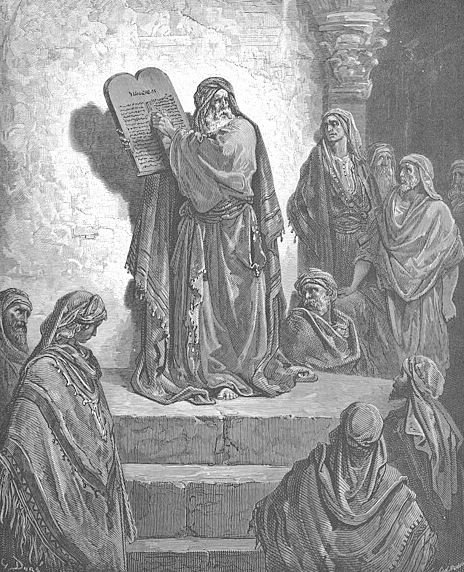
“Ezra Reads the Law to the People”, a painting by French artist Gustave Doré.
Destruction and Diaspora: A Spirit Without a Center
The destruction of the Second Temple in 70 CE by the Romans posed an existential threat. Once again, the physical center was lost, but the spiritual core endured. Rabbinic Judaism emerged as the new guardian of tradition. The Mishnah, Talmud, and midrashic literature became the foundation of Jewish learning and community life.
This period marks one of the most remarkable transformations in religious history: a sacrificial cult became a textual civilization. Jewish spirituality became anchored not in places but in practices—study, prayer, mitzvot, debate, interpretation. The Talmudic sages, heirs of the Mesopotamian ethos, turned exile into opportunity. The “never seen” spirit that began in Ur had now become a vast body of law, lore, and ethical reflection that could be carried into any land.
What was the First Jewish–Roman War? – History and Major Facts
The Wandering Spirit: From Babylon to Spain, Poland, and Beyond
As Jews spread across the world—into Persia, North Africa, Europe, and Asia—their spirit evolved in dialogue with host cultures while preserving its inner compass. In Islamic lands, Jewish philosophers and poets flourished. Saadia Gaon, Yehuda Halevi, and Maimonides all engaged with Arabic philosophy and theology, producing works that remain central to Jewish thought.
In Christian Europe, despite persecution, the Jewish spirit manifested in mysticism (Kabbalah), communal autonomy, and scholastic excellence. The Ashkenazi tradition developed its own customs, liturgy, and literature, while the Sephardi tradition preserved a rich cultural legacy from Spain. Even in ghettos, shtetls, or under Inquisition, the Jewish spirit resisted erasure.
It thrived in hidden corners—chanting the Psalms by candlelight, teaching Torah in secret, weaving spiritual resistance into folk tales, songs, and prayers. The sense of divine presence—never fully visible, always sensed—endured.
Modernity and the Reawakening of the Spirit
The Enlightenment and emancipation challenged traditional Jewish life. Some abandoned religious practice, while others reinterpreted Jewish identity in secular, cultural, or political terms. The Jewish spirit expressed itself now in literature, science, revolution, and the arts. Spinoza, Marx, Freud, Kafka, Einstein—each in their own way—reflected fragments of that ancient legacy, though no longer confined to its religious framework.
Zionism, both secular and religious, represented yet another reinvention. It was a return not just to land but to agency. The founding of the State of Israel in 1948 signaled a profound shift: the Jewish spirit was no longer only diasporic. It had a physical, political expression once more. Yet, paradoxically, the spiritual questions deepened—how to reconcile ancient faith with modern nationalism, religious tradition with pluralism.

A model of Second Temple is showcased as part of the Holyland Model of Jerusalem at the Israel Museum.
The Holocaust: Silence and Renewal
The Holocaust posed a near-fatal rupture. Six million Jews perished, including entire centers of Jewish learning and culture. The Jewish spirit was tested to its core. In the ashes of Auschwitz and Treblinka, faith was shattered for many. Yet even there, traces of that ancient Mesopotamian-born resolve surfaced: clandestine prayers, Torah memorization, acts of kindness amid horror.
Post-Holocaust theology wrestled with divine silence, suffering, and survival. Thinkers like Emil Fackenheim argued for a “614th commandment”—to survive as Jews in defiance of Hitler. The “never seen” spirit had spoken through silence, endurance, and the refusal to disappear.