Deir el-Bahari: Origin Story and Major Facts
Deir el-Bahari, meaning “Monastery of the North” in Arabic, is a significant archaeological site located on the west bank of the Nile, opposite the city of Luxor, in what was...
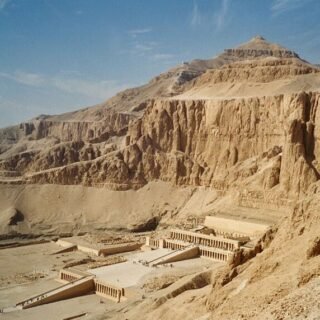
Deir el-Bahari, meaning “Monastery of the North” in Arabic, is a significant archaeological site located on the west bank of the Nile, opposite the city of Luxor, in what was...

Pharaoh Mentuhotep II, often regarded as the unifier of Egypt and the founder of the Middle Kingdom, played a pivotal role in shaping the course of ancient Egyptian history. His...

Mentuhotep II, one of ancient Egypt’s most significant pharaohs, is best known for reunifying Egypt after the chaotic First Intermediate Period and for establishing the Middle Kingdom. His achievements as...

Thutmose II, also spelled as Thutmosis or Tuthmosis, was the fourth pharaoh of Egypt’s Eighteenth Dynasty. His reign, dated to approximately 1493 to 1479 BCE under the Low Chronology, was...

The Valley of the Kings is one of the most iconic archaeological sites in the world, located on the west bank of the Nile River near Luxor, Egypt, within the Theban Necropolis....
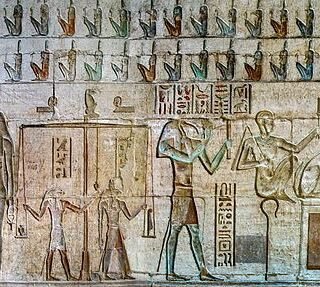
The concept of the Forty-Two Judges comes from ancient Egyptian mythology, specifically the beliefs surrounding the afterlife and the journey of the soul after death. It is closely associated with...
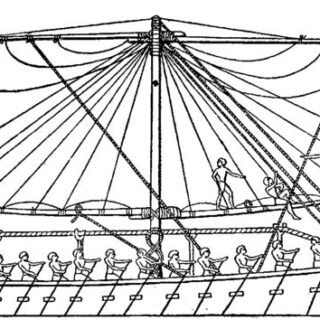
“The Tale of the Shipwrecked Sailor” is an ancient Egyptian literary work that dates back to the Middle Kingdom (circa 2000-1700 BCE). This captivating narrative is often considered one of...
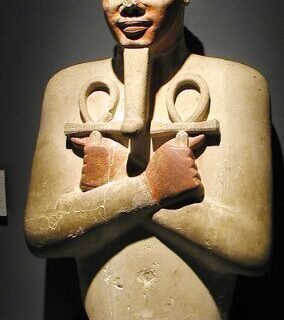
Senusret I, also known as Sesostris I, was the second pharaoh of Egypt’s Twelfth Dynasty, which is considered part of the Middle Kingdom period (c. 1971 BC – 1926 BC)....
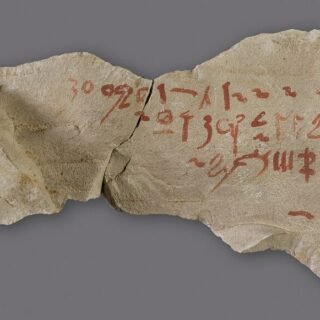
The Instruction of Amenemope is an ancient Egyptian text written during the late New Kingdom period, around the 12th century BCE. It is a literary and instructional work primarily focused on imparting...

The Field of Reeds, also known as Aaru or Sekhet-Aaru, is one of the most important aspects of ancient Egyptian religion, representing their vision of paradise and the afterlife. Aaru...
During the reign of Senusret III, a prominent Pharaoh of Egypt’s 12th Dynasty, the kingdom experienced a period of relative political stability, with many of the internal struggles that had...
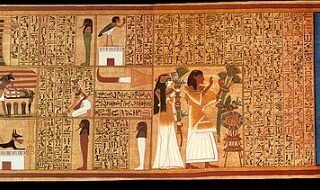
The Papyrus of Ani is one of the most well-known and best-preserved examples of the Book of the Dead, an ancient Egyptian funerary text designed to guide the deceased through...
In ancient Egypt, religion was deeply intertwined with daily life, politics, and the natural world. The pantheon of gods and goddesses that the Egyptians worshiped was vast, and one of...

Thutmose IV, also known as Thutmosis IV or Tuthmosis IV, was the eighth pharaoh of Egypt’s 18th Dynasty, reigning during the 14th century BC (approximately 1401–1391 BC). His reign marked...
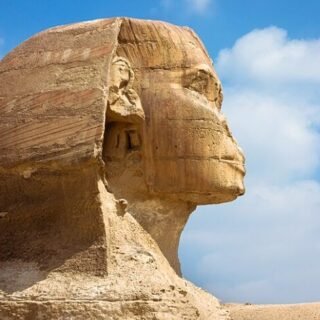
The Great Sphinx of Giza is one of the most iconic and enduring symbols of ancient Egypt, standing proudly on the Giza Plateau, adjacent to the pyramids. It has intrigued...





