Who was Pharaoh Siptah?
Pharaoh Siptah, also known as Akhenre Setepenre or Merneptah Siptah, was the penultimate ruler of Egypt’s Nineteenth Dynasty. His reign, though brief and shrouded in mystery, offers insight into the...

Pharaoh Siptah, also known as Akhenre Setepenre or Merneptah Siptah, was the penultimate ruler of Egypt’s Nineteenth Dynasty. His reign, though brief and shrouded in mystery, offers insight into the...
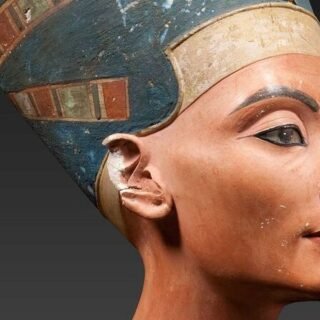
The Nefertiti Bust is one of the most famous and iconic pieces of ancient Egyptian art, representing not only the beauty and grace of Queen Nefertiti but also the rich...
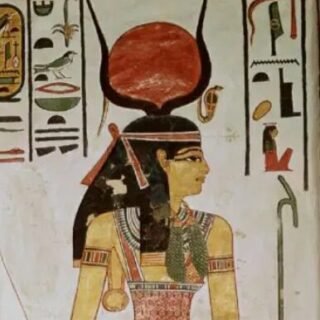
Isis, one of the most significant deities in ancient Egyptian religion, is a goddess whose story is intricately woven into the fabric of Egyptian mythology. Her origin and role in...

Seth, one of the most complex and multifaceted gods in ancient Egyptian mythology, plays a pivotal role in the Osiris myth, one of the most significant and enduring stories of...

Nefertiti, one of ancient Egypt’s most enigmatic and influential queens, played a pivotal role during the reign of her husband, Pharaoh Akhenaten. Her influence extended beyond that of a traditional...

Ever wondered why most paintings or sculptures of the Egyptian queen Hatshepsut depict her as a male pharaoh with broad shoulders and a beard? Well, legend claims much of Hatshepsut’s...

In ancient Egypt, the false beard, known as “postiche,” was a significant symbol of power and divinity. This unique ornament was not merely a fashion statement but a potent emblem...

Ancient Egypt, one of the most influential civilizations in history, boasts a rich tapestry of events that have shaped its development over millennia. From its inception around 3100 BC to...

Ancient Egypt, with its rich history spanning over three millennia, witnessed the rise and fall of many empires. The allure of Egypt’s wealth, strategic location, and fertile lands along the...

The Nile River, the longest river in the world, stretches through eleven countries in northeastern Africa, and it was pivotal in the development of ancient Egypt, a civilization that thrived...

The Great Pyramid of Giza, constructed around 2580-2560 BC during the reign of Pharaoh Khufu, is one of the most iconic and enduring symbols of ancient Egypt. However, its grandeur...

The judgment of the dead in ancient Egyptian mythology is an intricate process that embodies the culture’s moral and ethical framework, emphasizing the importance of truth, justice, and righteousness. This...

King Tutankhamun‘s tomb, officially catalogued as KV62, is located in the Valley of the Kings near Luxor, Egypt. Discovered on November 4, 1922, by British archaeologist Howard Carter and financed...

The discovery of the tomb of Tutankhamun in 1922 by Howard Carter and George Herbert, 5th Earl of Carnarvon, marked a watershed moment in the history of Egyptology and captured...

Sekhmet, often known as “the Bloodthirsty,” is a captivating figure from ancient Egyptian mythology who embodies the dual nature of being both a nurturing mother and a formidable adversary. Her...





