Who are the most pioneering figures in Egyptology?
Egyptology, the scientific study of ancient Egypt, has been shaped by numerous scholars whose groundbreaking discoveries have unveiled the mysteries of one of the world’s oldest civilizations. From deciphering hieroglyphs to uncovering tombs and temples, these pioneering figures have laid the foundation for modern Egyptology.
Below, World History Edu explores some of the most influential Egyptologists and their contributions.
Jean-François Champollion (1790–1832)

The French philologist and orientalist Jean-François Champollion (1790–1832) is best known for deciphering Egyptian hieroglyphs.
Jean-François Champollion is widely regarded as the father of Egyptology. His most significant achievement was deciphering Egyptian hieroglyphs, a task that had puzzled scholars for centuries.
The discovery of the Rosetta Stone in 1799, which contained the same text in Greek, Demotic, and hieroglyphic script, provided the key to unlocking this ancient language. By comparing these scripts, Champollion demonstrated that hieroglyphs were not merely symbolic but also phonetic, laying the groundwork for the translation of ancient Egyptian texts.
Champollion’s work, Précis du système hiéroglyphique des anciens Égyptiens (1824), remains a cornerstone in the study of ancient Egyptian writing.
A Demotist is an Egyptologist who specializes in the study of the Demotic language and related texts.
Karl Richard Lepsius (1810–1884)

An 1874 photograph of Karl Richard Lepsius.
Karl Richard Lepsius was a German Egyptologist who significantly advanced the field through his extensive documentation and classification of ancient Egyptian monuments.
Sent by the Prussian government in the 1840s, Lepsius led an expedition to Egypt and Nubia, where he meticulously recorded temples, tombs, and inscriptions.
His work culminated in the publication of Denkmäler aus Aegypten und Aethiopien (Monuments from Egypt and Ethiopia), a multi-volume work that provided invaluable insights into ancient Egyptian civilization. Lepsius is also credited with creating a chronological framework for Egyptian history.

Auguste Mariette (1821–1881)

Auguste Mariette in 1861.
Auguste Mariette, a French Egyptologist, was instrumental in preserving Egypt’s ancient heritage. Recognizing the rampant looting of artifacts, he advocated for the establishment of the Egyptian Antiquities Service to regulate excavations and protect monuments.
Auguste Mariette, Gaston Maspero, and Pierre Montet made major discoveries, including temples, tombs, and important artifacts.
Mariette’s most famous discovery was the Serapeum of Saqqara, a vast underground necropolis containing the tombs of sacred Apis bulls. Mariette also founded the Egyptian Museum in Cairo, ensuring that many artifacts remained in Egypt rather than being exported to European collections.
Gaston Maspero (1846–1916)

Portrait of Gaston Maspero
Gaston Maspero succeeded Mariette as head of the Egyptian Antiquities Service and continued efforts to safeguard Egypt’s treasures. He played a crucial role in clearing the Great Pyramid of Giza‘s internal chambers and cataloging thousands of artifacts.
The French Egyptologist Maspero also discovered the Royal Cache at Deir el-Bahari, which contained the mummies of several New Kingdom pharaohs, including Ramses II and Thutmose III. His meticulous documentation efforts helped preserve knowledge about Egypt’s rulers and burial customs.
Gaston Maspero’s meticulous work in excavation, documentation, and analysis has preserved invaluable knowledge and continues to inspire future generations of scholars.
Flinders Petrie (1853–1942)

A 1903 photograph of Flinders Petrie.
William Matthew Flinders Petrie revolutionized archaeological methodology by introducing systematic excavation techniques. Before his work, excavations often resulted in the destruction of valuable contextual information.
Petrie emphasized careful stratigraphic recording and pioneered seriation, a dating method based on changes in pottery styles.
His discoveries include the Merneptah Stele, which contains the earliest known reference to Israel, and the excavation of the Pyramid of Hawara, which provided insights into Middle Kingdom burial practices. His influence extended beyond Egyptology, shaping archaeological practices worldwide.
English Egyptologist and archeologist Sir Flinders Petrie revolutionized the field with his systematic excavation methods, making him one of the key figures in modern Egyptology.
Howard Carter (1874–1939)
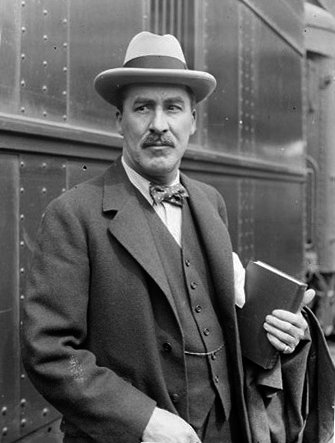
British archaeologist and Egyptologist Howard Carter
One of the most famous figures in Egyptology, Howard Carter, made history in 1922 with the discovery of the nearly intact tomb of Pharaoh Tutankhamun in the Valley of the Kings. This find was unparalleled in its significance, as it contained a vast array of treasures, including the golden funerary mask that has become an iconic symbol of ancient Egypt.
Howard Carter discovered the tomb of Tutankhamun in 1922, one of the most significant archaeological finds in history.
Carter’s meticulous excavation and documentation set new standards for archaeological practice. His publication, The Tomb of Tutankhamun, remains a crucial reference for understanding the burial customs of the New Kingdom.
Challenges and Controversies Surrounding the Discovery of Tutankhamun’s Tomb
James Henry Breasted (1865–1935)

A 1928 photo of James Henry Breasted
James Henry Breasted was a pioneering American Egyptologist who sought to make ancient Egyptian history accessible to a broader audience.
He founded the Oriental Institute at the University of Chicago, which became a leading center for Near Eastern studies. His seminal work, A History of Egypt, provided one of the first comprehensive narratives of Egyptian civilization.
Henry Breasted also led expeditions to document inscriptions and monuments, ensuring their preservation through photography and detailed records.
The contributions of James Henry Breasted, a pioneering Egyptologist, have fundamentally shaped our understanding of ancient Egypt.
Zahi Hawass (Born 1947)

Egyptian scholar and Egyptologist Zahi Hawass in 2009
Zahi Hawass has been one of the most recognizable figures in modern Egyptology. As the former Secretary-General of the Supreme Council of Antiquities, he played a key role in overseeing excavations, restoring monuments, and advocating for the return of Egyptian artifacts housed in foreign museums.
Zahi Hawass’s discoveries include the Valley of the Golden Mummies in Bahariya Oasis and the identification of Queen Hatshepsut’s mummy. Hawass has also been a strong proponent of using modern technology, such as CT scans and DNA analysis, to study mummies and uncover new insights into ancient Egyptian health and lineage.
Salima Ikram (Born 1965)

A 2015 photo of Salima Ikram.
Salima Ikram is a leading Egyptologist specializing in mummification and funerary practices. Her research has provided in-depth analysis of how ancient Egyptians preserved their dead, from human mummies to animal embalming. She has worked extensively on projects such as the Valley of the Kings and Saqqara necropolis, and her books, including Death and Burial in Ancient Egypt, have become essential reading for students and scholars alike.
Notable modern Egyptologists include Zahi Hawass, Salima Ikram, and Mark Lehner, who continue to lead excavations and research.
Mark Lehner (Born 1950)

Mark Lehner
Mark Lehner has dedicated much of his career to studying the pyramids of Giza. His research has provided valuable insights into how these structures were built, including the discovery of a workers’ village near the Great Pyramid, which sheds light on the labor force and logistics behind their construction. His meticulous mapping of the Giza Plateau has contributed significantly to understanding the layout and purpose of various monuments in the area.
Questions and Answers
What is Egyptology?
Egyptology is the scientific study of ancient Egypt, including its history, language, literature, religion, architecture, and art, spanning from the 5th millennium BC to the 4th century AD.
Egyptology is taught at a number of universities across the world, including famous institutions like the University of Chicago, Oxford, Cambridge, and the University of Cairo.
Egyptologists work in universities, museums, and research institutes, including the British Museum, the University of Chicago, and the Egyptian Ministry of Antiquities.
Who were the first explorers of ancient Egypt?
The ancient Egyptians themselves were the first explorers. Thutmose IV excavated the Great Sphinx, and Prince Khaemweset restored historic structures.
How did classical antiquity contribute to Egyptology?
Greek and Roman historians like Herodotus, Strabo, and Diodorus Siculus documented Egypt. The Ptolemies restored monuments and built new temples in the Egyptian style.
READ MORE: 10 Most Famous Rulers from the Ptolemaic Dynasty
What role did medieval scholars play in Egyptology?
Medieval Islamic scholars attempted to translate hieroglyphs and recorded detailed descriptions of Egyptian monuments. European travelers also documented Egyptian sites.

Who was the first modern Egyptologist?
Jean-François Champollion deciphered hieroglyphs in 1822, marking the beginning of modern Egyptology.
What was the significance of Napoleon’s invasion of Egypt?
Napoleon Bonaparte‘s 1798 campaign led to the discovery of the Rosetta Stone and the publication of Description de l’Égypte, expanding European knowledge of ancient Egypt.
How did Flinders Petrie influence Egyptology?
Flinders Petrie introduced scientific excavation techniques, improving artifact preservation and record-keeping.
What was the significance of Howard Carter’s discovery?
Howard Carter’s 1922 discovery of Tutankhamun’s tomb provided a wealth of artifacts and increased global interest in ancient Egypt.
Which Egyptologists contributed to the study of hieroglyphs?
Jean-François Champollion, Thomas Young, and Adolf Erman played key roles in deciphering and understanding ancient Egyptian writing.
Which Egyptologists focused on Egyptian religious studies?
Jan Assmann and Erik Hornung have made significant contributions to the study of ancient Egyptian religion and beliefs.
Are there fictional Egyptologists in popular culture?
Yes, fictional Egyptologists include Evelyn Carnahan from The Mummy, Daniel Jackson from Stargate, and Amelia Peabody from the Amelia Peabody series.
How has modern technology impacted Egyptology?
Geophysical surveys, underwater archaeology, and 3D imaging have enhanced discoveries, such as the sunken city of Thonis-Heracleion and new tombs in Saqqara.
What are some recent discoveries in Egyptology?
Recent finds include lost cities, new tombs, and well-preserved mummies, such as the 4,400-year-old tomb of Wahtye and the discovery of over 100 painted coffins in Saqqara.
What are some biases in Egyptology?
Early Egyptology was influenced by colonial biases, often downplaying Egypt’s African identity. Modern scholars emphasize Egypt’s African cultural connections.
What is the main professional organization for Egyptologists?
The International Association of Egyptologists (IAE) organizes global conferences and promotes research in the field.
As technology advances, modern Egyptologists build upon the works of these pioneering Egyptologists, further unraveling the mysteries of one of the world’s most fascinating civilizations.





