Ottoman conquest of Adrianople
The conquest of Adrianople was a landmark event in Ottoman and Balkan history. It marked the consolidation of Ottoman power in Europe, leading to the eventual collapse of Byzantine control over the Balkans.
Ottoman Expansion into the Balkans
The conquest of Adrianople (modern-day Edirne) was a crucial milestone in the Ottoman expansion into the Balkans during the 14th century.
This period was characterized by rapid Turkish territorial gains following the seizure of Gallipoli in 1354. The capture of Gallipoli provided the Ottomans with a strategic foothold in Europe, facilitating their advance into Thrace and beyond.
However, their expansion was briefly interrupted between 1357 and 1359 due to the Kidnapping of Şehzade Halil, the son of Sultan Orhan. The incident led to a temporary halt in military operations as efforts were focused on securing his release.

Orhan Ghazi – 16th century Ottoman miniature of Orhan Gazi
Once Halil was rescued, the Ottomans resumed their campaign, targeting key Byzantine cities. At the time, Adrianople was the third most important city in the Byzantine Empire, following Constantinople and Thessalonica. Control over Adrianople meant securing dominance over the central Balkans, which was vital for further expansion.
Turkish forces, either under direct Ottoman command or independent ghazi (warrior) bands, managed to capture Demotika (Didymoteicho) in 1360 or 1361, followed by Filibe (Philippopolis) in 1363. These conquests demonstrated the increasing strength of the Ottomans and their ability to consolidate control over vast territories despite resistance from local rulers.
Despite attempts to resist Ottoman advances, Byzantine forces suffered significant setbacks. The Savoyard Crusade of 1366, led by Amadeus VI of Savoy, briefly recaptured Gallipoli, offering some relief to Byzantium. However, this did little to curb the overall Ottoman expansion.
More Turcoman warriors from Anatolia continued to cross into Europe, reinforcing Turkish control over Thrace and extending influence westward to the Rhodope Mountains and northward to Bulgarian principalities.
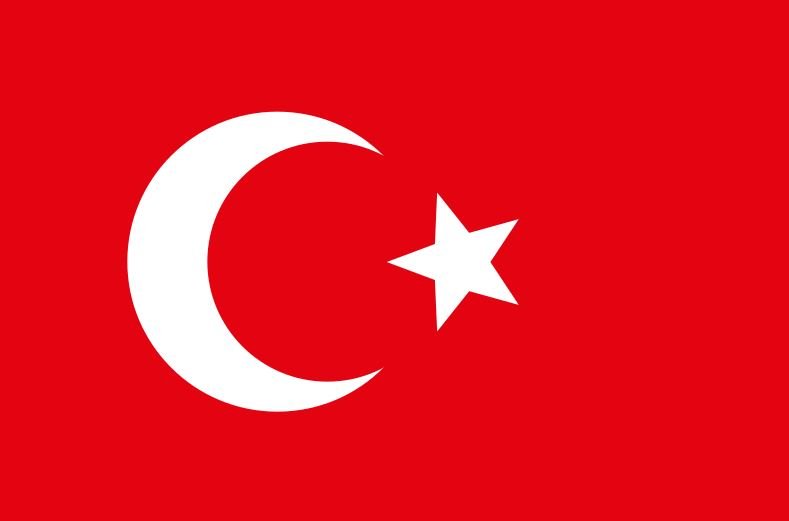
Flag used by the Ottoman Empire between 1844 and 1922.
The Capture of Adrianople
The precise date of the Ottoman conquest of Adrianople remains a subject of scholarly debate due to conflicting historical sources. Different accounts suggest the city may have fallen in 1361, 1362, 1367, or even 1371.
Early historical interpretations, relying on Ottoman sources, placed the conquest between 1361 and 1363, linking it to a reported solar eclipse that supposedly occurred in the same year. These sources claim that Lala Shahin Pasha, a prominent Ottoman commander, defeated the Byzantine tekfur (governor) of Adrianople at the Battle of Sazlıdere, southeast of the city. Following this battle, the Byzantine ruler is said to have fled by boat, leaving the city’s population to negotiate surrender terms.
As a result, Adrianople fell into Ottoman hands in summer 1362, with the inhabitants granted assurances of continued residence and religious freedom.
However, later historical analyses, particularly those by Elisabeth Zachariadou, suggest a different timeline. Byzantine sources indicate that Adrianople was still under Byzantine control as late as Christmas 1366, as evidenced by a poem from the city’s metropolitan bishop addressed to Emperor John V Palaiologos.
Furthermore, a collection of Byzantine short chronicles suggests the city was captured in 1369. This revised timeline challenges earlier assumptions and raises the possibility that the conquest was not exclusively an Ottoman military operation but rather involved independent akinji (raider) bands operating in the region.
Regardless of the exact date, the loss of Adrianople was a significant blow to the Byzantine Empire. It marked a turning point in Ottoman-Balkan relations, solidifying their presence in Thrace and opening the pathway for further territorial expansion.
Aftermath and Transformation of Adrianople into Edirne
Following its conquest, Adrianople was renamed Edirne, reflecting its integration into the growing Ottoman state. The city was initially administered by Lala Shahin Pasha, who managed local governance and military affairs while Sultan Murad I continued to rule from the former Ottoman capital, Bursa.

A 16th-century manuscript features a miniature of Murad I.
Despite the conquest, Murad did not immediately establish Edirne as the official capital. Instead, Ottoman administration operated out of multiple centers, including Bursa, Demotika, and Edirne. However, by the late 14th century, Edirne emerged as the primary Ottoman stronghold in the Balkans, serving as a strategic military and political hub.
Adrianople’s transformation into Edirne solidified Ottoman influence in the region and facilitated further conquests, including the eventual fall of Constantinople.
Murad I first entered the city in the winter of 1376/7, a period that coincided with a pivotal event in Byzantine-Ottoman relations. Byzantine Emperor Andronikos IV Palaiologos, embroiled in a civil war, sought Ottoman assistance against his rivals. In return for Murad’s support, Andronikos ceded the crucial stronghold of Gallipoli to the Ottomans, further consolidating their grip over the European side of the Dardanelles.
Edirne soon evolved into the de facto Ottoman capital, remaining so until the conquest of Constantinople in 1453. The city’s strategic location made it ideal for governing the rapidly expanding empire, particularly given its proximity to major trade routes, military corridors, and Byzantine territories. It also became an essential base for launching further campaigns into the Balkans, particularly against Serbian, Bulgarian, and Hungarian forces.
Edirne as a Key Ottoman Center
Beyond its strategic importance, Edirne played a central role in administration, commerce, and culture. The Ottomans initiated significant urban development projects to transform Edirne into a flourishing capital. Mosques, schools, and marketplaces were built, reflecting Ottoman architectural and cultural influence.
The city’s population grew as Turkish settlers, merchants, and artisans migrated from Anatolia, bringing with them new economic and artistic traditions.
Adrianople’s rise as a political, military, and economic center reinforced its role as a crucial stepping stone in the expansion of Ottoman rule westward.
Edirne also became a crucial military staging ground. During the Ottoman Interregnum (1402–1413)—a period of civil war following the defeat of Sultan Bayezid I by Tamerlane at the Battle of Ankara—one of Bayezid’s sons, Süleyman Çelebi, moved the state treasury to Edirne, emphasizing its importance as the Ottoman administrative center.
The city continued to serve as the empire’s political heart until Mehmed II’s conquest of Constantinople in 1453, after which the new Ottoman capital was transferred to the former Byzantine metropolis.
Frequently Asked Questions
What was the significance of Adrianople for the Byzantines?
Adrianople was the third most important Byzantine city after Constantinople and Thessalonica, serving as a strategic and economic center in Thrace.
What triggered Ottoman expansion towards Adrianople?
After capturing Gallipoli in 1354, the Ottomans intensified their expansion in the Balkans, with Adrianople as a key target due to its strategic location.
When did the Ottomans capture Adrianople?
The exact date is disputed, with some sources suggesting 1361–1363, while modern scholars favor 1369 based on Byzantine chronicles.
READ MORE: 10 Most Famous Byzantine Emperors and Empresses
Who led the Ottoman forces in the conquest?
Lala Shahin Pasha is traditionally credited with leading the Ottoman forces at the Battle of Sazlıdere, defeating the Byzantine ruler and capturing the city.
Was the conquest carried out solely by the Ottomans?
Some scholars suggest that independent akinji warrior bands, rather than organized Ottoman forces, may have played a role in capturing the city.
Why did Edirne become the Ottoman capital?
Though Murad I initially ruled from Bursa, Edirne became the main Ottoman military base in the Balkans and later the de facto capital until Constantinople’s fall in 1453.
How did the Byzantines react to the loss of Adrianople?
Byzantine sources indicate they still controlled the city in 1366, but after its fall, their influence in Thrace weakened significantly.
What was the impact of Adrianople’s capture on the Ottoman Empire?
Edirne became a major administrative and military center, facilitating further Ottoman expansion into the Balkans.
Who was Constantine XI Palaiologos, the last emperor of the Byzantine Empire?