The Latin Alphabet
The Latin alphabet, also referred to as the Roman alphabet, is the writing system originally developed and employed by the ancient Romans to document the Latin language. Over the centuries,...

The Latin alphabet, also referred to as the Roman alphabet, is the writing system originally developed and employed by the ancient Romans to document the Latin language. Over the centuries,...
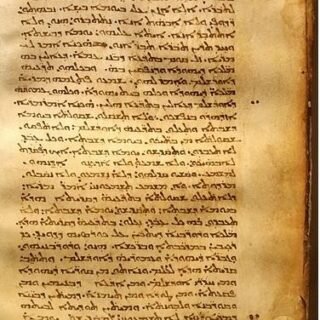
The Peshitta is the standard version of the Bible for churches in the Syriac tradition, containing both the Old and New Testaments. Summary The Peshitta (Classical Syriac: ܦܫܺܝܛܬܳܐ or ܦܫܝܼܛܬܵܐ,...

The Antonine Plague is also referred to as the Plague of Galen. It was a deadly epidemic that afflicted the Roman Empire between AD 165 and 180. Named after the Greek...

Osroene, also known as the Kingdom of Edessa, was an ancient state and region in Upper Mesopotamia. Established in the 2nd century BC, it remained an independent or semi-autonomous entity...
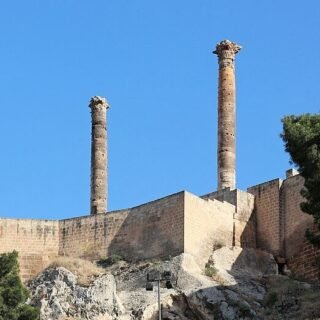
Edessa, an ancient city in Upper Mesopotamia, is known for its rich historical and cultural legacy. Located in present-day Şanlıurfa, Turkey, Edessa played a significant role in various historical epochs,...

The Church of Saint-Germain l’Auxerrois, located in the 1st arrondissement of Paris, stands as an enduring symbol of medieval Catholic heritage. Positioned directly opposite the Louvre Palace, the church bears...

Bayt al-Ahzan translates to “House of Sorrows.” It was a historical structure situated in Al-Baqi Cemetery in Medina, located in the Hejaz region of present-day Saudi Arabia. Bayt al-Ahzan was...

A French Egyptologist Émile Gaston Chassinat (1868–1948) known for his contributions to temple inscriptions and hieroglyphic studies. Early Life and Education Émile Gaston Chassinat was born on May 5, 1868....

Andy Warhol’s Marilyn Diptych (1962) is a landmark of American Pop Art, encapsulating the essence of celebrity culture and mass media in the 20th century. This monumental piece, featuring 50...

The Roman Rite, the most prevalent liturgical tradition within the Latin Church, governs the manner in which ecclesiastical services, sacraments, and blessings are performed. As the principal ritual of the...

Kameriye Malhun Hatun, also referred to as Mal Hatun or Mala Hatun, was the second legal wife of Osman I, the founder of the Ottoman dynasty. She played a crucial...
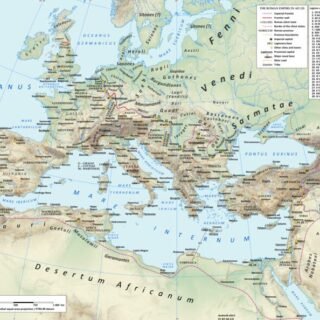
The Marcomanni were a major Germanic tribe that played a crucial role in Roman-Germanic relations, engaging in conflicts with Rome and forming powerful alliances with other Suebian tribes. Origins and...
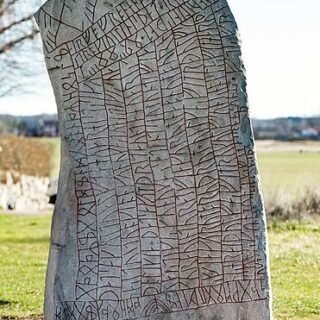
Runes are an ancient writing system used by Germanic peoples during the first millennium AD and beyond. These symbols formed the basis of runic alphabets, also called runic rows or...

Tuskegee University (TU), formerly known as Tuskegee Institute, stands as one of the most historically significant institutions in the United States. As a private, historically Black land-grant university in Tuskegee,...

Fatima bint Muhammad (605/15–632 CE), commonly referred to as Fatima al-Zahra, holds a revered position in Islamic history as the daughter of Prophet Muhammad (S.A.W.) and his first wife, Khadija....





