Who was Aldus Manutius?
Aldus Pius Manutius, born between 1449 and 1452 in Bassiano near Rome, was a prominent figure of the Italian Renaissance. He came from a wealthy family, which enabled him to...
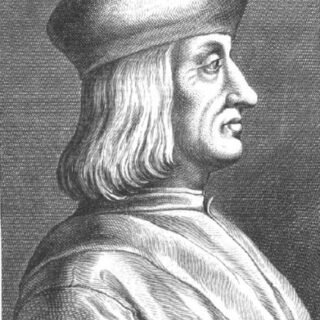
Aldus Pius Manutius, born between 1449 and 1452 in Bassiano near Rome, was a prominent figure of the Italian Renaissance. He came from a wealthy family, which enabled him to...
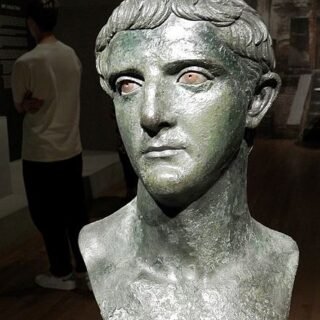
Nero Claudius Drusus Germanicus’s life exemplified the complexities of Roman imperial ambitions, blending personal ambition with service to the state. Through his campaigns in Germania, Drusus expanded Rome’s borders and...

Norse mythology, rich with intricate tales of gods, giants, and epic battles, presents a vivid tapestry of cosmic events and sacred landscapes. Among these, the Plains of Vigrid stand out...
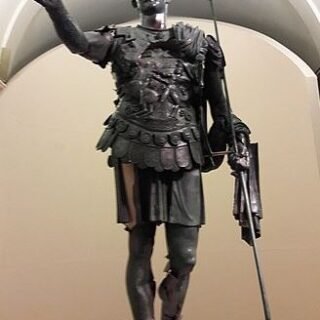
Germanicus Julius Caesar remains a significant figure in the history of the Roman Empire. His life was marked by notable military accomplishments, familial connections to the highest echelons of power,...

The Horus name stands as the earliest known royal title of ancient Egyptian pharaohs, integral to the complex system of royal titulary. This title forms one of the “great five...

Giovanni Antonio Canal, famously known as Canaletto, was a prominent Italian painter born on October 18, 1697, in Venice. He emerged as a pivotal figure in the 18th-century Venetian school,...

Maarten van Heemskerck, originally named Maerten Jacobsz van Veen, stands as a distinguished figure in the Northern Renaissance, renowned for his innovative fusion of Italian Renaissance styles with Northern Dutch...
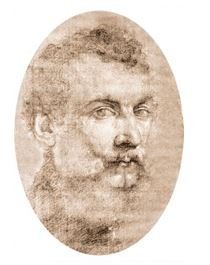
Pirro Ligorio (c. 1512–1583) stands as a multifaceted figure of the Italian Renaissance, renowned for his contributions to painting, architecture, garden design, and antiquarian studies. Despite the scarcity of documentation...
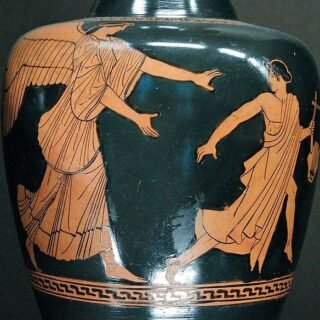
Tithonus, a Trojan prince and lover of Eos, the Goddess of Dawn, occupies a significant place in Greek mythology as a symbol of the consequences of immortality without eternal youth....
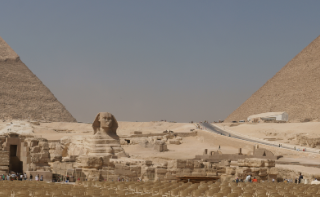
The Fourth Dynasty of ancient Egypt (c. 2613–2494 BCE) represents a golden age in the Old Kingdom, marked by profound architectural achievements, centralized governance, and religious developments. This period is...

Pharaoh Userkaf, the founder of Egypt’s Fifth Dynasty, reigned during the 25th century BC in the Old Kingdom period. His rule marked a transitional era in Egyptian history, characterized by...

Pisistratus (c. 600–527 BC) was a prominent Athenian leader and early tyrant whose governance shaped Athens’ trajectory toward cultural and political significance. His three non-consecutive periods of rule (late 560s,...

The Panathenaea was one of the most important festivals in ancient Greece, celebrated annually in Athens in honor of Athena, the city’s patron goddess. Its origins are rooted in mythology...

Khedebneithirbinet I was a queen of ancient Egypt during the 26th Dynasty, also known as the Saite Dynasty (c. 664–525 BCE). Her name, meaning “Neith Kills the Evil Eye,” reflects a devotion...
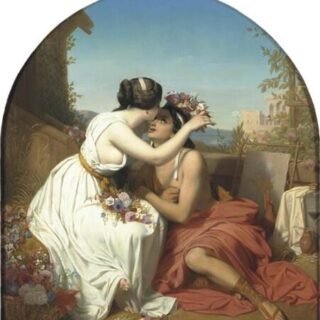
Pausias stands out as a distinguished figure in ancient Greek art, flourishing during the early 4th century BC. As a member of the Sicyonian school, his contributions significantly influenced the...





