When and Why was the Holy Roman Empire dissolved?
The dissolution of the Holy Roman Empire on August 6, 1806, marked the end of a political entity that had existed for over a millennium. Established in 800 AD with...
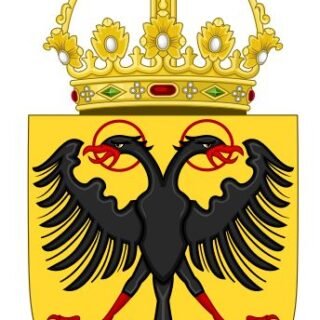
The dissolution of the Holy Roman Empire on August 6, 1806, marked the end of a political entity that had existed for over a millennium. Established in 800 AD with...

Francis II (1768–1835) was a pivotal figure in European history, serving as the last Holy Roman Emperor and the first Emperor of Austria. Born on February 12, 1768, in Florence,...

Epaticcus, also known as Epaticcu, was a notable figure in Iron Age Britain, remembered primarily for his political and military activities. A brother of Cunobelinus, the king of the powerful...

Caradog ap Bran is a central figure in Welsh mythology, known for his noble lineage and his role in the mythological tales of the Mabinogi. He is the son of...

Ankhnesneferibre, an illustrious figure of the 26th Dynasty of ancient Egypt, exemplifies the intertwining of royal lineage and religious authority in Thebes. Born around 595 BC, she was the daughter...

Cartimandua (reigned c. AD 43–69) was a 1st-century Brigantian queen in northern England, noted in Tacitus’s writings. She is best known for aligning her tribe with Rome, betraying Celtic leader Caratacus...

Hubert Robert (1733–1808) stands as a seminal figure in French painting, whose works bridge the late Rococo and the burgeoning Romantic movements. Renowned for his evocative landscapes and imaginative architectural...

Pharaoh Neferefre, also known as Raneferef, was a ruler of ancient Egypt’s Fifth Dynasty during the Old Kingdom period. His reign, though brief, offers valuable insights into the political, architectural,...

The Augustus of Prima Porta is a marble statue that encapsulates the political, cultural, and artistic ideals of the Roman Empire under Emperor Augustus. Discovered in 1863 at the Villa...
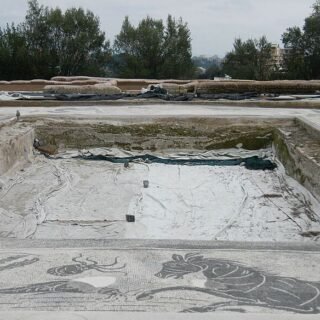
The Villa of Livia, also known as Ad Gallinas Albas, is an ancient Roman villa located at Prima Porta, approximately 12 kilometers north of Rome along the Via Flaminia. This...

Neferirkare Kakai, the third pharaoh of Egypt’s Fifth Dynasty, lived during the mid-25th century BC. He was the son of Pharaoh Sahure and Queen Meretnebty, as confirmed by reliefs from...

Caratacus, also known as Caractacus, stands as a pivotal figure in early British history, renowned for his unwavering resistance against the Roman conquest of Britain in the 1st century AD....

Livia Drusilla (59 BC–AD 29) was Roman empress from 27 BC to AD 14 as Augustus’s wife. Known as Julia Augusta after AD 14, she was the daughter of Marcus...

Anne Hutchinson was a prominent and influential Puritan spiritual advisor in early colonial America. Known for her strong religious convictions and opposition to the established Puritan leadership in the Massachusetts...
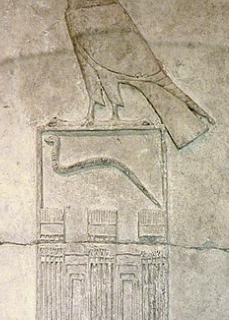
In ancient Egyptian hieroglyphs, the serekh stands as a pivotal symbol representing royal authority and divine legitimacy. Combining artistic elements of architecture and symbolism, the serekh served not only as...





