Artaxerxes III
Artaxerxes III, born Ochus, was one of the most notable kings of the Achaemenid Empire, reigning from 359/58 to 338 BC. As a ruler, he is remembered for consolidating his...
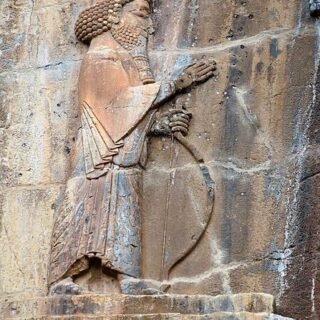
Artaxerxes III, born Ochus, was one of the most notable kings of the Achaemenid Empire, reigning from 359/58 to 338 BC. As a ruler, he is remembered for consolidating his...

The Muslim Conquest of Persia, also known as the Arab Conquest of Iran, was a transformative series of military campaigns conducted by the Rashidun Caliphate between 632 and 654 CE....

The Sasanian Empire, officially known as Ērānšahr (Middle Persian: 𐭠𐭩𐭥𐭠𐭭𐭱𐭲𐭥𐭩), meaning “Empire of the Iranians,” was the last pre-Islamic Persian empire, flourishing from 224 to 651 AD. Established by Ardashir...

Darius I (c. 550–486 BCE), also known as Darius the Great, was one of the most influential rulers of the Achaemenid Empire. His reign, from 522 to 486 BCE, marked...
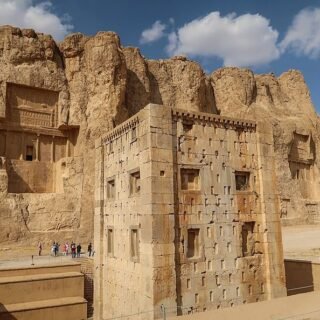
Naqsh-e Rostam, an archaeological masterpiece situated in Iran’s Fars Province, serves as a profound testament to the region’s illustrious history. This necropolis, carved into the sheer cliffs of a mountain,...

Shapur I, also known as Shabuhr I, was a pivotal figure in Iranian history as the second Sasanian King of Kings of Iran. His reign, spanning approximately from 240 to...

Artabanus I of Parthia, also known by his Parthian name Ardawān, was the ruler of the Parthian Empire from approximately 127 BC until his death in 124/123 BC. His reign,...

The Parthian Empire, one of the most formidable powers of the ancient world, flourished between 247 BC and 224 AD. Its rulers, from the Arsacid dynasty, achieved remarkable feats in consolidating...

Mithridates II of Parthia, also known as Mithridates the Great, was one of the most significant rulers in the history of the Parthian Empire. His reign, from 124 to 91 BC,...

Cyrus the Great, the founder of the Achaemenid Empire in Persia, is renowned for his conquest of the Neo-Babylonian Empire in 539 BC. This event not only marked a significant...
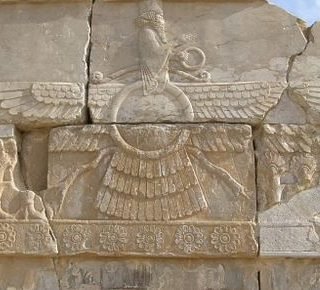
Widely regarded as a symbol that first emerged from ancient Persia, the faravahar has for centuries remained a popular symbol of the Supreme Being Ahura Mazda in Zoroastrianism. However, that...

Also known as Ahuramazda, Hurmuz, or Harzoo, Ahura Mazda’s worship began in the late 3rd millennium BCE in Old Median Empire and ancient Persia, making him the oldest monotheist deity...





