History of Roman Walls: What was their purpose and structure?
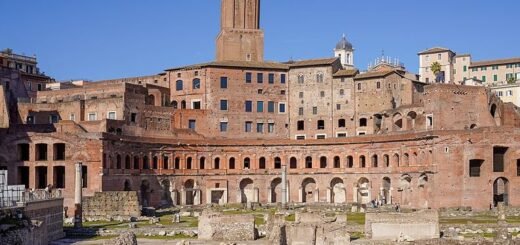
Roman walls are one of the most enduring legacies of the Roman Empire, showcasing its engineering prowess, military strategy, and urban planning. These walls served as fortifications, boundaries, and expressions of Roman authority, marking the expansion and control of the empire. Built over several centuries, Roman walls varied in scale, materials, and purpose, reflecting the needs of different regions and periods.
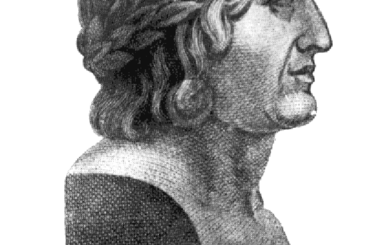
The last king of Rome before the establishment of the Roman Republic
Historical Context
The construction of walls began during the early days of Rome and expanded significantly as the empire grew. Initially, walls were erected around settlements to protect against raids. As Rome transitioned from a city-state to a vast empire, walls became vital for defending key territories, cities, and borders from external threats, including barbarian invasions and rival states.

A view of the interior section of the Aurelian walls.
The Role of Walls in Roman Society
Roman walls played a multifaceted role in society.
First of all, the walls served as vital barriers against enemy advances, buying time for counterattacks and safeguarding territories.
Secondly, walls represented Rome’s power, showcasing its authority to citizens and intimidating adversaries.
By protecting cities, trade routes, and marketplaces, walls ensured economic stability and secure resource management.
Furthermore, Roman walls often incorporated local materials and architectural styles, reflecting a fusion of Roman engineering and regional traditions, reinforcing both Roman influence and local identity.
Roads in Ancient Rome: History, Significance and Construction
Key Types of Roman Walls
Roman walls can be categorized based on their function and location:
City Walls
City walls were constructed around urban centers to safeguard inhabitants from invasions and to control access. Some prominent examples include:
- Servian Wall: Built in the 4th century BCE around Rome, this wall demonstrated early Roman efforts at large-scale fortification.
- Aurelian Walls: Erected in the late 3rd century CE under Emperor Aurelian, these walls encompassed a much larger area of Rome, reflecting its growth and increasing external threats.

A close view of a section of the Servian Wall.
Frontier Walls
To secure the empire’s vast borders, the Romans built monumental frontier walls:
- Hadrian’s Wall (122 CE): Spanning northern England, this wall marked the northern limit of Roman Britain and included forts, milecastles, and watchtowers.
- Antonine Wall (142 CE): Located further north in Scotland, it served as a shorter-lived frontier compared to Hadrian’s Wall.
- Limes Germanicus: A series of walls, forts, and ditches along the Rhine and Danube rivers, marking Rome’s northeastern boundary.
Fort Walls
Military forts, or castra, were enclosed by strong defensive walls. These walls often featured:
- A rectangular layout.
- Rounded corners to minimize structural weaknesses.
- Guard towers and gates for monitoring and controlling movement.
Aqueduct Walls
While not primarily defensive, walls also supported aqueducts, which transported water to cities and military camps. Some aqueduct walls were fortified to prevent sabotage.
Construction Techniques
Roman wall construction showcased ingenuity and adaptability, employing local resources and advanced engineering methods.
Materials
Roman walls utilized a variety of materials tailored to their purpose and location. Durable stones such as limestone, granite, and tuff were favored for their strength and longevity, forming the core of many significant structures.
Fired clay bricks, known for their uniformity and resilience, were commonly employed, especially in regions with abundant clay resources. The revolutionary Roman concrete (opus caementicium) offered unmatched durability and flexibility, enabling the construction of large-scale walls and arches.
Roman walls utilized durable materials: stone (e.g., limestone, granite, tuff) for strength, fired clay bricks for uniformity, revolutionary concrete (opus caementicium) for durability, and earth or timber in less critical areas.
In less strategic or resource-scarce areas, rammed earth and timber were used, providing quicker and more economical solutions. This combination of materials exemplifies Roman engineering ingenuity and adaptability in addressing diverse construction challenges across the vast empire.
Construction Styles
Roman walls showcased advanced construction techniques tailored to strength, efficiency, and aesthetics. Opus Quadratum used large, regularly cut stone blocks laid in horizontal courses without mortar, relying on their weight for stability, often seen in prestigious structures.
Another construction style was Opus Caementicium. This was a revolutionary innovation that involved a durable concrete core faced with stone or brick, combining strength and practicality, especially for large-scale projects like aqueducts and walls.
The construction styles used by Romans in constructing walls highlight their ingenuity, blending function and aesthetics.
Opus Reticulatum featured a decorative diamond-shaped stone pattern, adding visual appeal while maintaining structural integrity, common in villas and public buildings.
There was also the Opus Incertum. Commonly seen as an economical style, this style used irregularly shaped stones embedded in concrete, offering flexibility and ease of construction for walls and foundations.
Structural Features
Roman walls incorporated key structural features for defense and functionality. Ditches and ramparts were often dug in front of walls to create obstacles that slowed attackers and exposed them to defensive fire from above.
Watchtowers and bastions, strategically placed at regular intervals, provided elevated vantage points for surveillance, early threat detection, and improved defense capabilities. These features allowed defenders to repel attackers effectively while ensuring comprehensive monitoring of the surrounding area.
Gates and portcullises, critical access points, were heavily fortified with iron fittings to withstand assaults and control movement in and out of fortified areas.
Together, these elements combined to create highly effective defensive systems that showcased Roman engineering expertise and strategic planning, reinforcing the empire’s dominance and security.
Notable Examples of Roman Walls
- Hadrian’s Wall: A blend of stone and turf sections, featuring forts like Vindolanda and Housesteads.
- Aurelian Walls: Stretching 19 kilometers, these walls enclosed all seven hills of Rome and were punctuated by 18 large gates.
- Walls of Lugo: A UNESCO World Heritage Site in Spain, these 3rd-century walls remain remarkably intact.
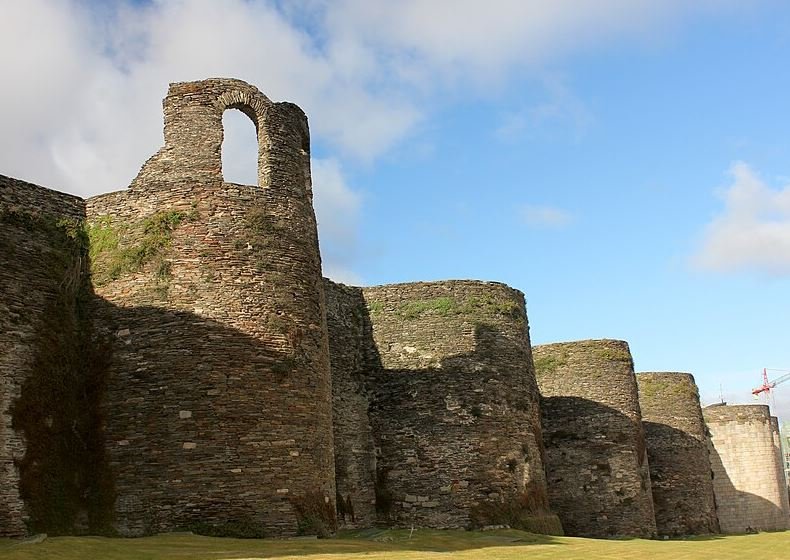
Walls of Lugo
Strategic Importance of Roman Walls
Technological Innovations

Decline and Legacy
By the 5th century CE, the decline of the Roman Empire led to the abandonment of many walls, but their influence endured.
Medieval architects adopted Roman construction techniques, applying them to castles and fortifications, ensuring their defensive innovations shaped future military architecture. Urban planning in post-Roman Europe often incorporated or followed the outlines of Roman walls, influencing city layouts for centuries.
Additionally, many Roman walls, such as Hadrian’s Wall, serve as enduring monuments, drawing tourists and scholars alike. These walls provide invaluable archaeological insights into Roman engineering, military strategy, and frontier life, securing their place as cultural and historical landmarks that continue to inspire and educate.
Questions and Answers

Hadrian’s Wall was a 73-mile wall that represented the north-west frontier of the Roman Empire for many centuries.
What do Roman walls symbolize in history and construction?
Roman walls symbolize the evolution of Roman construction techniques, the ingenuity of Roman engineering, and the broader historical and societal contexts of the Roman Empire.
What were the earliest Roman walls made of, and how were they constructed?
The earliest Roman walls were dry-stone constructions made by placing large, irregular stones without mortar. These walls, known as Cyclopean, were named after the mythical Cyclopes.
What advancements in stone-cutting led to stronger walls in ancient Rome?
By the 6th century BCE, the Romans developed opus quadratum, a technique that used rectangular blocks of limestone or tuff in parallel courses, alternating long and short sides for stability.

Stone foundation of the Antonine Wall.
How were sun-dried brick walls constructed in early Roman houses?
Sun-dried brick walls, or adobe, were made by mixing earth, water, and organic materials like straw. These bricks were placed on stone or rubble foundations to prevent cracking and offered excellent insulation.
What was the Roman “Concrete Revolution”?
In the 3rd century BCE, Roman engineers developed concrete (opus caementicium), a cohesive mortar mixed with volcanic ash (pozzolana). This durable material enabled faster construction and resistance to elements, including seawater.
What types of decorative facings were used on Roman concrete walls?
Decorative facings included opus incertum (irregular stone placement), opus reticulatum (diagonal grids of pyramid-shaped blocks), and opus testaceum (brick-faced concrete).
Why did fired clay bricks replace sun-dried bricks in Roman construction?
Fired clay bricks, introduced during Augustus’s reign, were stronger and more durable. They were used widely for walls in the 1st century CE and often stamped with marks for dating.
What features made the Servian Wall an effective defensive structure?
The Servian Wall, built with tuff blocks using opus quadratum, was 10 meters high and 3.6 meters thick. It included ditches and internal earth ramps for added defense.
How did the Aurelian Walls address the needs of a growing Rome?
Constructed in the 3rd century CE, the Aurelian Walls spanned 19 kilometers, included 383 towers, and 18 gates. They responded to increasing external threats, such as Germanic invasions.
What was the purpose and structure of Hadrian’s Wall?
Built between 122–128 CE, Hadrian’s Wall marked the northern boundary of Roman Britannia. Spanning 117 kilometers, it was constructed from local stone and clay, with forts every five Roman miles.
Why was the Antonine Wall less enduring than Hadrian’s Wall?
The Antonine Wall, built further north, was made of turf rather than stone. It proved less durable and was abandoned after eight years due to its limited effectiveness.