Author: World History Edu
Cyrus the Younger (424–401 BC), son of Darius II and Parysatis, was a Persian prince and satrap known for his ambition and military prowess. Aided by Greek mercenaries, he launched...
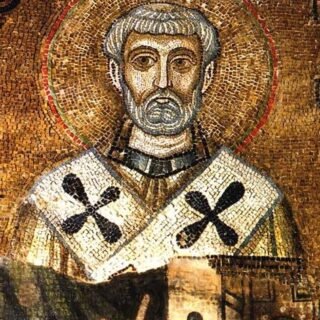
The Early Church Fathers are a group of influential Christian theologians, bishops, and writers who played pivotal roles in shaping the doctrines, practices, and organizational structures of Christianity from the...
Valerian, born Publius Licinius Valerianus around 199 AD, ruled as Roman emperor from 253 until spring 260. Summary Emperor Valerian’s reign marked a turning point as he became the first...
Susa, an illustrious ancient city nestled in the lower Zagros Mountains of present-day Iran, stands as a monumental testament to the civilizations that flourished in the Ancient Near East. Located...
Shapur I, also known as Shabuhr I, was a pivotal figure in Iranian history as the second Sasanian King of Kings of Iran. His reign, spanning approximately from 240 to...
The Prophet’s Mosque, known in Arabic as al-Masjid an-Nabawi, is one of the most revered and historically significant sites in Islam. Located in Medina, Saudi Arabia, it serves as a...
Queen Tiye stands out as one of ancient Egypt’s most influential and revered royal figures. Her life, marked by strategic alliances, political acumen, and a legacy that transcended her time,...
The Egyptian Museum of Berlin, part of the Neues Museum on Museum Island, is one of the world’s premier institutions for the study and display of ancient Egyptian artifacts. Its...
The Statue of Amenemhat III in Berlin is not only a significant artifact within the museum’s collection but also a vital piece for the study of Ancient Egyptian sculpture and...
Cleopatra II Philometor Soteira was a prominent figure in the Ptolemaic dynasty of Egypt, whose life and reign reflected the complex political, familial, and cultural dynamics of her time. Born...
Lysias (circa 445–380 BC) was a notable logographer, or speechwriter, in ancient Greece. He excelled in creating persuasive speeches for legal cases and political issues, playing a significant role in...
Cleopatra III (c.160–101 BC) was an Egyptian queen who co-ruled with Cleopatra II and Ptolemy VIII (142–131 BC, 127–116 BC) and later with her sons Ptolemy IX and Ptolemy X...
Attic Greek represents a cornerstone of ancient linguistic and cultural heritage. Its development, literary achievements, and influence on subsequent Greek dialects and global intellectual traditions underscore its historical importance. As...
Koine Greek, meaning “common dialect,” served as the lingua franca of the Hellenistic world and beyond, following the conquests of Alexander the Great. It emerged as a simplified, universal form...
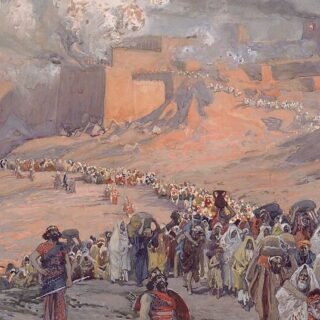
The Babylonian Captivity, spanning 597–539 BCE, stands as a transformative period in Jewish history. This era witnessed the forced deportation of Judeans from the Kingdom of Judah to Babylon by...