Category: Ancient Egypt

Uraeus

The Uraeus in Ancient Egypt

Origin Story The Uraeus, a prominent symbol in ancient Egyptian culture, traces its origins back to the early dynastic periods of Egypt, around the third millennium BCE. Its genesis is...

Ancient Egyptian City of Bubastis

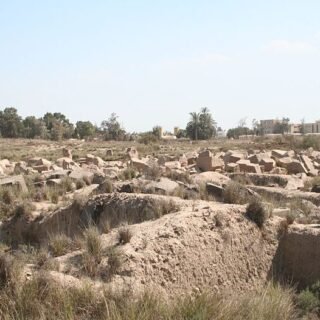
Bubastis, known in ancient Egyptian as “Pr-Bȝst.t” (Per-Bast), meaning “House of Bast,” was a major city in ancient Egypt. Renowned as a religious and administrative hub, Bubastis played a critical...

Pharaoh Osorkon II

Pharaoh Usermaatre Setepenamun Osorkon II was a prominent ruler of ancient Egypt’s Twenty-second Dynasty, governing from approximately 872 to 837 BC. As the son of King Takelot I and Queen...

Sed Festival in Ancient Egypt

The Sed festival (ḥb-sd), or Feast of the Tail, was an ancient Egyptian ceremony celebrating a pharaoh’s continued rule, typically after 30 years and then every 3–4 years. Origin Story...

Pharaoh Menkauhor Kaiu

Menkauhor Kaiu, also known as Mencherês in Greek, was a pharaoh of Egypt’s Fifth Dynasty, ruling around 2399–2390 BC. He is attested in three significant New Kingdom sources: the Abydos...

Queen Tiye

Queen Tiye stands out as one of ancient Egypt’s most influential and revered royal figures. Her life, marked by strategic alliances, political acumen, and a legacy that transcended her time,...

Statue of Amenemhat III

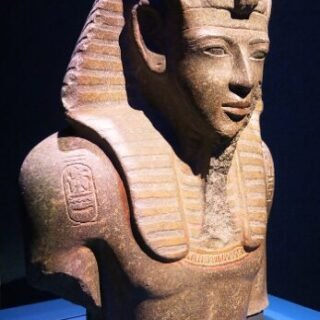
The Statue of Amenemhat III in Berlin is not only a significant artifact within the museum’s collection but also a vital piece for the study of Ancient Egyptian sculpture and...

Cleopatra II Philometor Soteira

Cleopatra II Philometor Soteira was a prominent figure in the Ptolemaic dynasty of Egypt, whose life and reign reflected the complex political, familial, and cultural dynamics of her time. Born...

Pharaoh Merneptah

Ancient Egyptian pharaoh Merneptah’s life and reign unfolded against a backdrop of dynastic complexity, shifting geopolitical currents, and the monumental legacy of his illustrious predecessor. He inherited an empire at...