The Four Major Tribes of Ancient Greece
Ancient Greece was not a monolithic entity but a tapestry of diverse tribes, each contributing uniquely to the cultural, political, and social landscape of the Hellenic world. According to the...
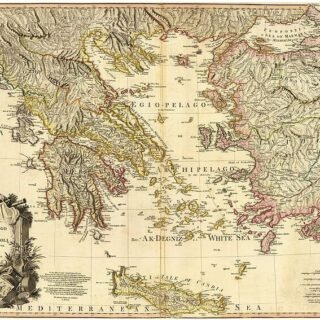
Ancient Greece was not a monolithic entity but a tapestry of diverse tribes, each contributing uniquely to the cultural, political, and social landscape of the Hellenic world. According to the...

Philip I, known as Philip the Arab (c. 204–249), ruled the Roman Empire from 244 to 249. Initially Praetorian prefect, he ascended after Gordian III’s death, negotiating peace with the...
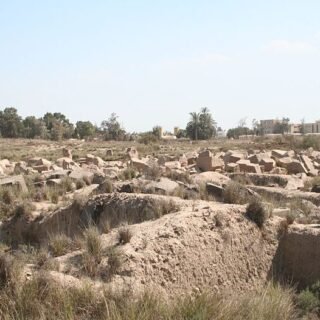
Bubastis, known in ancient Egyptian as “Pr-Bȝst.t” (Per-Bast), meaning “House of Bast,” was a major city in ancient Egypt. Renowned as a religious and administrative hub, Bubastis played a critical...
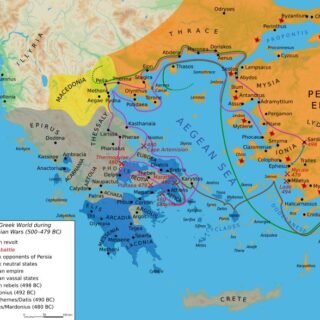
The first Persian invasion of Greece (492–490 BC) was a pivotal episode in ancient history, part of the broader Greco-Persian Wars. It was driven by Persia’s ambition to expand its...

Gordian III’s reign represents a pivotal chapter in the history of the Roman Empire. Ascending to the throne as a child during a period of political upheaval, Gordian faced immense...
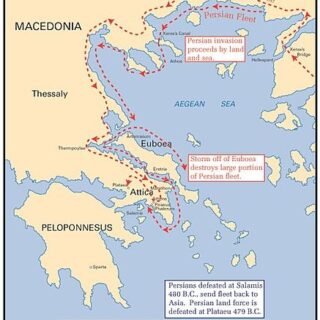
The Second Persian Invasion of Greece (480–479 BC) stands as one of the most significant military campaigns in ancient history. Orchestrated by King Xerxes I of Persia, this invasion marked...
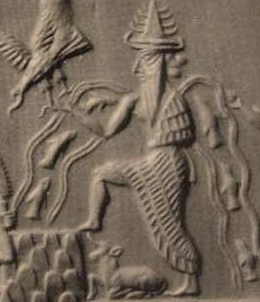
Enki, one of the most revered deities in ancient Sumerian mythology, embodies the essence of water, knowledge, crafts, and creation. As a pivotal member of the Anunnaki pantheon, Enki’s influence...
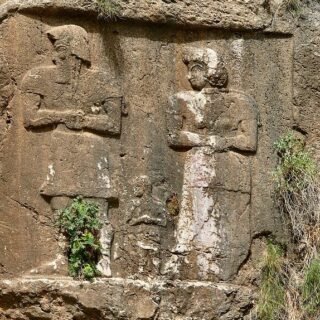
The Elamites were a significant ancient civilization that thrived in the southwestern regions of modern-day Iran and parts of southern Iraq. Spanning from approximately 3200 BCE to 540 BCE, Elam...
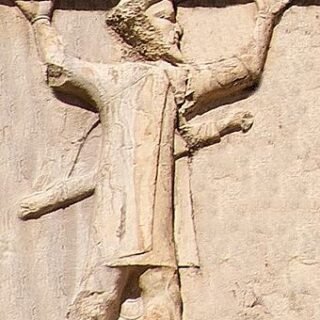
The Ionians were one of four major ancient Greek tribes, alongside Dorians, Aeolians, and Achaeans. The dialect of the Ionians was a key linguistic division in the Hellenic world. Narrowly,...

The Lydian stater holds immense historical and cultural importance as the world’s first standardized coinage, marking a revolutionary development in human economic and social history. Introduced in the ancient kingdom...

Cratinus was one of the eminent playwrights of ancient Greece. The Athenian playwright was a master of Old Comedy, a theatrical tradition characterized by its sharp wit, political satire, and...
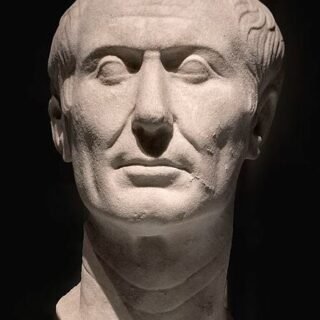
Julius Caesar is one of history’s most celebrated figures. Revered as a military genius, political tactician, and transformational leader, Caesar’s legacy looms large over Western civilization. However, alongside his monumental...
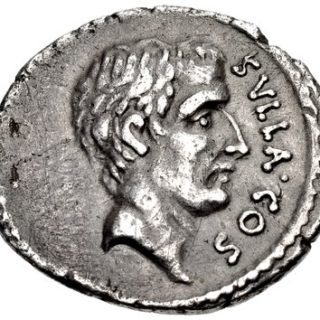
Lucius Cornelius Sulla, a complex and controversial figure in Roman history, remains a topic of debate among historians and scholars. His actions and policies significantly influenced the late Roman Republic,...

The djed is one of the most ancient and enduring symbols in ancient Egyptian culture, often associated with stability, strength, and endurance. Depicted as a pillar with horizontal crossbars, the...

Pharaoh Usermaatre Setepenamun Osorkon II was a prominent ruler of ancient Egypt’s Twenty-second Dynasty, governing from approximately 872 to 837 BC. As the son of King Takelot I and Queen...





