Yazılıkaya in the Hittite Empire
Yazılıkaya, meaning “Inscribed Rock” in Turkish, stands as one of the most remarkable archaeological sites from the Hittite Empire. Located near the ancient capital of Hattusa in present-day Çorum Province,...

Yazılıkaya, meaning “Inscribed Rock” in Turkish, stands as one of the most remarkable archaeological sites from the Hittite Empire. Located near the ancient capital of Hattusa in present-day Çorum Province,...

Agesilaus’ reign is remembered for his military leadership and personal virtues, such as frugality and dedication to Spartan ideals. However, his rigid policies and unrelenting hostility toward Thebes are often...

Nectanebo I, who reigned from 379 to 360 BCE, was the founder of Egypt’s 30th Dynasty and one of the last native Egyptian pharaohs to successfully maintain the nation’s independence....

Nestled within the expansive loop of the Kızılırmak River in modern-day Turkey lies the ancient city of Hattusa (also known as Hattuşa, Ḫattuša, Hattusas, or Hattusha). Once the vibrant capital...

The Hurrians were an influential Bronze Age people whose cultural, political, and religious dimensions once resonated across a wide geographical landscape. Though never as universally recognized in popular imagination as...

Horemheb, whose name means “Horus is in Jubilation,” was the final pharaoh of Egypt’s 18th Dynasty, ruling from 1319 BCE to 1292 BCE. Unlike many of his predecessors, he was...

Pharaoh Ay was a significant yet enigmatic figure of ancient Egypt’s 18th Dynasty. His brief reign, familial ties, and political maneuvering during a turbulent period highlight his role as a...

Thuya, also spelled as Touiyou, Thuiu, Tuya, Tjuyu, or Thuyu, was an influential figure in ancient Egypt, particularly during the New Kingdom era. Thuya is best known for being notable...

Tarḫunna, also known as Tarḫuna or Tarḫuna-i, occupies a pivotal role in Hittite mythology as the supreme weather god. Revered as the “Weather God of Heaven” and the “Lord of...

Pharaoh Hotepsekhemwy was the founder of Egypt’s Second Dynasty, a period marked by transition and consolidation following the challenges of the First Dynasty‘s decline. His reign represents a crucial point...

The Hittites were an ancient Indo-European civilization that emerged in Anatolia (modern-day Turkey) during the early second millennium BCE. As one of the earliest major powers of the Bronze Age...

Origin Story The Uraeus, a prominent symbol in ancient Egyptian culture, traces its origins back to the early dynastic periods of Egypt, around the third millennium BCE. Its genesis is...
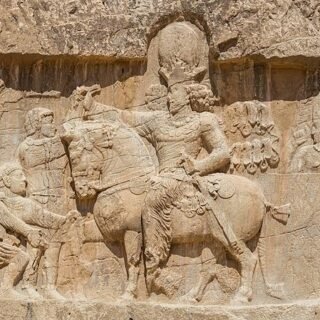
The Battle of Edessa in AD 260 was a pivotal conflict between the Roman Empire, led by Emperor Valerian, and the Sasanian Empire, under King Shapur I. This confrontation occurred...

Ra, one of ancient Egypt’s most revered deities, is intricately associated with symbols that embody life, power, and the eternal cycle of rebirth. His primary symbols include the Wadjet sun...
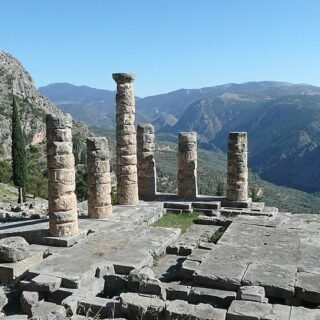
The Archaic period of ancient Greece, spanning roughly from the early 8th century BCE to the onset of the Classical era around 480 BCE, represents a foundational epoch in Greek...





