Ancient Settlement of Nisa
The ancient settlement of Nisa, also known as Parthaunisa, was one of the most significant sites in the Parthian Empire, which played a crucial role in shaping the history of the ancient...

The ancient settlement of Nisa, also known as Parthaunisa, was one of the most significant sites in the Parthian Empire, which played a crucial role in shaping the history of the ancient...
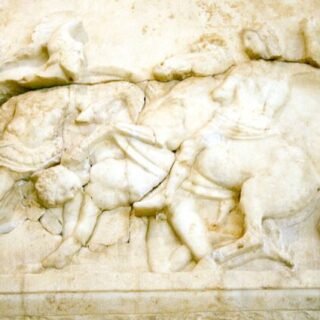
Diodorus Siculus, a Greek historian of the 1st century BC, chronicled many important events of ancient history in his work Bibliotheca Historica. Among the events he covered, the Battle of Chaeronea...
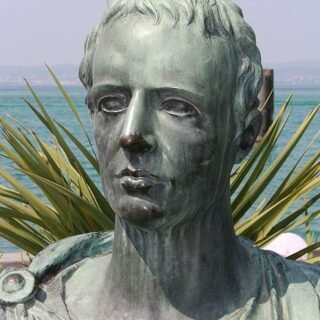
Ancient Roman literature, especially its poetry, has left an indelible mark on Western civilization. Many of the most renowned Roman poets influenced subsequent generations, shaping the way literature evolved for...

Ptolemy VI Philometor, a prominent figure in the history of Ptolemaic Egypt, ruled during a period of considerable turbulence, both within the kingdom and in its external relations. Born in...

Ptolemy V Epiphanes, whose full title is “Ptolemy the Manifest, the Beneficent,” was a king of Ptolemaic Egypt. He ruled from 204 BC until his death in 180 BC. He...

Themistocles was one of ancient Greece’s most prominent politicians and military leaders. He was instrumental in securing Athens’ survival and shaping the course of Greek history during the Persian Wars. Born...

Kamnaskires II Nikephoros was a ruler of Elymais, a historical region situated in what is now southwestern Iran. His reign spanned from approximately 147 BC to 139 BC, a time...
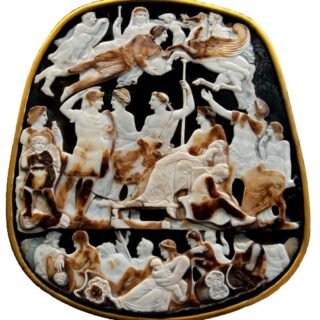
The Julio-Claudian Dynasty was the first imperial dynasty of the Roman Empire, reigning from 27 BC, when Augustus established the empire, until AD 68, when Nero, the last emperor of the dynasty, died....

Ptolemy IV Philopator, whose full name means “Ptolemy, lover of his father,” ruled Ptolemaic Egypt from 221 to 204 BC. He was the fourth monarch in the Ptolemaic dynasty, succeeding...

Charon, the ferryman of the dead in Greek mythology, is one of the most enduring figures associated with the Greek concept of the afterlife. His role as a psychopomp—a guide...

Nabu, the ancient Babylonian god of wisdom and literacy, played a central role in Mesopotamian religious and intellectual life. Revered for his association with writing, communication, and knowledge, Nabu’s influence...
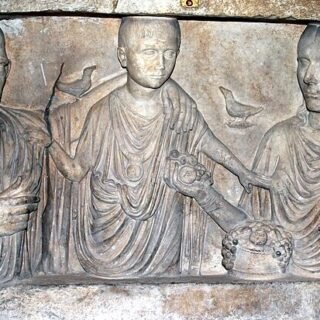
The mos maiorum (literally meaning “the way of the ancestors” in Latin) was the unwritten code of traditional values, customs, and social practices that formed the ethical foundation of ancient Roman society....

A Roman funeral was a deeply significant cultural and religious event, reflecting Roman beliefs about death, the afterlife, and social status. While the exact practices varied depending on the time...
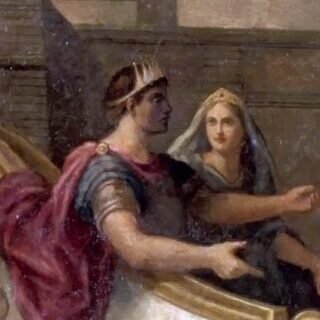
Amytis of Media was an important figure in ancient history, particularly due to her role in the alliance between the Median and Babylonian empires. She was the daughter of Cyaxares,...

Astyages, the last king of the Median Empire, played a pivotal role in the history of ancient Persia and the rise of the Achaemenid Empire. His life and reign, while...





