Pergamon Museum
The Pergamon Museum, located on Berlin’s Museum Island, is a masterpiece of Stripped Classicism architecture. Construction began in 1910 under Alfred Messel’s design and continued by Ludwig Hoffmann after Messel’s...

The Pergamon Museum, located on Berlin’s Museum Island, is a masterpiece of Stripped Classicism architecture. Construction began in 1910 under Alfred Messel’s design and continued by Ludwig Hoffmann after Messel’s...

Indrani, also known as Shachi, is a prominent goddess in Hindu mythology. She is revered as the queen of the devas (gods) and the consort of Indra, the king of...

The Ishtar Gate was constructed during the reign of King Nebuchadnezzar II around 569 BCE, at the height of the Neo-Babylonian Empire. Babylon, located in modern-day Hillah, Iraq, was the...

Devaloka, or Deva Loka, refers to the divine realms where celestial beings, known as devas (gods), reside. Rooted in Hindu mythology and cosmology, these realms are often described as places...
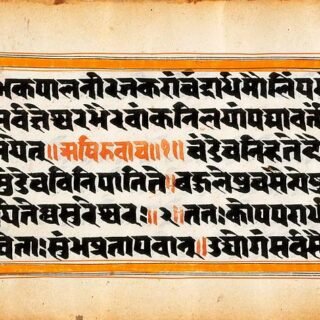
The Puranas are an expansive genre of ancient Indian literature that emerged within the Hindu cultural milieu. They hold a unique place in the Hindu tradition, existing somewhat outside the...
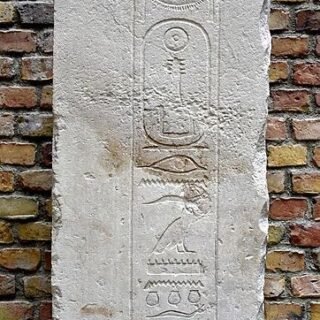
Djedkare Isesi, also known as Tancheres in Greek, was the eighth and penultimate ruler of Egypt’s Fifth Dynasty during the Old Kingdom. He reigned from the late 25th century to...

The flag of the Arab Revolt, also known as the flag of Hejaz, emerged during World War I as a unifying symbol of Arab resistance against the Ottoman Empire. The...

Thinis, known as Tjenu in ancient Egyptian, was one of the earliest cities of Upper Egypt. It rose to prominence during the Pre-Dynastic Period (c. 4000–3100 BCE) as the center...

Khakaure Senusret III, also known as Senwosret III or Sesostris III in its Hellenized form, was one of the most significant pharaohs of ancient Egypt. He ruled during the Twelfth...
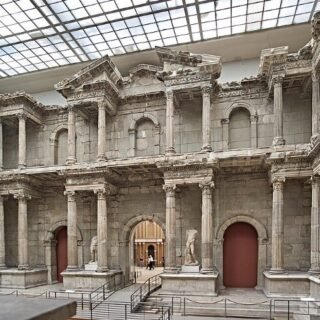
The Market Gate of Miletus, an architectural marvel, originates from the ancient city of Miletus, located in modern-day Turkey. Miletus was one of the most prominent cities of ancient Ionia,...

Hadad, also known as Adad in Akkadian and Iškur in Sumerian, was a prominent storm and rain god worshiped across the ancient Near East. His origins date back to around...

Michelangelo Buonarroti, one of the greatest artists of the Italian Renaissance, produced a diverse range of masterpieces in sculpture, painting, and architecture. His works reflect unparalleled skill, profound emotional depth,...
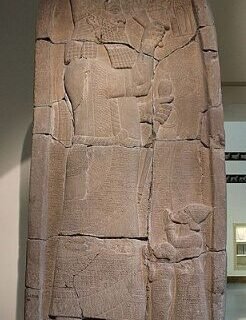
The historical context of the stele is rooted in Esarhaddon’s efforts to assert Assyrian dominance over Egypt. This campaign followed an earlier defeat in 674 BCE, where Taharqa, ruler of...

Throughout human history, countless religious traditions, mythologies, and cosmological systems have depicted the universe as layered into multiple heavens. Among the most frequently encountered configurations is the concept of seven...

Naraka, also known as Yamaloka, is the Hindu concept of hell, governed by Yama, the god of death. Unlike the eternal damnation described in some other religions, Naraka is a...





