Author: World History Edu
Before achieving independence, the United States, then a collection of British colonies, relied on a diverse array of currencies to facilitate trade and commerce. The colonial economy, largely decentralized and...
The Russian Empire was a colossal and influential state that emerged as a dominant force in northern Eurasia, extending from Eastern Europe to the far reaches of Asia and even...
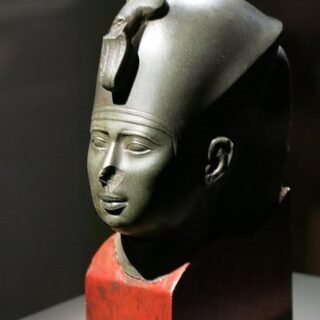
Pharaoh Psamtik II, the third ruler of Egypt’s Saite 26th Dynasty, reigned from 595 to 589 BC. His tenure was marked by significant military campaigns, strategic governance, and notable contributions...
Pharaoh Necho II, who reigned from 610 to 595 BC, was a significant figure in the late period of ancient Egypt’s history. As a ruler of the 26th Dynasty, his tenure...
Peyton Randolph (September 10, 1721 – October 22, 1775) was a distinguished American politician and planter from Virginia, revered as one of the Founding Fathers of the United States. Born...
This weekend marks the 508th anniversary of the Reinheitsgebot, also known as the German Beer Purity Law, introduced by Duke Wilhelm IV of Bavaria in 1516. Beer enthusiasts across Germany...
The Russian Revolution of 1905 was a momentous event that shook the foundations of the Russian Empire, exposing deep systemic flaws within the autocracy of Tsar Nicholas II. This revolution,...
The Pacte de Famine (Famine Pact) was an 18th-century conspiracy theory in pre-revolutionary France that alleged intentional manipulation of grain supplies by elites to exploit the common people. The theory...
The Treaty of Guadalupe Hidalgo, signed on February 2, 1848, marked the formal conclusion of the Mexican-American War (1846–1848). This conflict arose from the United States’ expansionist ideology, known as...
The Third Estate, encompassing the common people of medieval and early modern Europe, played a foundational role in shaping societal structures and political movements across the continent. From its origins...
The Women’s March on Versailles, also known as the October Days, was a pivotal event during the early stages of the French Revolution. Taking place on October 5–6, 1789, it...
Honorius (384–423) was Roman emperor from 393 to 423, ruling the Western Roman Empire. The younger son of Theodosius I and Aelia Flaccilla, he became emperor under Stilicho’s regency after...
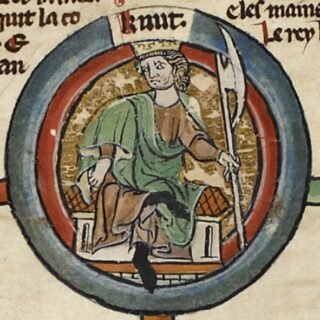
Cnut the Great’s capture of the English throne in the early 11th century was a remarkable feat of political strategy, military prowess, and opportunism. His ascent to power involved navigating...
San Jose, officially known as the City of San José de Guadalupe, stands as the largest city in Northern California by both population and area. Its rich history reflects significant...
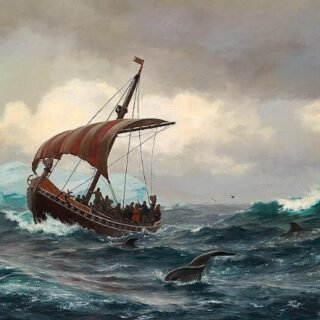
Leif Erikson, a prominent Norse explorer, is widely recognized as one of the first Europeans to reach North America, centuries before Christopher Columbus. His journey to what is now known...