The Battles of Lexington and Concord
The Battles of Lexington and Concord, fought on April 19, 1775, were the first major military engagements of the American Revolutionary War. These pivotal clashes between British troops and colonial...

The Battles of Lexington and Concord, fought on April 19, 1775, were the first major military engagements of the American Revolutionary War. These pivotal clashes between British troops and colonial...

The Westminster Massacre occurred on March 13, 1775, in Westminster, Vermont, when a sheriff’s posse killed two men, William French and Daniel Houghton, after a crowd of protestors occupied the...

Mehet-Weret, also known as Mehturt, was a prominent celestial goddess in ancient Egyptian mythology. Her name, meaning “Great Flood,” connects her with both cosmic and terrestrial waters. Appearing in some...

George Cabot was a key figure in the early years of the United States, particularly in the formation of its financial system and its foreign policy. Early Life and Family...

The Federalist Party was the first political party in the United States, laying the groundwork for future American politics. It emerged in the aftermath of the American Revolution, spearheaded by...
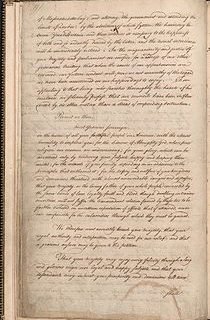
In 1774, the American Colonies found themselves at a pivotal moment in their relationship with Great Britain. Following years of escalating tensions, the Continental Congress issued a petition to King...

Horagalles, also known as Hora Galles or Thora Galles, is a central figure in Sami shamanism, often associated with thunder, lightning, and various natural phenomena. His image and symbolism are...

Mercy Otis Warren (September 25, 1728 – October 19, 1814) was a pioneering American writer, activist, and historian whose works played a significant role in shaping the political landscape of...

The crossbow is one of the most significant technological innovations in the history of ancient Chinese warfare. Its development marked a turning point in military engineering, battlefield strategy, and the...

The aquila, or eagle, was a powerful and iconic symbol in ancient Rome. More than just a standard or insignia, it held religious, military, and political significance. Each Roman legion...

Queen Nzinga was a 17th-century ruler of the African kingdoms of Ndongo and Matamba, located in present-day Angola. She is renowned for her military leadership, diplomatic acumen, and resistance to...

Giovanni Antonio Cavazzi da Montecuccolo was an Italian Capuchin missionary priest known for his travels in 17th-century Portuguese Angola and for documenting the region’s history, culture, and Capuchin missionary activity....

The Fourth Dynasty of ancient Egypt, spanning approximately from 2613 to 2494 BC, is widely considered a “golden age” within the Old Kingdom period. Marked by political stability, economic prosperity,...

Korean influence on Japanese culture spans thousands of years and encompasses a vast array of domains including technology, art, philosophy, religion, governance, and literature. The Korean Peninsula functioned as a...

The Horse-Rider Theory is a historical hypothesis that seeks to explain the origins of the Yamato state in ancient Japan, arguing that a group of mounted warriors from the Korean Peninsula, often...





