Enūma Eliš: The Ancient Babylonian Creation Myth
Enūma Eliš, meaning “When on High,” is an ancient Babylonian creation myth that outlines the origins of the cosmos, the rise of the god Marduk, and the creation of humanity....

Enūma Eliš, meaning “When on High,” is an ancient Babylonian creation myth that outlines the origins of the cosmos, the rise of the god Marduk, and the creation of humanity....
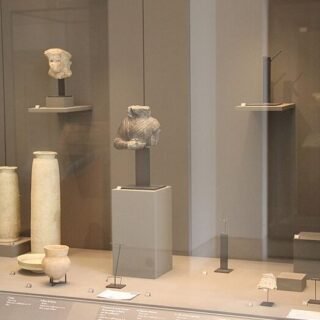
The Amorites were an ancient Northwest Semitic-speaking people who emerged during the Bronze Age. Originating from the Levant, they were first recorded in Sumerian texts around 2500 BC. Over the...

Throughout history, humans have sought to understand and predict natural disasters, especially earthquakes. Earthquakes, which have devastating impacts, have left societies grappling with both physical destruction and a search for...
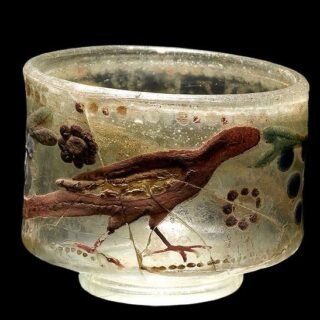
Roman glass refers to the glass artifacts produced during the time of the Roman Empire, roughly from the first century BCE to the end of the Roman Empire in the...

The Acts of the Apostles is the fifth book of the New Testament, detailing the establishment of the Christian Church and the spread of its teachings throughout the Roman Empire....

The Kingdom of Kerma, located in what is now northern Sudan, was one of the most powerful Nubian states in antiquity. For over a millennium, it developed as a significant...

The Achaean League, or Koinon ton Akhaion, was a confederation of Greek city-states in the northern and central Peloponnese. Named after the region of Achaea in the northwestern Peloponnese, the...

The Hasmonean and Herodian royal winter palaces, located at Tulul Abu el-‘Alayiq near the entrance of Wadi Qelt, represent a remarkable archaeological complex from the Second Temple period. Situated in...
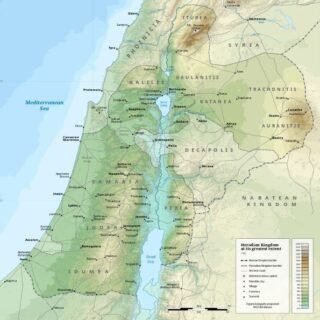
The Herodian Kingdom, ruled by Herod the Great from 37 to 4 BCE, was a client state of the Roman Republic. Herod, designated “King of the Jews” by the Roman...
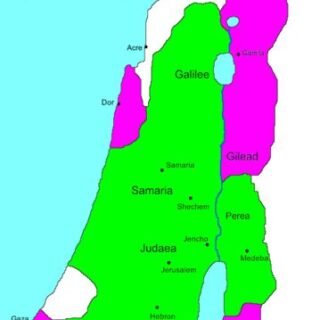
The Hasmonean dynasty (c. 140 BCE to 37 BCE) emerged during the Hellenistic period of Judea’s Second Temple era. It evolved from semi-autonomous rule under the Seleucid Empire into an...
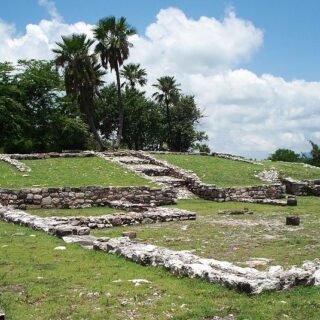
Cuetlajuchitlán is a fascinating Mesoamerican archaeological site, located 3 kilometers southeast of Paso Morelos in the northeast of Guerrero, Mexico. Its discovery in 1991 during the construction of the Cuernavaca-Acapulco...
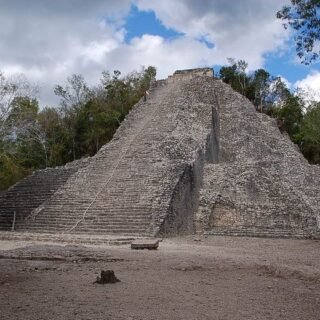
Coba, or Cobá in Spanish, is an ancient Mayan city located on the Yucatán Peninsula in Quintana Roo, Mexico. Renowned as the center of the largest network of stone causeways...

Roman wall painting, a vital aspect of Roman art, developed over centuries and evolved through various styles that offer insight into Roman culture, aesthetics, and daily life. Roman murals and...

The Czechoslovak Socialist Republic (CSSR) emerged in 1948, following the February Coup, where the Communist Party of Czechoslovakia (KSČ) seized power with support from the Soviet Union. This event marked...

Larsa is known in Sumerian as UD.UNUGKI and referred to as Larancha or Laranchon by the Greek historian Berossos. This ancient Sumerian city-state is located approximately 24 kilometers southeast of...





