Masjid al-Haram: The Sacred Mosque of Mecca
Masjid al-Haram, also known as the Great Mosque of Mecca, stands as the most sacred and revered site in Islam. Encompassing the Kaaba, the mosque serves as the epicenter of...

Masjid al-Haram, also known as the Great Mosque of Mecca, stands as the most sacred and revered site in Islam. Encompassing the Kaaba, the mosque serves as the epicenter of...

The djed is one of the most ancient and enduring symbols in ancient Egyptian culture, often associated with stability, strength, and endurance. Depicted as a pillar with horizontal crossbars, the...

Pharaoh Usermaatre Setepenamun Osorkon II was a prominent ruler of ancient Egypt’s Twenty-second Dynasty, governing from approximately 872 to 837 BC. As the son of King Takelot I and Queen...

Arrian of Nicomedia, formally known as Lucius Flavius Arrianus Nicomediensis, stands as a prominent figure in ancient history and philosophy. Living during the Roman Empire in the second century AD,...

Darius I (c. 550–486 BCE), also known as Darius the Great, was one of the most influential rulers of the Achaemenid Empire. His reign, from 522 to 486 BCE, marked...

The Kaaba stands as the most sacred site in Islam, a symbol of unity and devotion for over a billion Muslims worldwide. Located in the heart of Masjid al-Haram in...

Wepwawet, whose name translates to “Opener of the Ways,” is a significant figure in ancient Egyptian mythology. Revered for his association with guidance, protection, and transitions, Wepwawet played critical roles...
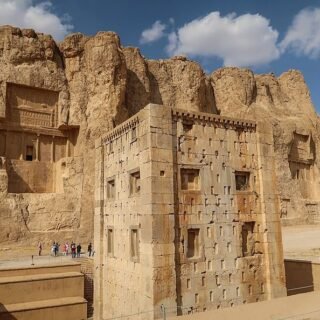
Naqsh-e Rostam, an archaeological masterpiece situated in Iran’s Fars Province, serves as a profound testament to the region’s illustrious history. This necropolis, carved into the sheer cliffs of a mountain,...

Sulayman ibn Abd al-Malik (c. 675–717) served as the seventh Umayyad caliph from 715 until his death. Summary Son of Caliph Abd al-Malik and Wallada bint al-Abbas, Sulayman ibn Abd al-Malik...
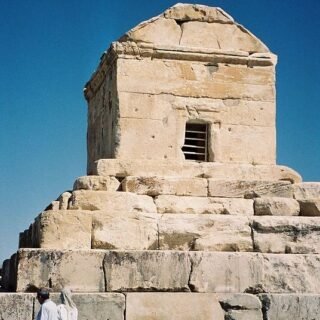
The Tomb of Cyrus the Great, located in Pasargadae, Iran, stands as a monumental testament to the legacy of one of history’s most influential rulers. As the final resting place...

The Berlin Green Head is a remarkable artifact from ancient Egypt, celebrated for its artistic excellence and historical intrigue. Housed in the Egyptian Museum of Berlin, this statue head offers...

The Sed festival (ḥb-sd), or Feast of the Tail, was an ancient Egyptian ceremony celebrating a pharaoh’s continued rule, typically after 30 years and then every 3–4 years. Origin Story...

Menkauhor Kaiu, also known as Mencherês in Greek, was a pharaoh of Egypt’s Fifth Dynasty, ruling around 2399–2390 BC. He is attested in three significant New Kingdom sources: the Abydos...

Septimius Odaenathus was a transformative leader whose military and political acumen significantly shaped the history of the Roman East. His ability to elevate Palmyra‘s status, defend against formidable Persian threats,...

The Green Dome, situated atop the Prophet’s Mosque (Al-Masjid an-Nabawi) in Medina, Saudi Arabia, is a structure of profound historical depth and spiritual significance to Muslims worldwide. Its importance extends...





