Runes: What are they, and where did they originate from?
Runes are an ancient writing system used by Germanic peoples during the first millennium AD and beyond. These symbols formed the basis of runic alphabets, also called runic rows or...
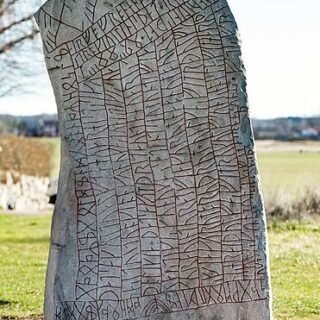
Runes are an ancient writing system used by Germanic peoples during the first millennium AD and beyond. These symbols formed the basis of runic alphabets, also called runic rows or...

Tuskegee University (TU), formerly known as Tuskegee Institute, stands as one of the most historically significant institutions in the United States. As a private, historically Black land-grant university in Tuskegee,...

Fatima bint Muhammad (605/15–632 CE), commonly referred to as Fatima al-Zahra, holds a revered position in Islamic history as the daughter of Prophet Muhammad (S.A.W.) and his first wife, Khadija....

Bernardino Rivadavia was the first President of Argentina, serving from 1826 to 1827, and was a key figure in early Argentine politics, advocating for centralization and modernization. Early Life and...
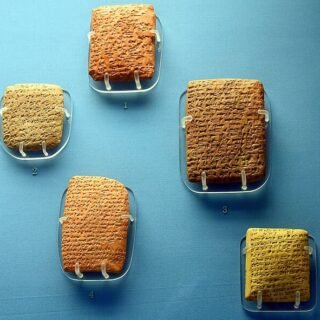
The Amarna letters are a collection of clay tablets that document diplomatic correspondence between the Egyptian administration and various rulers of neighboring regions. Dating to the mid-14th century BC, these...
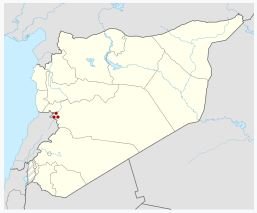
Kadesh, or Qadesh, was an ancient city situated near the headwaters or a ford of the Orontes River in the Levant. It held strategic importance during the Late Bronze Age...

The Tomb of Zechariah is an ancient monolithic structure located in Jerusalem’s Kidron Valley. It is traditionally associated with Zechariah ben Jehoiada, a priest mentioned in Jewish scriptures. The tomb...

The Battle of the Delta was fought around 1175 BC. It was a pivotal naval engagement between Pharaoh Ramesses III of Egypt and the Sea Peoples, a confederation of maritime...

Gráinne O’Malley was a powerful Irish chieftain and seafaring leader, often referred to as the “Pirate Queen.” She commanded a fleet, engaged in trade and piracy, and played a significant...

The Alien Enemies Act, officially titled “An Act Respecting Alien Enemies,” was passed in 1798 as part of the Alien and Sedition Acts. It was designed to supplement the Alien...

Deir el-Medina was known in ancient times as Set Maat, which translates to “Place of Truth.” The settlement housed the artisans responsible for constructing and decorating the royal tombs in...

Baldwin II, or Baldwin of Courtenay, was the final Latin Emperor ruling from Constantinople. Born there in late 1217, he was the only Latin Emperor native to that city. A...

The First Liberian Civil War was a devastating conflict that engulfed Liberia from December 1989 to August 1997. The war arose from political and ethnic tensions exacerbated by corruption, totalitarian...

Ramesses III, officially known as Usermaatre Meryamun Ramesses-Heqaiunu, was the second Pharaoh of the Twentieth Dynasty of Egypt. Scholars estimate that he reigned from around 1185 to 1155 BC, making...

The Louvre Palace (Palais du Louvre), situated on the Right Bank of the Seine in Paris, stands as one of the most iconic architectural landmarks of France. It extends between...





