Author: World History Edu
The Mesoamerican ballgame is one of the oldest known team sports. This fascinating tradition dates back over 3,500 years. It was played by various pre-Columbian cultures across present-day Mexico, Belize,...
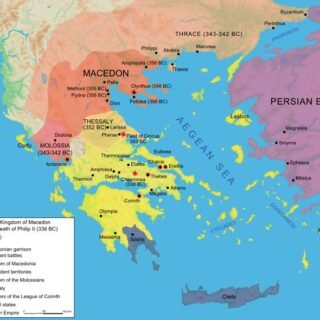
Macedonia’s rise to dominance in ancient Greece was a transformative historical process that unfolded during the reign of Philip II of Macedon (reign: c. 359–336 BC). Initially a peripheral kingdom...
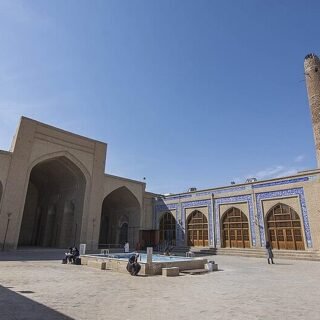
The Seljuk dynasty (11th–13th centuries) ruled a vast empire that covered parts of Persia, where Islamic art and architecture flourished. Persian minarets became more than just functional structures; they were...
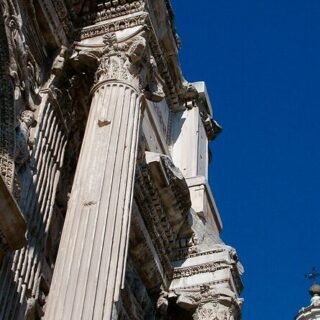
Classical architecture, known for its balance, symmetry, and precise proportions, traces back to ancient Greek and Roman influences. Over centuries, these styles have inspired many structures and buildings around the...
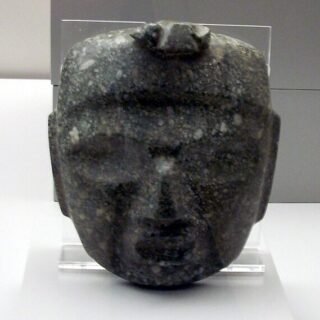
The Mezcala culture, also known as the Balsas culture, thrived in the southern Mexican state of Guerrero, particularly in the upper Balsas River region. Though relatively obscure and poorly understood,...
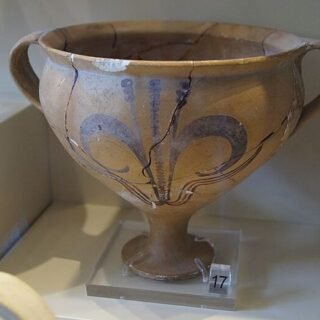
Flourishing from around 1600 to 1100 BCE in mainland Greece and the Aegean islands, the Mycenaean civilization is renowned for its distinctive pottery. These works offer insight into its cultural,...
Minoan stoneware was an essential aspect of ancient Cretan civilization. The works highlight the remarkable craftsmanship and artistic sophistication of the Minoans, who thrived during the Bronze Age (circa 3000-1450...
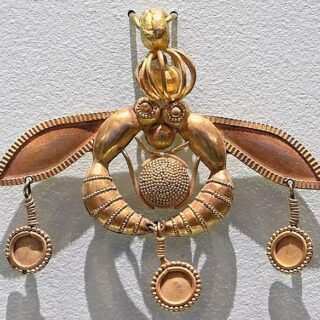
Minoan jewelry, produced during the Bronze Age civilization that flourished on the island of Crete from around 3000 to 1100 BCE, is a fascinating subject due to its artistry, craftsmanship,...
Genocide in the ancient world, while not always explicitly labeled as such, manifested in various forms across different civilizations. Ancient wars and conquests often led to the deliberate and systematic...
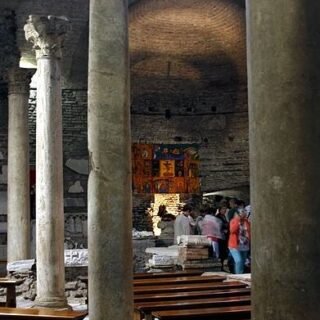
Beneath the streets of the modern metropolis of Rome lies an intricate maze of archaeological wonders, revealing layers of history from ancient Roman civilization to the early Christian period and...
Judaea was a Roman province established in 6 CE, encompassing Judea, Idumea, Samaria, Galilee, and parts of Philistia. It was formed after the deposition of Herod Archelaus, transitioning from semi-autonomous...
The Aetolian League, or Koinon tōn Aitōlōn (Κοινὸν τῶν Αἰτωλῶν), was a significant political and military federation in ancient Greece. Centered in Aetolia in central Greece, it emerged as a...
Saint Peter, also known as Simon Peter, Simon, Simeon, or Cephas, was one of the Twelve Apostles of Jesus Christ and among the first leaders of the early Christian Church....
Quetzalcoatl, meaning “Feathered Serpent” in Nahuatl, is one of the most significant deities in Mesoamerican cultures, particularly among the Aztecs. Revered as a god of wind, Venus, the Sun, knowledge,...
The Anunnaki, derived from the Sumerian words “da-nuna” or “da-nuna-ke4-ne,” meaning “princely offspring” or “offspring of An,” were a group of deities central to the ancient Mesopotamian pantheon. They appeared...