Category: Ancient Mesopotamia
The Old Babylonian Empire, also known as the First Babylonian Empire, stands as one of the most influential states in ancient Mesopotamian history. Spanning approximately from 1894 to 1595 BC,...
Shinar, known in Hebrew as Šinʿār (שִׁנְעָר), is a term found in the Hebrew Bible that refers to the southern region of Mesopotamia, encompassing areas central to early civilizations. This...
The Sumerian King List (SKL), also known as the Chronicle of the One Monarchy, is a pivotal ancient literary document written in the Sumerian language. Originating from southern Mesopotamia, the...
The Sumerian language stands as a monumental cornerstone in the study of ancient civilizations, being one of the earliest known written languages. It was spoken in ancient Sumer, located in...
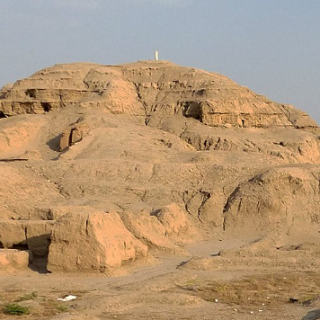
Uruk, known today as Warka, stands as one of the most significant ancient cities in the Near East. Situated east of the current bed of the Euphrates River, Uruk was...
Enkidu, a central figure in Mesopotamian mythology, is one of the most compelling characters from the Epic of Gilgamesh. He represents the transition from nature to civilization, serving as both...
Nabonidus, the last king of the Neo-Babylonian Empire, ruled from 556 BCE until Babylon’s fall to the Achaemenid Empire under Cyrus the Great in 539 BCE. His reign is notable for its distinct approach to religion,...
Esarhaddon, the Neo-Assyrian king who ruled from 681 to 669 BCE, is remembered as a unique ruler who significantly expanded and strengthened the empire, confronted profound political challenges, and conducted...
The Cylinders of Nabonidus are ancient cuneiform inscriptions commissioned by Nabonidus, the last king of the Neo-Babylonian Empire, who reigned from 556 to 539 BCE. These inscriptions, found on clay...
Nabu, the ancient Babylonian god of wisdom and literacy, played a central role in Mesopotamian religious and intellectual life. Revered for his association with writing, communication, and knowledge, Nabu’s influence...
The ancient Mesopotamian underworld was a complex and essential part of Mesopotamian belief systems, serving as both a physical location and a spiritual realm where the souls of the dead resided....
Dumuzid, also known as Tammuz in later Akkadian traditions, is a central figure in the mythology of ancient Mesopotamia. His story, woven with elements of love, death, resurrection, and the...
The mušḫuššu is a prominent mythological creature from ancient Mesopotamian culture, recognized for its distinctive hybrid form. In various ancient texts and art, the creature is portrayed as part serpent,...
Ningishzida, an ancient Mesopotamian deity, held a significant place in Sumerian and Akkadian religious traditions. His name, often translated as “Lord of the Good Tree,” reflects his strong associations with...
The Middle Assyrian Empire, which lasted from approximately 1363 BC to 912 BC, marks a crucial era in the history of Assyria. It represents a transitional phase during which the...