Leto in Greek Mythology
Leto, also known as Lētṓ, is a significant yet often understated figure in ancient Greek mythology and religion. She is primarily revered as the mother of two of the most...
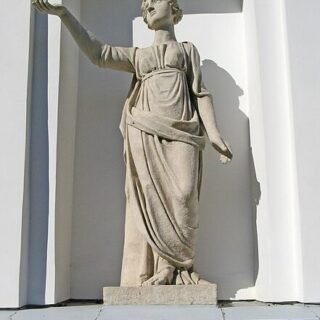
Leto, also known as Lētṓ, is a significant yet often understated figure in ancient Greek mythology and religion. She is primarily revered as the mother of two of the most...
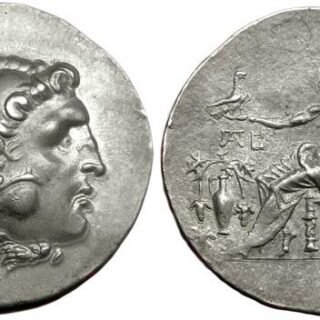
Ancient Greek coinage is a remarkable reflection of the culture, politics, and economy of one of history’s most influential civilizations. Its development spans four distinct periods: Archaic, Classical, Hellenistic, and...

Herodotus, the ancient Greek historian known as the “Father of History,” wrote extensively about Egypt in his monumental work, Histories. His account of the Egyptians is found primarily in Book II,...

Pharaoh Unas, also spelled Wenis or Unis, was the ninth and final ruler of Egypt’s Fifth Dynasty during the Old Kingdom, reigning approximately from 2345 to 2315 BCE. His reign...

The Apollo Belvedere, one of the most celebrated sculptures of classical antiquity, has long been revered as a masterpiece of artistic perfection. Its rich history and cultural significance span centuries,...
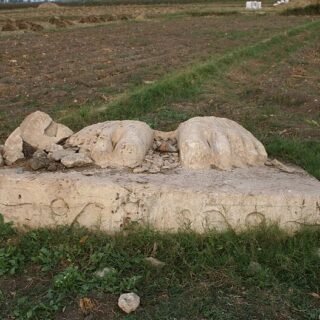
Pi-Ramesses, meaning “House of Ramesses” (pr-rꜥ-ms-sw), was established by Pharaoh Ramesses II during Egypt’s Nineteenth Dynasty (1279–1213 BCE). It was situated at Qantir, near the ancient site of Avaris, a...

The Beautiful Festival of the Valley (hb nfr n jnt) originated in ancient Thebes (modern Luxor) during the Middle Kingdom (c. 2000–1700 BCE). It was initially rooted in funerary practices...

Heliopolis, known as Iunu in Ancient Egyptian, was a major city in Lower Egypt and a focal point of religious and cultural activity. Located in modern northeastern Cairo, encompassing Ain...
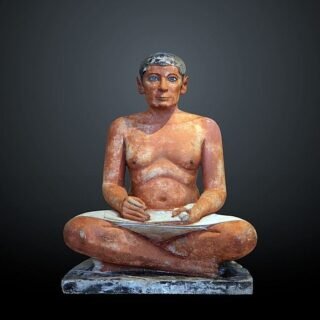
Ancient Egypt’s artistic legacy is one of the most enduring and influential in human history. Spanning over three millennia, Egyptian art is renowned for its remarkable consistency, symbolic depth, and...

Yuya was a prominent figure in ancient Egypt during the Eighteenth Dynasty, around 1390 BC. Renowned for his influence in the royal court and his familial ties to the ruling...
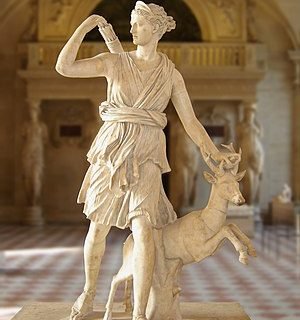
The Diana of Versailles, a slightly larger-than-life marble statue of Diana (Artemis in Greek mythology), was created as a Roman copy of a lost Greek bronze original by Leochares, dating...

Leochares was a prominent sculptor from Athens, active during the 4th century BC. Renowned for his contributions to monumental and portrait sculpture, he played a significant role in defining the...

Mutnedjmet, also spelled Mutnodjmet or Mutnedjemet, was a significant figure in ancient Egypt, serving as the Great Royal Wife of Pharaoh Horemheb, a ruler of the 18th Dynasty. Her life,...

In the early 6th century BC, Athens faced a dire social and political crisis. Severe inequality, rampant debt slavery, and aristocratic dominance had brought the city-state to the brink of...

The Mortuary Temple of Hatshepsut, known as Djeser-Djeseru (“Holy of Holies”), was commissioned by Pharaoh Hatshepsut, one of ancient Egypt’s most remarkable rulers. Built during her reign in the 18th...





