What are the Amarna Letters?
The Amarna letters are a collection of clay tablets that document diplomatic correspondence between the Egyptian administration and various rulers of neighboring regions. Dating to the mid-14th century BC, these...
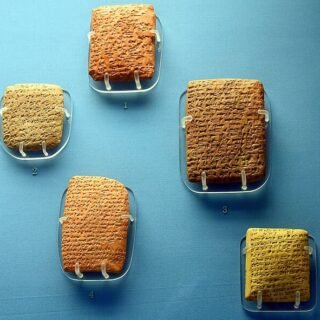
The Amarna letters are a collection of clay tablets that document diplomatic correspondence between the Egyptian administration and various rulers of neighboring regions. Dating to the mid-14th century BC, these...

The Battle of the Delta was fought around 1175 BC. It was a pivotal naval engagement between Pharaoh Ramesses III of Egypt and the Sea Peoples, a confederation of maritime...

Deir el-Medina was known in ancient times as Set Maat, which translates to “Place of Truth.” The settlement housed the artisans responsible for constructing and decorating the royal tombs in...

Ramesses III, officially known as Usermaatre Meryamun Ramesses-Heqaiunu, was the second Pharaoh of the Twentieth Dynasty of Egypt. Scholars estimate that he reigned from around 1185 to 1155 BC, making...
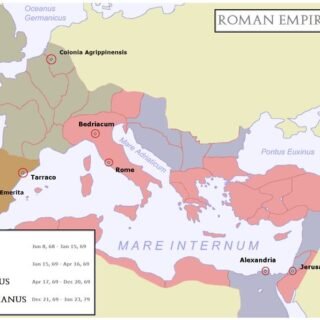
The Battle of Bedriacum refers to two significant battles fought in AD 69, during the tumultuous Year of the Four Emperors. These battles determined the fate of Rome’s leadership and...

Neferkare II was a little-known pharaoh of ancient Egypt who ruled during the tumultuous early First Intermediate Period (c. 2181–2055 BC). As a ruler of the Eighth Dynasty, he would...
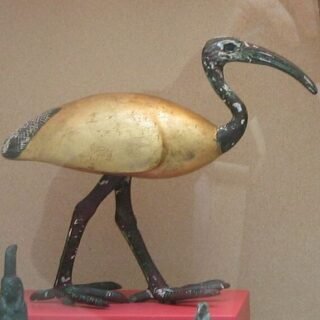
The sacred ibis was deeply revered in ancient Egypt, primarily due to its association with Thoth, the god of wisdom, knowledge, writing, and mathematics. Thoth, often depicted with the head...
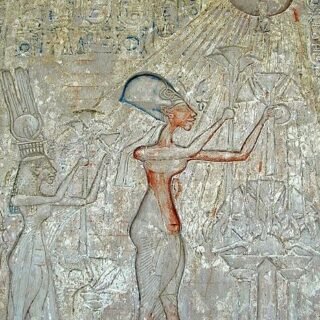
Atenism, also known as the Amarna religion, was a radical religious movement introduced by Pharaoh Akhenaten during the 14th century BCE in ancient Egypt. This monotheistic or monolatristic faith centered...
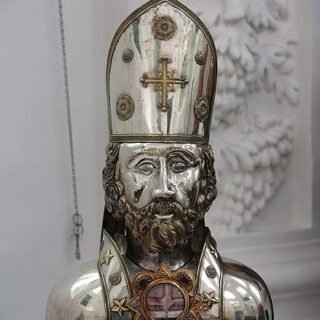
The Plague of Cyprian (c. 250–270 CE) was a devastating pandemic that struck the Roman Empire during a period of political and military crisis. Named after St. Cyprian, the bishop of Carthage who...

Min was the god of fertility, male potency, and agricultural abundance, associated with reproduction and renewal in both human and natural cycles. Origins and Cult Centers Min was known in...

The Marduk Prophecy is an ancient Mesopotamian text, written in Akkadian cuneiform, that narrates the travels of the statue of the god Marduk from Babylon and its eventual return. It is part of a...

Nicaea (also spelled Nicæa or Nicea), known in Ancient Greek as Nikaia, was a significant city in the northwestern Anatolian region of Bithynia. It played a crucial role in ancient...

The Admonitions of Ipuwer is an ancient Egyptian literary text that has intrigued scholars for centuries. This text, preserved on a single papyrus housed in the Dutch National Museum of Antiquities...

Amenhotep II was the seventh pharaoh of Egypt’s Eighteenth Dynasty, ruling from approximately 1427 to 1401 BC. He inherited a powerful kingdom from his father, Thutmose III. Early Life and...

The quaestor was a public official in ancient Rome, playing an essential role in administrative, financial, and judicial matters. Over time, the title encompassed various responsibilities, adapting to the changing...





