Pharnaces II of Pontus
Pharnaces II of Pontus was the king of the Bosporan Kingdom and Kingdom of Pontus until his death around 47 BC. Early Life and Heritage Pharnaces II (c. 97–47 BC),...

Pharnaces II of Pontus was the king of the Bosporan Kingdom and Kingdom of Pontus until his death around 47 BC. Early Life and Heritage Pharnaces II (c. 97–47 BC),...

Nicomedes III Euergetes, known as “the Benefactor” (Ancient Greek: Νικομήδης Εὐεργέτης), ruled the kingdom of Bithynia from approximately 127 BC to 94 BC. A descendant of a prestigious lineage and...
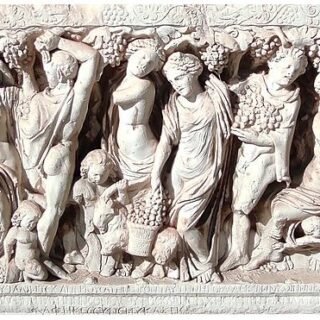
Wine played a central role in the cultures of the ancient Mediterranean, influencing social, religious, and economic aspects of life. As a symbol of wealth, hospitality, and divine favor, wine...

Aristoxenus of Tarentum (c. 375–335 BCE) was a Greek philosopher and one of Aristotle’s most distinguished pupils. Although renowned for his contributions to philosophy and ethics, Aristoxenus is best known...

Wadjenes, also rendered as Wadj-nes, Wadjlas, Ougotlas, or Tlas, was a lesser-known king who likely reigned during Egypt’s 2nd Dynasty. His name, meaning “fresh of tongue,” suggests symbolic or ceremonial...

Sardis, historically known as Sardes, was a significant ancient city primarily recognized as the capital of the Lydian Empire. Its prominence persisted through successive eras, becoming the administrative center of...

The Delian League emerged in the aftermath of the Persian Wars (490–479 BCE), a defining period in Greek history. The Greek victory in battles like Marathon (490 BCE), Salamis (480...

Craterus was a prominent Macedonian general who served under Alexander the Great. Renowned for his unwavering loyalty, he played a significant role in Alexander’s campaigns and later became one of...

Amyrtaeus of Sais was a pivotal figure in ancient Egyptian history, being the sole ruler of the Twenty-Eighth Dynasty. His reign (circa 404–399 BCE) marked the end of the first...

The olive, its cultivation, and its symbolic significance played a central role in the development of ancient Mediterranean civilizations, shaping their economies, diets, religious practices, and artistic expressions. Through its...

Roman walls are one of the most enduring legacies of the Roman Empire, showcasing its engineering prowess, military strategy, and urban planning. These walls served as fortifications, boundaries, and expressions...
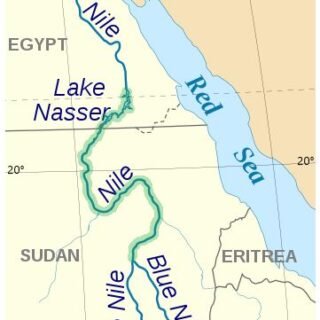
Nubia is a region along the Nile River that spans the areas of modern-day southern Egypt and northern Sudan. It encompasses the confluence of the Blue and White Niles near...
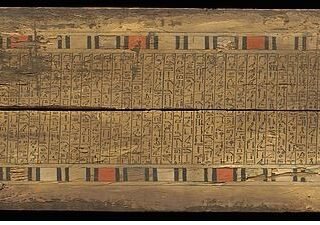
The Coffin Texts are a collection of 1,185 funerary spells written on coffins, tomb walls, and other burial objects during the First Intermediate and Middle Kingdom periods, democratizing access to...
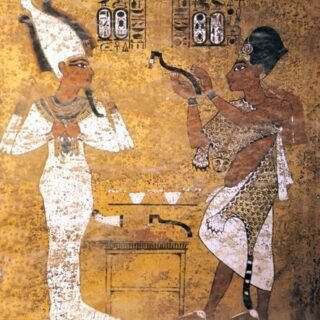
The Opening of the Mouth ceremony was a key ancient Egyptian funerary ritual described in texts like the Pyramid Texts and practiced from the Old Kingdom to the Roman Period....
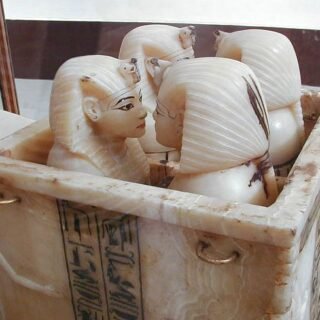
Canopic jars are essential artifacts from ancient Egyptian burial practices, symbolizing their spiritual beliefs and advanced mummification techniques. These containers were specifically designed to store and protect the internal organs...





