Religion in Ancient India
Religious developments in ancient India were profound and multifaceted, shaping not only the spiritual lives of its people but also influencing the cultural, social, and political landscapes. The period witnessed...
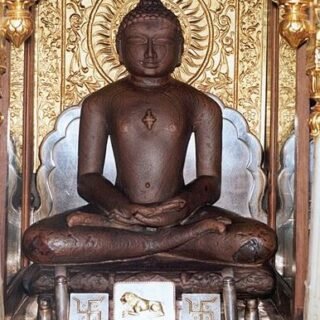
Religious developments in ancient India were profound and multifaceted, shaping not only the spiritual lives of its people but also influencing the cultural, social, and political landscapes. The period witnessed...
The Republican Party, often referred to as the GOP (Grand Old Party), is one of the two major political parties in the United States, alongside the Democratic Party. Founded in...
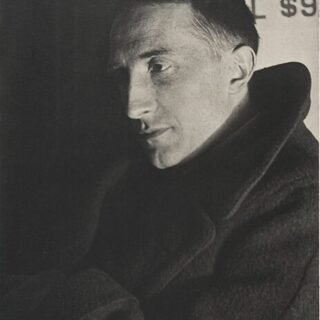
Marcel Duchamp (28 July 1887 – 2 October 1968) is widely regarded as one of the most influential artists of the 20th century. His innovative approach to art, which challenged...

The Atrahasis Epic is one of the most significant and ancient Mesopotamian texts, believed to have been written around 1700 BCE. The epic tells the story of the creation of humankind, a...

The reelection of Abraham Lincoln in 1864 stands as one of the most critical moments in American history. It took place during a turbulent time in the country’s existence, as the Civil...

Venice, a city of unparalleled beauty and historical significance, has fascinated historians, artists, and travelers for centuries. Known for its winding canals, impressive architecture, and rich cultural heritage, Venice holds...

Albert Gleizes (1881–1953) was a key figure in the development of modern art, particularly as a pioneering force behind Cubism, one of the most important and revolutionary art movements of...

Jakob Fugger, born on March 6, 1459, in the Free Imperial City of Augsburg, was one of the most influential figures in European economic history. Often referred to as “Jakob...

Indra, one of the most prominent deities in early Vedic Hinduism, occupies a central role in the mythology of the Rigveda and is depicted as the king of the devas...

The Treaty of Tordesillas, signed on June 7, 1494, was a landmark agreement between Spain (i.e. Crown of Castile) and Portugal aimed at resolving conflicts over newly discovered lands in...
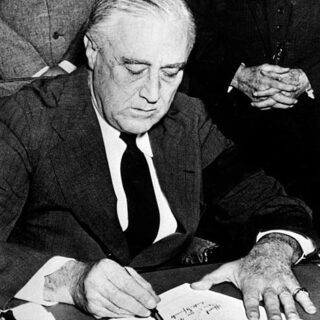
Franklin D. Roosevelt (FDR) holds a unique place in American history as the only U.S. president to serve four terms, from 1933 to 1945. His unprecedented tenure occurred during two...

The peace treaties that followed World War I reshaped the political landscape of Europe and much of the world. These treaties aimed to establish a lasting peace after four years...

The golden ratio, often symbolized by the Greek letter phi (φ), is a mathematical concept that has fascinated scholars, artists, and thinkers for centuries. It is an irrational number, approximately...
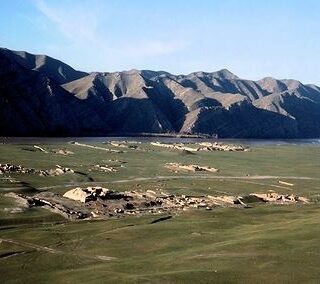
Ai Khanum, also spelled Ai-Khanoum, was one of the most significant cities of the Greco-Bactrian kingdom and played a key role during the reign of Eucratides I (r. 170–145 BCE)....
Depictions of India in ancient literature are a rich tapestry woven from diverse sources spanning millennia. These sources not only reflect India’s geography, culture, religion, and politics but also portray...





