First siege of Missolonghi (1822)
The Greek War of Independence began in 1821, aiming to liberate Greece from centuries of Ottoman rule. Missolonghi, a strategically located port town in western Greece, played a critical role...
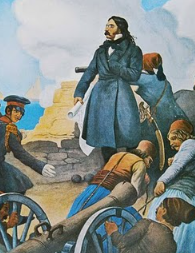
The Greek War of Independence began in 1821, aiming to liberate Greece from centuries of Ottoman rule. Missolonghi, a strategically located port town in western Greece, played a critical role...

In the early 6th century BC, Athens faced a dire social and political crisis. Severe inequality, rampant debt slavery, and aristocratic dominance had brought the city-state to the brink of...
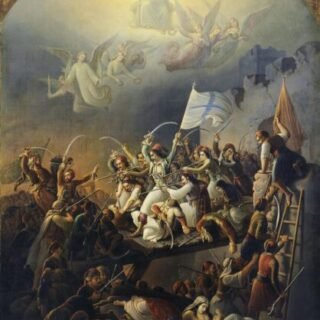
The Third Siege of Missolonghi was a pivotal event in the Greek War of Independence. Lasting from April 1825 to April 1826, it marked a tragic yet influential chapter in...
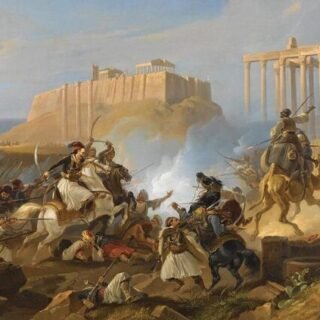
The Second Siege of the Acropolis (1826–1827) was a pivotal event during the Greek War of Independence. It marked the Ottoman Empire’s effort to reclaim Athens, one of the last...
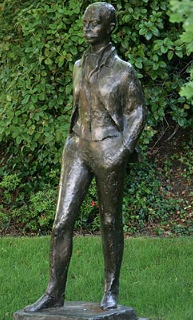
Pierre de Coubertin’s life and career exemplify his commitment to education, international cooperation, and the transformative power of sport. Through his dedication to reviving the Olympic Games, he created a...

The Mortuary Temple of Hatshepsut, known as Djeser-Djeseru (“Holy of Holies”), was commissioned by Pharaoh Hatshepsut, one of ancient Egypt’s most remarkable rulers. Built during her reign in the 18th...

Early Life and Education James Brendan Bennet Connolly was born on October 28, 1868, in South Boston, Massachusetts, to Irish immigrant parents from the Aran Islands. Growing up as one...
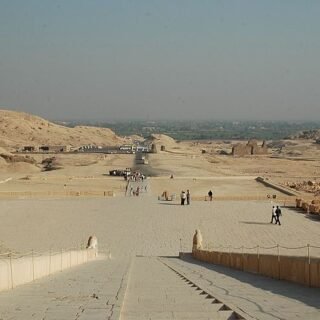
The discovery and subsequent dispersal of Bab el-Gasus have left a lasting impact on Egyptology, inspiring both scholarly research and public fascination. Efforts such as the “Gate of the Priests”...

The Sasanian kings were instrumental in shaping the empire’s history, blending military prowess, cultural patronage, and administrative reforms. Their accomplishments ensured the survival of Persian traditions and significantly influenced neighboring...

Abbas Helmy II, born on 14 July 1874 in Alexandria, Egypt, was the great-great-grandson of Muhammad Ali, the founder of modern Egypt. Raised in a cosmopolitan environment, he received a...

The Luxor Obelisks, a pair of monumental ancient Egyptian structures, were created over 3,000 years ago during the reign of Pharaoh Ramesses II (circa 1250 BC). These obelisks were carved...

The Opet Festival, known in Ancient Egyptian as ḥb nfr n jpt (“beautiful festival of Opet”), was an essential annual event in Thebes (modern Luxor), celebrated during the New Kingdom...
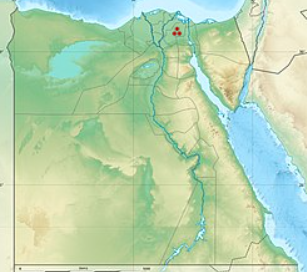
Avaris, known in ancient Egyptian as ḥw.t wꜥr.t (Hut-Waret), served as the capital of the Hyksos rulers during Egypt’s Second Intermediate Period (c. 1800–1550 BCE). Located at Tell el-Dab’a in...

Cleopatra’s Needles are a pair of ancient Egyptian obelisks that now stand in London and New York City. Originally erected during Egypt’s New Kingdom period, these monumental structures represent centuries...

From its construction during the New Kingdom to its modern-day function as a heritage site, the Luxor Temple embodies continuity and transformation, making it a remarkable example of human creativity...





