Rhadamanthus in Greek Mythology
Rhadamanthus stands out as a prominent figure in Greek mythology, revered for his wisdom, fairness, and moral integrity. He was regarded as one of the key judges of the dead,...

Rhadamanthus stands out as a prominent figure in Greek mythology, revered for his wisdom, fairness, and moral integrity. He was regarded as one of the key judges of the dead,...

The ancient Egyptians placed a profound emphasis on maintaining social order, truth, and harmony through a concept known as ma’at. This philosophical and ethical principle, which governed the universe and society,...

The dragon, or lóng (龙), holds a prominent position in Chinese mythology, culture, and philosophy, serving as an enduring symbol of power, strength, and divine authority. Unlike the malevolent dragons of Western...

The Han Dynasty (c. 202 BCE – 220 CE) marked a significant era in Chinese history, characterized by remarkable advancements in politics, culture, and art. As one of China’s longest-reigning...
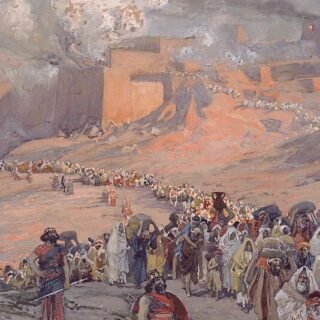
The Jewish spirit—the elusive yet resilient force that has defined the survival and transformation of the Jewish people across millennia—has its most ancient roots buried deep in the fertile crescent...

Mehet-Weret, also known as Mehturt, was a prominent celestial goddess in ancient Egyptian mythology. Her name, meaning “Great Flood,” connects her with both cosmic and terrestrial waters. Appearing in some...

The crossbow is one of the most significant technological innovations in the history of ancient Chinese warfare. Its development marked a turning point in military engineering, battlefield strategy, and the...

The aquila, or eagle, was a powerful and iconic symbol in ancient Rome. More than just a standard or insignia, it held religious, military, and political significance. Each Roman legion...

The Fourth Dynasty of ancient Egypt, spanning approximately from 2613 to 2494 BC, is widely considered a “golden age” within the Old Kingdom period. Marked by political stability, economic prosperity,...
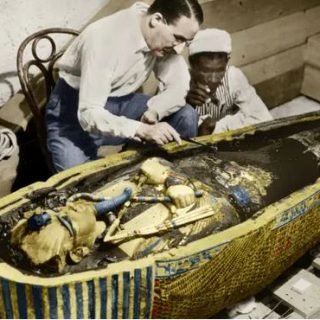
Tomb raiding in ancient Egypt was a widespread and persistent problem, spanning millennia. The Egyptian civilization placed immense importance on the afterlife, leading to elaborate burial practices that involved the...
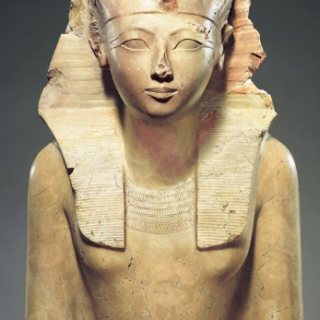
The statuary of Maatkare Hatshepsut, one of ancient Egypt’s most remarkable female pharaohs, represents a unique chapter in the evolution of Egyptian royal art and ideology. Hatshepsut, who ruled as...
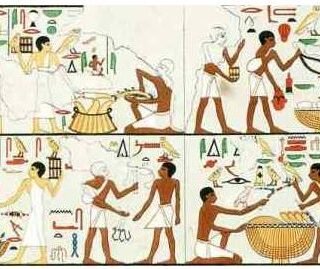
Trade played a crucial role in the economic and cultural development of ancient Egypt. As a civilization dependent on agriculture, Egypt needed to exchange goods with neighboring regions to obtain...

Jupiter, also known as Jove, was the supreme deity in ancient Roman religion and mythology. He was the god of the sky and thunder and served as the king of the...

Romulus Augustulus was the last emperor of the Western Roman Empire, ruling from 31 October 475 until 4 September 476. He was placed on the throne by his father, Orestes,...

Petronius Maximus was a Roman senator who briefly ruled as Western Roman Emperor in 455. He played a key role in the assassinations of Aetius and Valentinian III but was...





