Category: Ancient History
The Moirai, often known as the Fates in Greek mythology, are among the most intriguing and mysterious deities in ancient Greek religion. These three goddesses—Clotho, Lachesis, and Atropos—were believed to...
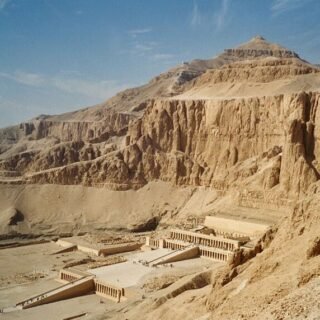
Deir el-Bahari, meaning “Monastery of the North” in Arabic, is a significant archaeological site located on the west bank of the Nile, opposite the city of Luxor, in what was...
Pharaoh Mentuhotep II, often regarded as the unifier of Egypt and the founder of the Middle Kingdom, played a pivotal role in shaping the course of ancient Egyptian history. His...
Mentuhotep II, one of ancient Egypt’s most significant pharaohs, is best known for reunifying Egypt after the chaotic First Intermediate Period and for establishing the Middle Kingdom. His achievements as...
Thutmose II, also spelled as Thutmosis or Tuthmosis, was the fourth pharaoh of Egypt’s Eighteenth Dynasty. His reign, dated to approximately 1493 to 1479 BCE under the Low Chronology, was...
The Valley of the Kings is one of the most iconic archaeological sites in the world, located on the west bank of the Nile River near Luxor, Egypt, within the Theban Necropolis....
The ancient Mesopotamian underworld was a complex and essential part of Mesopotamian belief systems, serving as both a physical location and a spiritual realm where the souls of the dead resided....
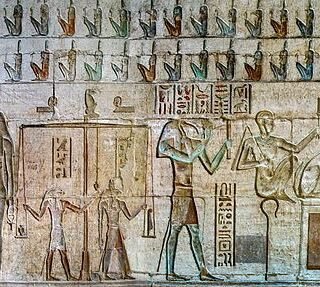
The concept of the Forty-Two Judges comes from ancient Egyptian mythology, specifically the beliefs surrounding the afterlife and the journey of the soul after death. It is closely associated with...
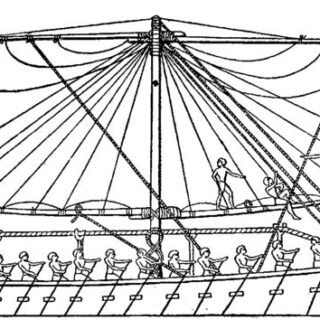
“The Tale of the Shipwrecked Sailor” is an ancient Egyptian literary work that dates back to the Middle Kingdom (circa 2000-1700 BCE). This captivating narrative is often considered one of...
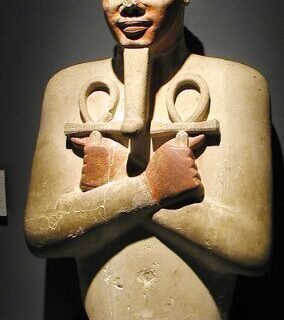
Senusret I, also known as Sesostris I, was the second pharaoh of Egypt’s Twelfth Dynasty, which is considered part of the Middle Kingdom period (c. 1971 BC – 1926 BC)....
Lycosura, located in the region of Arcadia in the southern Peloponnese, holds a special place in ancient Greek history and religion. According to the ancient Greek writer Pausanias, Lycosura was...
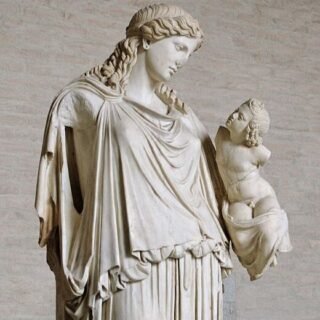
Eirene, also known as Irene, is the Greek goddess and personification of peace, one of the Horae. In Greek mythology, she is typically depicted as a beautiful young woman holding...
Dumuzid, also known as Tammuz in later Akkadian traditions, is a central figure in the mythology of ancient Mesopotamia. His story, woven with elements of love, death, resurrection, and the...
Despoina, meaning “The Mistress” in Greek, is a lesser-known but highly significant deity in ancient Greek religion, particularly within the context of Arcadian mythology. Unlike the more famous goddesses such...
The mušḫuššu is a prominent mythological creature from ancient Mesopotamian culture, recognized for its distinctive hybrid form. In various ancient texts and art, the creature is portrayed as part serpent,...