The World’s Oldest Love Poem
The world’s oldest love poem, often referred to as the “Song of Love for Shu-Sin”, is a remarkable piece of history, showcasing the enduring nature of human emotion and the sophisticated...

The world’s oldest love poem, often referred to as the “Song of Love for Shu-Sin”, is a remarkable piece of history, showcasing the enduring nature of human emotion and the sophisticated...

The relationship between Sennacherib, the Assyrian king, and the city of Babylon represents one of the most dramatic episodes in ancient Mesopotamian history. This relationship is emblematic of the broader...

Antisthenes of Athens, a prominent Greek philosopher and student of Socrates, is a key figure in the writings of Diogenes Laertius, whose Lives and Opinions of Eminent Philosophers serves as a rich...

Shepseskare, whose name means “Noble is the Soul of Ra,” was a pharaoh of Egypt’s Fifth Dynasty during the Old Kingdom, reigning in the mid-25th century BCE. Historical and archaeological...
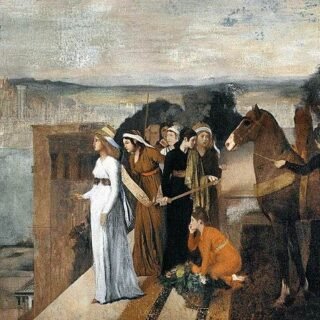
Sammu-Ramat, a historical Assyrian queen, and Semiramis, a figure of legend, have long captured the imagination of historians, writers, and artists. Their stories, though intertwined, represent two distinct facets of...

The Ubaid period, spanning approximately from 5500 to 3700 BC, marks a pivotal era in the prehistory of Mesopotamia. Recognized for its substantial cultural, technological, and societal advancements, the Ubaid...
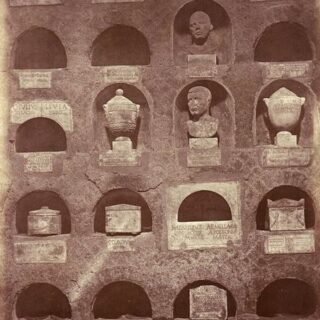
The columbaria of Imperial Rome offer a fascinating glimpse into the social, cultural, and architectural dynamics of death in ancient Roman society. These structures, designed to house the ashes of...
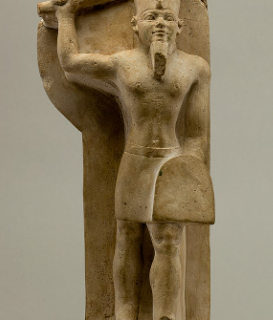
Resheph, known by various names such as Reshef, Rašap, and Rešep̄, was a prominent deity in the ancient Near East. Associated primarily with war and plague, Resheph’s worship spanned multiple...

Ninagal occupies a pivotal role in Mesopotamian mythology as a divine smith, embodying the essential skills of metalworking and craftsmanship revered in ancient Mesopotamian society. His depiction, worship, and associations...
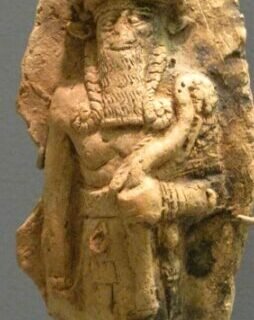
Nergal stands as one of the most formidable deities in the ancient Mesopotamian pantheon. Revered for his association with war, death, and disease, Nergal’s influence permeated various aspects of Mesopotamian...
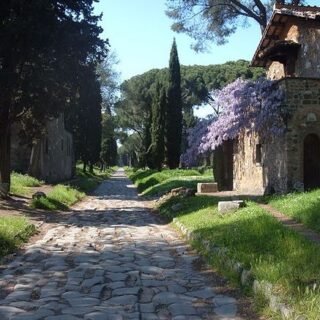
Roman roads were an integral part of the Roman Empire’s infrastructure, enabling military expansion, facilitating trade, and enhancing communication across vast territories. These roads were marvels of engineering and a...
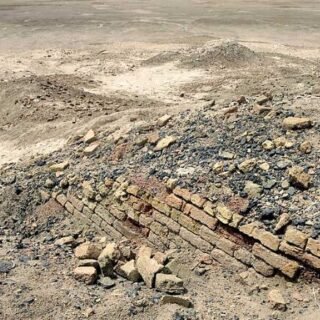
Eridu stands as one of the earliest known cities in southern Mesopotamia, embodying significant historical, cultural, and architectural milestones. Situated in present-day Iraq, Eridu’s legacy offers profound insights into the...
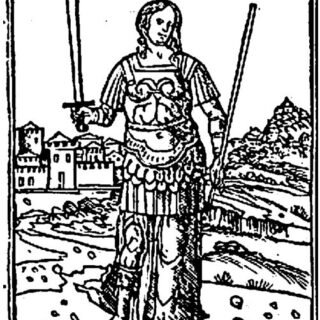
Diodorus Siculus, a Greek historian from the 1st century BC, wrote an expansive history called the Bibliotheca Historica. Within this work, he provided an account of Semiramis, a semi-legendary queen...

Ur, one of ancient Mesopotamia’s most renowned city-states, played a pivotal role in the development of early urban civilization. Situated on the fertile plains between the Euphrates and Tigris rivers,...
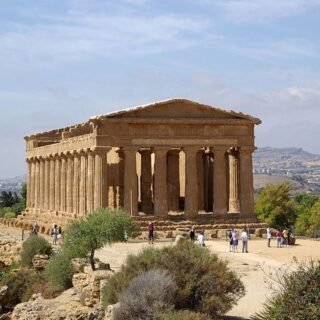
Sicilian temples, as part of the broader tradition of Greek architecture, represent some of the most spectacular monuments of the ancient world. These temples, located primarily in the ancient Greek...





