Timeline of the Roman Empire
The Roman Empire was one of the most powerful and influential civilizations in human history. Spanning over a thousand years—from a small village on the Tiber River to the rulers...

The Roman Empire was one of the most powerful and influential civilizations in human history. Spanning over a thousand years—from a small village on the Tiber River to the rulers...

Scottish author and poet James Lewis Spence was best known for his extensive writings on mythology, folklore, the occult, and theories about lost civilizations like Atlantis and Lemuria. Early...

Works and Days is a foundational text of Greek didactic poetry written by the poet Hesiod around 700 BCE. Composed in dactylic hexameter and stretching across 828 lines, this poem...

So, picture this: It’s around 510 BC in Athens. The last of the city’s tyrants has just been shown the door, with a little help from Sparta, and out of...

In the rugged landscape of Sicily, surrounded by the whispers of ancient civilizations and layered histories, lie enigmatic monuments that predate even the classical world that would later dominate the...

Late Antiquity refers to the transitional period between Classical Antiquity and the Middle Ages, generally spanning from the late 3rd century to the 7th or 8th century AD, depending on...

In the summer of 991 AD, near the town of Maldon in Essex, England, a dramatic and fateful encounter unfolded between the Anglo-Saxons and Viking raiders. The reigning monarch was...

Ancient Egyptian society was built upon a foundation of stability, order, and harmony, which the Egyptians encapsulated in the concept of Maat. This principle governed not only the cosmic order but...

Among the many profound contributions of ancient China to world civilization, the invention of paper stands as one of the most transformative. It not only revolutionized communication and bureaucracy within...
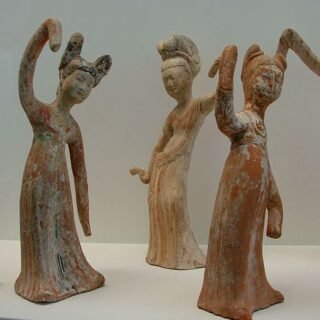
The Tang Dynasty (c. 618–907 CE) represents a golden age in Chinese history, marked by a flourishing of arts, culture, and international exchange. During this period, China enjoyed unprecedented prosperity...

Also known as the Barbarian Invasions, the Migration Period began mainly due to the arrival of the Huns in Eastern Europe around 375 AD, which displaced many Germanic tribes and...

Among the most compelling and historically rich artworks of the ancient Near East are the Assyrian wall reliefs from the palace of Ashurnasirpal II (r. 883–859 BCE), displayed prominently at the British Museum. These panels,...

Imagine stepping into 9th-century Baghdad—a vibrant, buzzing metropolis where the hum of scholarly debate mixes with the scent of exotic spices. This is not just the heart of the Abbasid...
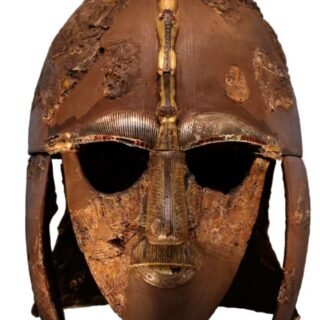
So, picture this: it’s the late 400s, and the Roman Empire—this giant, powerful, seemingly invincible force that had shaped so much of the Western world—is crumbling. The roads are still...

Ancestor worship in ancient China was a deeply rooted tradition that permeated all aspects of Chinese society, from family life and politics to philosophy and religious practices. This practice was...





