The Glory Days of Classical Greece
So, picture this: It’s around 510 BC in Athens. The last of the city’s tyrants has just been shown the door, with a little help from Sparta, and out of the political chaos emerges a man named Cleisthenes. What does he do? He pulls off one of the most radical political overhauls the world had seen—he lays down the foundation for Athenian democracy. This isn’t democracy as we know it today, but it’s the first time regular male citizens (not just the elite) are getting a real voice in how things are run. That’s a big deal.
Meanwhile, over in Sparta, things are humming along quite differently. They’ve got this quirky system called a diarchy, meaning two kings rule at the same time—supposedly descendants of twin heroes from way back in the mythic past. Spartan society is ultra-militarized, suspicious of outsiders, and not exactly a breeding ground for poets and philosophers. But when it comes to military might? Oh, they’ve got that on lockdown.
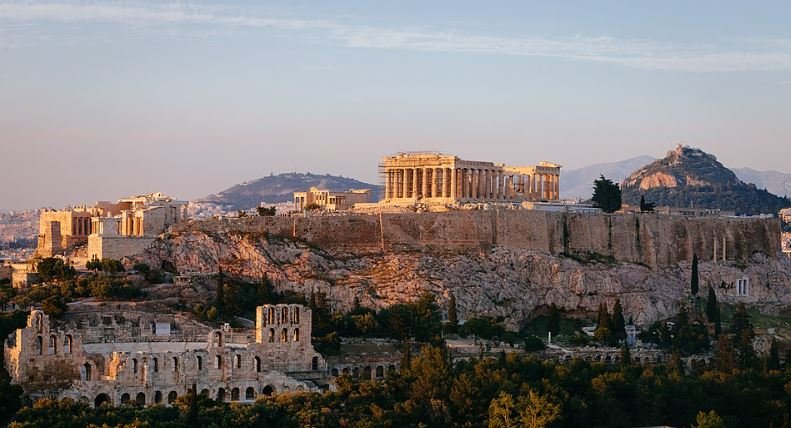
A 2019 photo of the Acropolis of Athens.
Athens Steps into the Spotlight
Back in Athens, Cleisthenes’ reforms reorganized the city into new tribal units called demes. This wasn’t just redistricting for political convenience—it was genius social engineering. The idea was to break up the old loyalties tied to geography and wealth and force people to mix. So, whether you were a fisherman from the coast or a farmer from the hills, you’d find yourself in the same political tribe as an urban merchant. Brilliant, right?
With this setup, democracy began to blossom. Citizens could attend the assembly, serve on juries, and even hold public office—drawn by lottery, mind you. It wasn’t perfect (women, slaves, and foreigners were still excluded), but it was revolutionary for the time.
Persia Looms Large
Now, while Athens is busy inventing democracy, there’s a big storm brewing to the east. The Persian Empire—massive, wealthy, and well-organized—starts eyeing the Greek world. They’ve already taken control of the Ionian Greek cities in Asia Minor, and in 499 BC, those cities decide they’ve had enough. They rise up in what becomes known as the Ionian Revolt. Athens and a few allies send help, but it’s not enough. The revolt gets crushed.
But King Darius of Persia? He’s not the forgive-and-forget type. In 490 BC, he sends an invasion force to punish Athens for meddling. They land at Marathon, expecting an easy victory. Instead, they get a shocking defeat at the hands of a smaller Athenian force led by Miltiades. Legend has it that a messenger ran all the way back to Athens to deliver the good news before collapsing and dying—yep, that’s where the whole marathon race idea comes from.
The Second Persian Invasion: Thermopylae and Salamis
Fast forward ten years. Darius is dead, but his son Xerxes picks up where he left off. He invades Greece with a force so huge that it reportedly drinks rivers dry (okay, maybe not literally, but the Greeks sure thought so). In 480 BC, the Spartans famously hold the line at Thermopylae with King Leonidas and his 300 warriors. It’s a heroic but doomed stand.
Then comes the naval showdown at Salamis. Themistocles, an Athenian general with a flair for strategy, tricks the massive Persian fleet into a narrow strait where their numbers count for nothing. The Greek triremes, sleek and fast, decimate the Persians. Xerxes watches his fleet burn and decides he’s had enough. The next year, at Plataea, the Greeks drive out the remaining Persian land forces. Just like that, the invasion is over.
Enter the Delian League
So what now? Athens isn’t content to just go back to business as usual. They form the Delian League, a kind of mutual defense pact centered around protecting Greek cities from future Persian attacks. In theory, it’s all about unity. In practice, Athens quickly starts acting like the boss of everyone.
They move the league’s treasury from Delos to Athens and begin using the money not just for defense, but for ambitious building projects—like the Parthenon. And if any city tries to leave the league? Athens cracks down hard. So, the Delian League gradually transforms into an Athenian empire in all but name.
The Peloponnesian War: Athens vs. Sparta
As you can imagine, this doesn’t sit well with Sparta. While Athens grows richer and flashier, Sparta and its allies in the Peloponnesian League see an arrogant upstart throwing its weight around. Tensions build for years until finally, in 431 BC, war breaks out.
This war drags on for nearly three decades and is absolutely brutal. Athens has the better navy; Sparta dominates on land. Athens tries to ride out the war behind its Long Walls, but then a devastating plague strikes, wiping out a third of the population—including the brilliant Pericles.
Both sides win and lose battles, but nothing decisive happens for a long time. Then, in a moment of wild ambition, Athens launches the Sicilian Expedition in 415 BC. The goal? Conquer Syracuse and expand the empire. The result? An epic disaster. The entire expeditionary force is wiped out. Nicias, one of the generals, is executed. Athens never really recovers from the loss.
Spartan Victory—and the Cost
In the later stages of the war, Sparta gets a secret weapon: Persian gold. Yep, the Persians decide to fund the Spartans to keep the Greek city-states fighting each other. With this money, Sparta builds a navy that can finally take on Athens at sea.
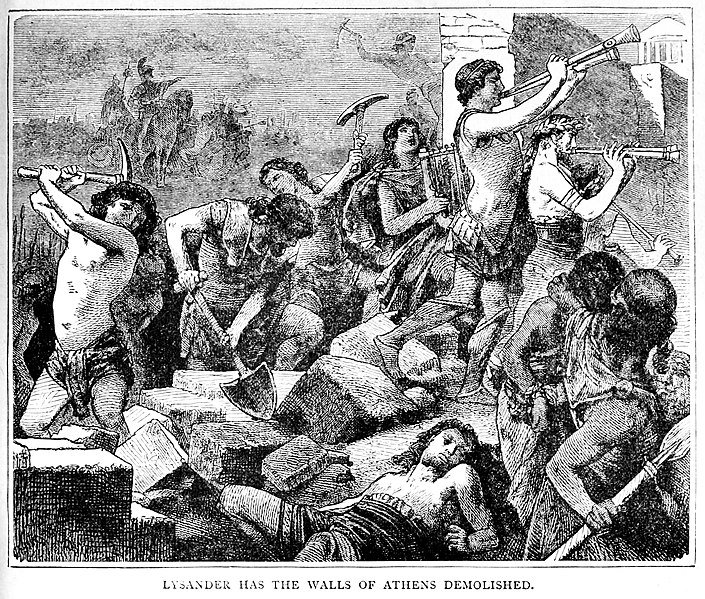
The final blow comes at the Battle of Aegospotami in 405 BC. The Athenian fleet is caught off guard and annihilated. With its food supply cut off and no navy to defend itself, Athens surrenders in 404 BC.
Sparta installs a puppet government—the infamous Thirty Tyrants—and democracy in Athens is snuffed out. But not for long.
READ MORE: The Tyrants Who Ruled Ancient Athens
A Shaky Spartan Hegemony
Now you might think this is Sparta’s big moment. They’ve beaten Athens, controlled the Aegean, and become the top dog in Greece. But here’s the thing—Sparta isn’t built for empire. They’re great at fighting, not so great at politics or diplomacy.
Within a few years, old rivalries flare up again. Athens overthrows the Thirty Tyrants and restores democracy. Other city-states, like Thebes and Corinth, get fed up with Spartan bullying. The Corinthian War breaks out in 395 BC and drags on for years, ending with the Peace of Antalcidas—essentially a humiliating treaty brokered by Persia that forces the Greeks to do what the Persians say. Yep, the same folks they once united against are now calling the shots.
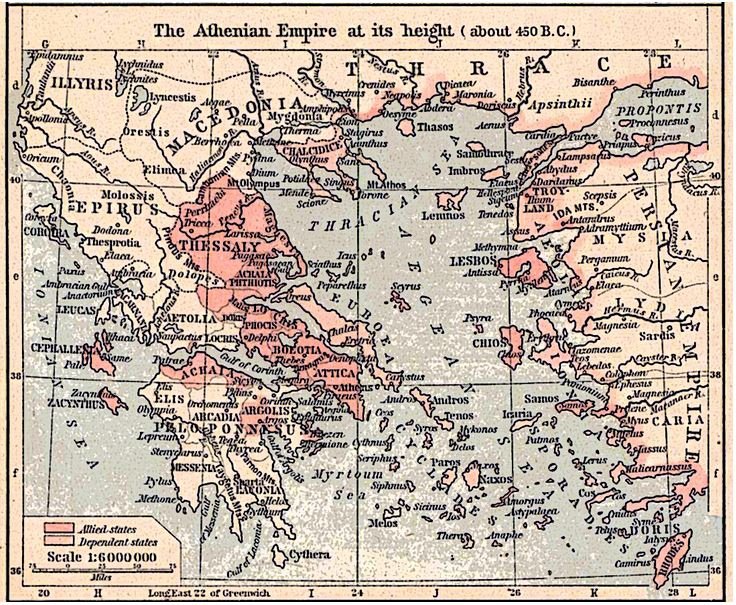
Map of the Athenian Empire circa 450 BC.
The Rise of Thebes
Out of this mess rises a new power: Thebes. Under generals like Epaminondas and Pelopidas, Thebes reforms its army, revives the Boeotian League, and starts to flex its muscles. In 371 BC, they shock the Greek world by defeating Sparta at the Battle of Leuctra. This is more than just a battlefield win—it’s a symbolic defeat for a city that had built its identity around invincibility.
Sparta’s hold on the Peloponnese crumbles. Epaminondas even invades Laconia itself (Sparta’s homeland), something no one had dared to do. He liberates the helots, Sparta’s enslaved labor force, and founds the city of Messene for them. That’s a direct attack on the Spartan way of life, and they never fully recover.
Athens’ Second Act—and Another Fall
Athens, seeing an opportunity, starts building a new alliance—the Second Athenian League. But they’re careful this time. No forced tribute, no central treasury. Just a defensive alliance, or so they say.
Still, old habits die hard. Athenian generals start acting a bit too independently. Allies start grumbling. Cities like Byzantium and Naxos revolt. Eventually, in the Social War (357–355 BC), the whole thing falls apart. Athens loses its grip, and the dream of a peaceful league crumbles once more.
Enter Macedonia: Philip II Changes the Game
While the southern city-states are busy bickering and bleeding each other dry, a storm is gathering in the north. Macedonia, once seen as a semi-barbaric backwater, has a new king: Philip II. He’s clever, ruthless, and has a clear vision. He reorganizes the army into a professional fighting force, borrowing techniques from Thebes, and starts expanding Macedonian territory.
When Philip takes the city of Amphipolis—an important Athenian port—it’s a wake-up call. But Athens is too divided to respond effectively. Some, like Demosthenes, urge resistance. Others, like Phocion, prefer appeasement. Meanwhile, Philip keeps moving.
Chaeronea and the End of Greek Independence
Everything comes to a head in 338 BC at the Battle of Chaeronea. Philip’s army, including his teenage son Alexander (yes, that Alexander), faces off against a coalition of Greeks, including Athens and Thebes. The Macedonians win decisively. Greek independence, as it had been known, is over.
But Philip doesn’t destroy the city-states. Instead, he organizes them into the League of Corinth, a federation that recognizes Macedonian leadership but leaves local governments mostly intact. His goal? Unite Greece and take the fight to Persia.
Alexander the Great: From Student to Conqueror
Before he can launch his grand campaign, Philip is assassinated in 336 BC at a wedding. Alexander, just 20 years old, wastes no time securing the throne. He eliminates rivals, asserts control over the Greek states (crushing a Theban revolt with terrifying efficiency), and then turns eastward.
In 334 BC, Alexander crosses into Asia with around 35,000 troops. Over the next decade, he does the impossible—he topples the Persian Empire, pushes into Egypt, marches all the way to India, and spreads Greek culture from the Mediterranean to the Himalayas. It’s an astonishing feat of military brilliance and charismatic leadership.
But in 323 BC, at just 32 years old, Alexander dies in Babylon. His empire fractures almost immediately, divvied up among his generals, the Diadochi. This marks the end of the Classical period and the beginning of the Hellenistic era.
What Classical Greece Left Behind
When we look back at Classical Greece, what really stands out isn’t just the wars or the shifting alliances—it’s the cultural explosion that happened in the midst of all that turmoil. This was the age of Socrates, Plato, and Aristotle; of Sophocles, Euripides, and Aristophanes; of Herodotus and Thucydides. The Parthenon rose above Athens. The tragedies played in the Dionysian theater. Democracy was born, questioned, and reborn.
Even today, we feel the echoes. Western philosophy, politics, art, science—all bear the fingerprints of Classical Greece. Whether it’s through Aristotle’s logic, Plato’s idealism, or even a modern marathon, that 200-year window in ancient Greece still shapes how we think, govern, and dream.

A close view of the Parthenon.