Fólkvangr in Norse Mythology
Fólkvangr is a field ruled by the goddess Freyja, where half of those who die in battle go after death, while the other half go to Odin’s Valhalla. Summary Fólkvangr,...

Fólkvangr is a field ruled by the goddess Freyja, where half of those who die in battle go after death, while the other half go to Odin’s Valhalla. Summary Fólkvangr,...

Min was the god of fertility, male potency, and agricultural abundance, associated with reproduction and renewal in both human and natural cycles. Origins and Cult Centers Min was known in...

Frederick II was a complex and dynamic monarch whose reign was defined by military ambition, economic reform, architectural innovation, and intellectual patronage. While earlier historical narratives often painted him as...

Guido Reni (1575–1642) was one of the most influential painters of the Italian Baroque era. His works, characterized by a classical elegance reminiscent of the Renaissance masters, combined elements of...

The Fourth Crusade (1202–1204) was an ambitious Latin Christian expedition launched by Pope Innocent III with the official goal of recapturing Jerusalem from Muslim control. However, a series of economic...

The Marduk Prophecy is an ancient Mesopotamian text, written in Akkadian cuneiform, that narrates the travels of the statue of the god Marduk from Babylon and its eventual return. It is part of a...
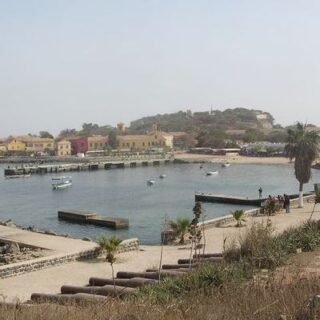
Known in French as Île de Gorée, Gorée is a small island off the coast of Dakar, Senegal. The island holds immense historical and cultural significance, particularly in relation to...

In Islam, Jesus holds a revered status as one of the greatest prophets and messengers of God. He is acknowledged as the penultimate prophet, preceding Muhammad, and is described as...

The Black Stone, known in Arabic as al-Ḥajar al-Aswad, is a revered Islamic relic embedded in the eastern corner of the Kaaba in Mecca, Saudi Arabia. According to Islamic tradition,...

Plymouth Rock is one of the most famous historical landmarks in the United States, widely believed to be the disembarkation site of the Mayflower Pilgrims who founded Plymouth Colony in...
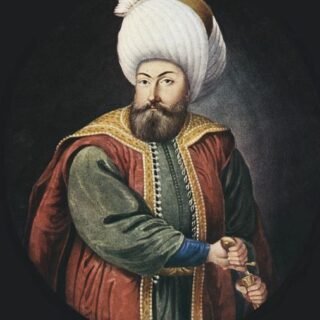
Osman I was the founder of the Ottoman Empire, initially leading a small Turkoman principality in Anatolia that later expanded into a vast empire. Early Life and Ancestry Osman I,...

Sandro Botticelli, one of the most distinguished painters of the Italian Renaissance, created a series of 92 illustrations for Dante Alighieri’s Divine Comedy. These drawings, often regarded as masterpieces, reflect...

The Uffizi Gallery, or Galleria degli Uffizi, is one of the most prestigious and visited art museums in the world. Located in Florence, Italy, it is an architectural and artistic...

Sandro Botticelli’s Primavera, painted in the late 1470s or early 1480s, is one of the most celebrated and extensively analyzed paintings in Western art. The large panel painting, executed in...

Orhan Ghazi was the second sultan of the Ottoman Empire, ruling from 1323/4 until his death in 1362. He was born in Söğüt as the son of Osman I, the...